Becoming biodynamic in a historic wine region – Szóló Winery in Tállya (Tokaj)
Biodynamic wineries are ubiquitous today. We can taste their wine, visit them and read all about this exciting cultivation and winemaking method. But let’s start with the basics: everything is only able to work as part of a system, whereby not just one or two wineries think alike in a whole region, but all the neighbours take the exact same steps each year. It’s really pleasing to see that in the Loire Valley or in Burgundy – there is an endless list of great producers with an organic way of thinking. They do not even write the word ‘organic’ on the label, because it’s part of their mentality to be sustainable, to be organic or go even further. But in Central Europe, there are a few abandoned Edens, some historic regions with a great past where the intention was also born, though that kind of progress is a bit different. Especially when your neighbour, the old man on the left uses any chemical available, while the one on the right does nothing with it, since 2015 when he passed away.
The big organic picture in Tokaj
Today in Tokaj, there’s only one winery with a long-held Demeter certificate (Pendits in Abaújszántó) and another in Tarcal, which has been carrying out constant biodynamic experiments since 2007. There are about a dozen organic wineries (and dozens of wineries with different trials in the practice). One of them is an eager, relatively young organic winery in Tállya, which may be a bit of a forgotten village, but it is making leaps nowadays with its amazing architecture and history.
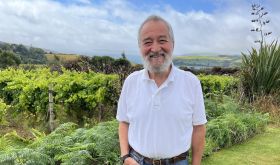
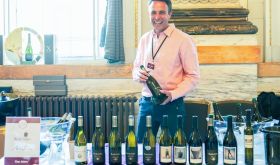
The Szóló winery looks like a love story at first, led by Tímea and her husband, Tamás Éless (pictured above by photographer Ferenc Dancsecs). Tímea was born in Tállya. She inherited a small parcel from her beloved grandmother and then the family started their professional winery in 2013, in order not to waste something that was always of value to the family. Sadly, the main tendency has been that so many other people just got rid and started a more comfortable life in cities in another profession.

Step by step towards a sustainable environment
The Éless family lives in Budapest, but today they spend most of their time in Tállya and they have three permanent employees. One of them is István Dorogi, from Tarcal, who supervises the vineyards as planned and discussed earlier, but the winemaking process is led by Tímea. They know that the only way to keep people in the region is to appreciate their work, so they also always employ the same four women for seasonal work (it is essential how gently they handle the fruit).
Their employees have the chance to receive training in horticulture (‘gentle’ pruning, plant protection, etc), while one of them is currently learning to drive and the winery is helping with the costs. All the colleagues, the local cooper, workers and the building contractor are invited to an annual winter party to celebrate the cooperation together and to share the community-building experience. The plan is to organise more subsequent events, to keep not just the winery sustainable, but also the whole community around the cellar as much as is possible (with tastings, workshops, concerts for locals, and so on). Most of their plans are supported financially from their regular jobs, but they hope it will help improve the village of Tállya and ultimately the whole Tokaj region.
They are leaving behind their past as a garage winery and now they’re building their brand- new, state-of-the-art winery and the plan is to use as much renewable energy as possible (solar panels, geothermal heat exchange for controlling tanks, rainwater tanks, etc). The building is mostly underground, so they will use gravity to rack and transfer must and wine.
Szóló is one of the most innovative boutique wineries in Hungary, with ceramic eggs, different barrel experiments, petnat, even completely natural winemaking trials, and the first edition of buried amphora wines is also on the way. They’ve been ageing a szamorodni in a barrel under flor since 2016, and in the best vintages they of course also make gorgeous aszú wines.
They formerly used heavy bottles, but as they became more eco-conscious, their bottles have got much lighter. Boxes are made of recycled paper and so is even the label of their natural wines. They do not use screwcaps and tin foil, only cork and beeswax as a closure and they are figuring out how to recycle bottles in the near future. They deliver most of their wines personally in Budapest (or by post to all over Hungary), but they plan to buy an electric car for delivering.
On their way to biodynamics
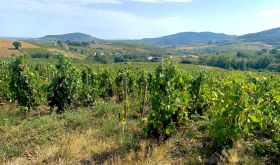
The whole estate is 10 hectares. Since the very beginning (2013), they’ve been working with organic methods in the historical vineyards of Tállya (Dukát, Tökösmály, Bohomáj, Bártfai, Sipos, Palota, Hetény, Ötvenhold and Vilmány). The vineyards are close to each other, but they plan to buy an electric tractor soon. They avoid mechanical processes in the vineyards as much as possible. There’s no ploughing or ground handling at all, they only scythe the natural vegetation between the rows and plan to ‘employ’ some sheep soon. They buy manure from a local shepherd for soil improvement, and the marc of the grapes is also recycled in the vineyard, like for mulching after pruning. They use a tying machine with paper-covered metal vine ties (100% natural ties are useless in Tokaj), but rely mostly on manual labour, either outdoor or indoor. Naturally, they do not use weed killer and they try to keep biodiversity as much in the vegetation as possible. The local flora is really diverse, but where they have only grass they plant the Fabaceae species to cover the soil (that keeps more water and produces nitrogen).
Two meteorological devices were installed in two parts of the estate, so that they can react swiftly to protect the plantation, but in gentler ways (without chemicals). They spray only sulphur, a minimum of copper, orange oil and biodynamic preparations (only four times a year). From this year, they’re following an only biodynamic approach that first of all ‘makes us spend much more time in the vineyard to observe and work, actually as much time as possible.’ – as they say. They try to be like ‘good directors’ of the vintage in order to channel the energies of nature in the right direction. For them it is an endless learning process, but they feel that it is good for everything that is local (probably for Botrytis cinerea too). Huge advantages of Tállya are the constant ‘Kassi-wind’ that refreshes the air frequently in vineyards and that (compared to other parts of the Tokaj region) the soil of Tállya was never polluted that much by chemicals, which makes it easier to get back to basics, to those ancient values.
Extreme vintages weren’t rare decades ago, either. But as the climate changes, they can see that the whole complex ecosystem is confused and that the grapes are reacting to that, but with natural and sustainable methods, confusing factors can be reduced and that could be an effective solution, too. But still the biggest issue is that in contiguous vineyards, organic and biodynamic cultivation can only work effectively when all the producers believe in it as a united community. Every wine region on the planet can function only with an effective community, which has the same intentions. Abandoned vineyards (surrounded by forests for example) are much easier to handle in a different way, but there must be some innovative wineries that carry the torch and take those first steps in a more sustainable direction. In Tállya, Szóló is one of the few promising examples. Subsequently, the way local communities react and then work in common will reveal everything.
(Their controlling organizations are Biokontroll Hungary, Demeter International, and Hungarian Biodynamic Non-profit Association).