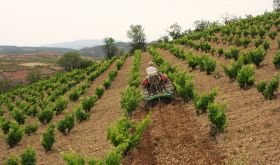
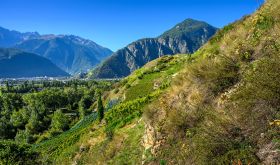
This is the tale of Santa Rosa de Lavaderos, a century-old vineyard in Chile's Maule Valley. It's a love story about viticulture, winemaking, environmental stewardship, and love.
Santa Rosa de Lavaderos lies about 270 kilometres south of Santiago de Chile, in the Maule Region. This is the location, which is owned by my wife's parents, where I fell in love with my wife, and with these ancestral vineyards.
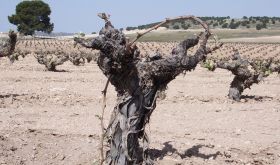
Two hectares of Cabernet Sauvignon and around seven hectares of Pais were able to survive by being in the right place at the right moment at all times. According to the Chilean Agronomical Agency (SAG), these vines were planted before 1900.
My wife’s parents were Oscar Bustamante and Modesta Urcelay. An intellectual couple who enjoyed reading and listening to classical music on vinyl records. They had a close connection to the earth because they were born and raised on farms. The Chilean administration of President Carlos Ibañez chose them in 1952 as cultural attachés to Her Majesty Elizabeth’s government, because of their considerable understanding of Chilean culture.
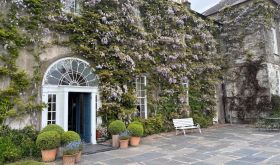
In 1939, they bought Santa Rosa de Lavaderos, an isolated place bordering the northern shores of the Maule River, from a family with a long wine tradition. There was no electricity, no phones, and no paved roads. Maule, like Itata today, was lagging behind the wine trends in Santiago. Remote and entrenched in tradition. The estate is a sprawling colonial adobe hacienda built before 1870, with wide corridors, high ceilings, and thick adobe white-washed walls that have withstood several eight-point-five Richter scale earthquakes. This is the place where the Bustamantes nurtured their family and a tradition around wine started.
Oscar used to gather with his collaborators every evening to review the work done and organize the activities for the following days, in the corridors overlooking the beautiful estate where the Incas cleaned gold from the adjacent Chivato mine (hence the name “Lavaderos”, which refers to an ancient Inca gold washing facility in Santa Rosa).

Bottom picture: the corridor of the old adobe hacienda where Oscar met with his collaborators overlooking the park where the gold was washed
The Bustamantes were conservative and did not believe in the use of agrochemicals. Therefore, organic procedures were in use before they became fashionable. Perhaps, this is the reason the land is healthy to date.

Oscar instilled in his team a premium on biodiversity. He believed, that with more biodiversity pests and illnesses would have a tougher time gaining control. In the soil, worms and organic matter abound. There are a lot of birds. The vines have green covers among the vines. There are cherry and plum orchards, as well as unique natural woodlands. Tomatoes and other annual crops.
The Bustamantes were also very concerned about the well-being of their helpers and so a small community was born around Santa Rosa de Lavaderos. We can say that they were pioneers in Fair Trade practices.
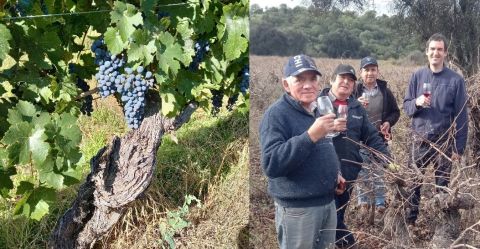
Decades ago, the grape harvest was sold to Chile's major wineries. The constant interaction with all these big wineries filled Santa Rosa de Lavaderos and its community with knowledge about viticulture and a deeper love for what they had in this corner of the Maule region. Key among the staff and families of the Santa Rosa de Lavaderos community is our farm manager, Martin Figueroa. He was raised in this community and has been part of our team for decades. A born leader, an intelligent man, sought knowledge from the staff that Concha y Toro, Miguel Torres, Santa Rita and Valdivieso sent to supervise the grapes they bought.
Jorge Coderch, owner of Viña Valdivieso, better known as Mr. Caballo Loco or Mr. Crazy Horse, often visited our vineyards before harvest time in his Land Rover. Caballo Loco was one of Chile's first high-end wines. I take this as yet another indicator of the wine quality generated by these century-old vines.
By way of background, the Pais, or Mission, or Criolla grapes made their way to America with the church from Spain back in the middle of the XVI century. Nowadays, there are roughly 8,000 hectares in Chile. It is a marvellous all-around grape. It is good for winemaking as well as being a nice table grape. It is big with relatively thin skin and small pips, with lots of sweet pulp well balanced with tartaric acid. It is also extremely hardy and grateful, withstanding droughts and all kinds of pests. They have the ability to dig deep roots in well-drained colluvial soils.
Cabernet Sauvignon arrived in Chile with other Bordeaux varietals during the mid-1850’s, owing to the strong French influence and the prestige of Bordeaux wines. The majority were planted in the Maipo Valley, but a few made their way to the Maule Valley, which is the largest wine grape region in Chile. With the arrival of the French varietals, the Pais vineyards started to be grubbed and became an afterthought.
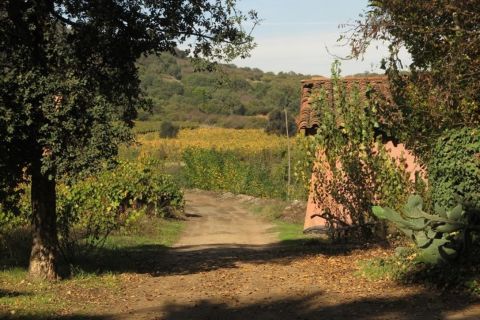
Fortunately, the Bustamantes decided to keep the old vineyards, helped in part by the isolation provided by the Maule, and because they provided them with so much energy and affection, and they were part of our history and tradition, even if they were not the most profitable crop.
The Santa Rosa de Lavaderos vineyards survived through luck and expert advice. Alejandro Parot, a family relative and wine trader who studied winemaking in Dijon with Miguel Torres, and motivated him to buy vineyards in Chile in 1979; stressed at every social event we met, that we should never grub the old Pais and Cabernet Sauvignon vineyards. Time shows that he was correct!
Santa Rosa de Lavaderos is blessed with an ideal microclimate. A moderate Mediterranean climate with rainy winters and springs, but no snow or frosts, and long dry summers and autumns. The Pacific provides a nice cool breeze every evening. Hot days and cold nights, during the grape growing season, provide a high diurnal range that helps the slow maturation of the grapes to concentrate the fruit flavours.
With so much history on our shoulders, our family began three years ago to consider what steps should be taken to keep the Santa Rosa de Lavaderos vineyard assets. We invited three friends who worked as executives at the Carmen and Santa Rita wineries to visit our farm. They were enthralled by the ancestral vineyards. During lunch, I told them that our neighbours had suggested uprooting the vines to replace them with more profitable cherry orchards. With a glass of wine in their hands, they leapt from their chairs and persuaded us to keep the vines.
Viña Carmen teamed with us, assigning their chief winemaker, Emily Faulconer. It is a wise decision, with our first Cabernet Sauvignon coming to the market this year.
I was not looking forward to taste wines made from cherries!
The wine making tradition lives on today with the younger generations making their own wines.
I travelled to London for my DipWSET, which gave me valuable insights into approaching the wine business. My son Paul, an oenologist, has lots of hands-on experience. The first results were promising, with the wines awarded 92 points by the most widely read wine guide in Chile. A good Beaujolais Cru reminds us of our Pais style.
The limited edition is distributed under the Santa Rosa de Lavaderos and Kod Kod labels. They are exported to Crescent Imports, Inc in New York and are sold to our friends in Chile.
We are thrilled to share these Pais and Cabernet Sauvignon wines with wine lovers all over the world, made from non-grafted vineyards that have survived since the Belle Époque!
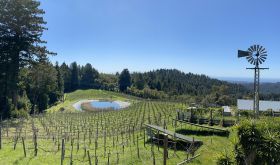
All the photos were taken by Peter McRostie. The photo at the top of the article is of Santa Rosa de Lavaderos old vineyards on slanting eastern-facing slopes with the Maule River at the back.