Barb Wild, DipWSET and aka Good Wine Gal, is a Vancouver, BC based wine professional who tastes, teaches and travels for wine. Barb is an educator and social media personality, born and raised in Western Canada and currently living in wine country, Kelowna. You can find Barb on Facebook, Instagam, YouTube and her website at https://www.goodwinegal.ca. Thank you so much for reading.
Radishes, Peas and Hairy Vetch
Wild cover crops are thriving in times of heat, drought, smoke and fire in the Okanagan Valley of British Columbia in Canada. Regenerative farming is flourishing in this wine region, where the young viticulturalist at Tantalus Vineyards is creating one of the valley’s success stories.
“I want you to act as if the house is on fire, because it is.” - Greta Thunberg
The Okanagan Valley air is cool and fresh. The forecast on this June day in Kelowna, British Columbia (B.C.), is calling for more unseasonably cold, rainy weather with the threat of flooding as glacier runoff has filled the lake to capacity. By definition this region has cool climate viticulture and vinification that rely on a warm May. Kelowna, at 350 meters of elevation, is the epicenter of a 180-kilometer-long valley at the northern limit where vitis vinifera can grow. Viticulture here faces a short, hot growing season with extra daylight hours (10 percent more than Napa) bringing high temperatures during the long summer days followed by cooling in the evening – the diurnal shift that helps retain acidity in the grapes, giving wines the signature freshness for which this region is known. With 1,323 Growing Degree Days on average, growers favor white and light red grape varieties like Pinot Gris, Chardonnay, Riesling and Pinot Noir. Winemakers make dry, still and sparkling wines, although ice wine can be made given the right winter conditions.
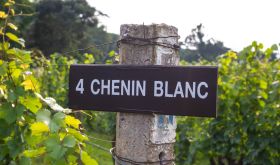
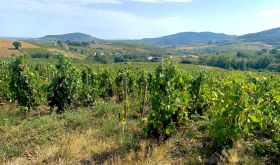
At Tantalus Vineyards [pictured above], just south of Kelowna above the eastern shore of Lake Okanagan, the first Mosel-clone Riesling vines were planted in 1978. This is home to Kiwi winemaker Dave Paterson and the most coveted old-vines Riesling in the valley, along with a growing reputation for Pinot Noir and Chardonnay. Not only are these wines respected for aromatic quality, fresh acidity, and age-ability but also for the distinctive artist labels by carver Dempsey Bob, a renowned artist from the Tahtlan-Tlingit, one of Canada’s First Nations. The tasting room also inspires fans, with uninterrupted views of Lake Okanagan. It’s a place I first discovered in September of 2015, with my WSET Diploma cohort visit as the viticulture and vinification module loomed. Vine rows were neatly manicured: short-trimmed grass with plenty of soil exposed and traditional in appearance. Since then, Tantalus has taken a sharp turn away from conventional farming methods and reliance on chemical sprays, tilling and low cover-crop towards farming in greater harmony with nature. Noticeably, the cover crops have gone from tame to wild! What a difference a few years make.
Despite best efforts in the vineyard and the shift towards regenerative and sustainable practices, there is a devil at the door. Last year, 2021, marked one of the worst forest fire seasons on record in British Columbia. Around 8,700 square kilometres burned, with 140 fires significantly close to communities. There is no doubt that global warming is affecting our entire region, with three of the worst fire seasons recorded in the last five years. Not only did the fire season start early in 2021, but on June 26th a so-called heat dome settled over the Pacific Northwest for four days, bringing the hottest temperatures ever recorded: 49.6 Celsius. That was in Lytton, B.C., a three hour drive north and west of Kelowna—the town disappeared in 20 minutes, leaving two residents dead and the remainder of the community homeless. The heat was the accelerant to an already drought-affected area. As fires raged, orange-tinged smoke blanketed the valley and all of wine country had shockingly poor air quality. People with respiratory ailments were advised to stay indoors. Vine leaves didn’t have a choice. Vines shut down at 35 Celsius, but when heat is protracted, vines die. In 2021, the damage was extensive and costly.
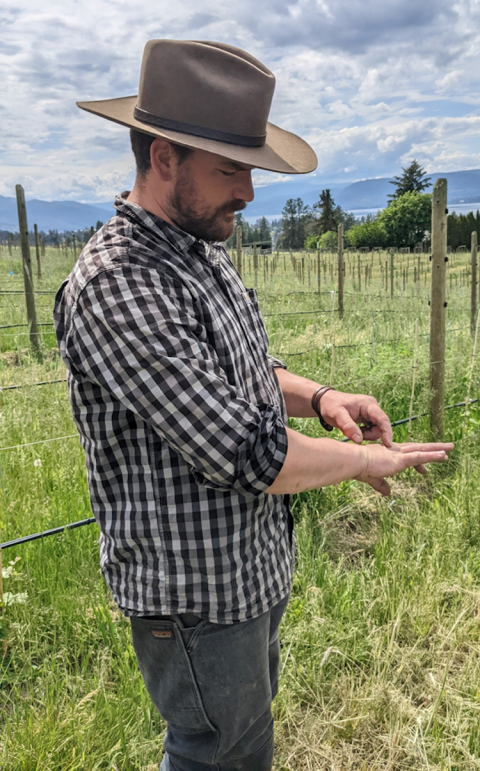
Today, there is a healthy hum of crickets and chirping ground birds at Tantalus Vineyards. The use of regenerative farming methods to enhance soil life and sequester carbon is proving effective as a long-term strategy of climate resistance. German-born, Geisenheim and UC Davis-trained Felix Egerer is the viticulturalist at Tantalus. He carries his solid frame under a broad brimmed felt hat, with a pair of shears in his back pocket. He’s a force. Although Egerer’s original passion was winemaking, his talents have turned him into the “Indiana Jones” of viticulture. In the movie Raiders of the Lost Ark, research, science and observation played important roles in the hero’s survival. There is a parallel here. Regenerative farming sits in the sweet spot between sustainable, organic and biodynamic viticulture. Science-smart and inquisitive, Felix spends time researching and testing cover crop seed mixes, monitoring the vines and using his knowledge to make informed decisions in support of vineyard health. Egerer champions regenerative farming in the valley, giving witness to nature’s ability to build a healthier, holistic system in just two years.
The tenets of regenerative farming in the Okanagan Valley according to Egerer, our own Indiana Jones, are:
- Keep soils covered to hold in moisture, protect from the elements
- Keep the ground temperature cooler: an essential strategy in hot summers
- Disturb the soils as little as possible
- Use plants and worms to create pathways for moisture and air instead of tilling
- Keep growing roots in the ground as long as possible
- Avoid the use of synthetic chemicals and fertilizers
- Integrate animals where possible
- Farm within your context: do not plant Cabernet Sauvignon where grapes suited to a cool climate will grow more readily
At Tantalus, the only “essence” of animal comes from manure brought in from a local horse farm (part of the on-farm compost process), and organic cow manure that is converted to the biodynamic preparation BD500. While Tantalus is not certified organic, it follows organic protocols. Tantalus is, however, certified Salmon Safe, a Pacific Northwest designation that aims to keep urban agricultural watersheds clean to protect fish stocks. Tantalus has not used chemicals in at least a decade. It was also one the first estate wineries to become a certified member of Sustainable Winegrowing British Columbia (SWBC) in 2021.
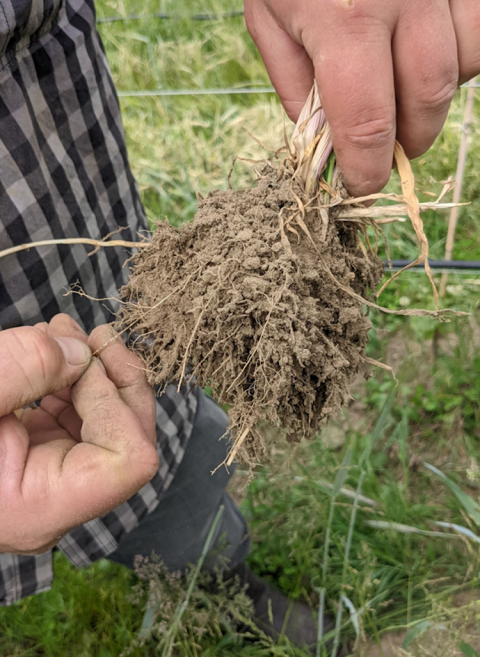
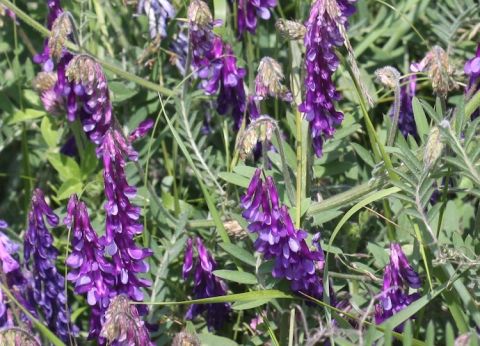
Egerer’s passion for agro-ecology and his attention to detail—from selecting seeds to match the desired growing conditions to monitoring the vines daily—has had a dramatic effect in the transformed appearance of the vineyard, from neat and trim to dense and wild. Legumes and vegetables grow green and tall in the vine rows where cover crops nourish the underground food web that sustains plants, insects and microbes. Egerer experiments with annuals, including winter cereal rye, winter peas, and hairy vetch (a plant that blooms with a purple flower, fixes nitrogen and attracts insects), which he planted before harvest 2021, using a no-till seed drill. Radishes and turnips were added into the mix, even though they can’t survive winter freeze. Egerer points out, “The beauty of radishes is that they grow fast in fall and scavenge any available nutrients in the soil and store them in their tubers. As it warms up in spring, the radishes turn to rot, feeding more nutrition back into the soil.” Egerer pulls up a cluster of tall cereal rye and brushes the roots gently. “Watch this”, he says, as he wraps his index finger and thumb around what looks like a worm and pulls down. He exposes a fine hair-like strand. “This is the root. This coating [rhizosheath], a complex mix of microbes, sugars, and soil particles, indicates a healthy functioning food web.” I lean in and instantly whiff aromas of sweet, damp earth—the smells of my childhood summers in grandma’s garden.
According to Egerer, healthy plants grown on healthy soils produce complex proteins that insects and disease cannot digest. Pests and diseases in the vineyard are nature’s cleanup crew. Mechanisms for remediation and recovery exist, but as long as tilling, monocultures, rampant herbicide use and soil exposure continue, nothing can sustain the soil. Financial benefits from working with nature are also available. “We didn't lose anything during the heat spike last year. In fact, it was surprising how resilient these vines were,” Egerer says.
Cover crops alone can’t make a vineyard system regenerative nor climate-change-proof. Sweet peas, cereal rye and hairy vetch between the vine rows, however, build a kingdom of microbial life, capture and retain moisture and sequester carbon giving resilience to vineyards in times of stress—especially summer heat, drought, fires and smoke. Egerer will continue to act like the house is on fire in search of solutions that will benefit not only the vineyards, but also the farming community he lives in here in the Okanagan. Having only had a couple of years testing these methods in the vineyard, our Indiana Jones says, “We still have a ways to go!” The treasure he’s crusading to save is bigger than wine, more precious than an artifact: earth itself.
Final picture of hairy vetch in bloom is by Felix Egerer. All other pictures are the author's own.