Robert Stanier writes the Reverend Robert Stanier is a vicar in Surbiton, south-west London. As a sideline, he writes and updates cotesdethonguewines.co.uk, a website devoted to the wines of the Cotes de Thongue, a small wine zone just south of St Chinian. He is married with three children, none of whom are interested in wine.
Aramon – one to forget?
Has there ever been a grape as unloved as aramon? The first sentence in its entry in the Oxford Companion to Wine merely expresses regret that it ever existed: ‘aramon is happily a remnant of French viticultural history.’ In fact, so close is it today to extinction that most people reading this will never have drunk a single glass. So let me put the case for the defence, even if it means taking a journey into a world that will never now exist.
But first, a little history. In the 19th Century, aramon dominated the Languedoc, prized for the prodigious quantity of wine that it could produce for every vine that was planted. Disappointingly transparent in colour and naturally low in alcohol, that did not matter so much when it was being hoovered up by the industrial workers of France’s north. What mattered was its productivity. If a consumer should quibble about the colour or the lack of alcohol, as they increasingly did as the 20th Century progressed, a producer could always combine it with some of the darker-coloured wine being shipped in from north Africa and still send it on to be sold successfully.
This equation balanced until Algeria got its independence in 1962. An inadvertent consequence of this colonial overthrow was that aramon could no longer be blended away with cheap, north African product, and it was exposed for its essence; a pale weakling of a red wine in comparison with almost anything else.
Amid the general economic meltdown across the Midi in the Sixties and Seventies, vigneron after vigneron tore up their aramon vines and replaced them with cabernet, merlot, grenache, syrah, carignan, indeed anything but aramon.
Over several decades, the Languedoc gradually rebuilt its wine economy and managed to rebrand itself first as a dependable provider of cheap but sturdy red wines, and then a few top producers managed to add a layer of premium complexity, for those consumers with enough sense of adventure. But aramon did not feature in either story.
Come the 2020s, however, and the wine world is turning against Languedoc’s reds. Where once, the easy frequency of 14%+ alcohol in its wines was the region’s attractive differential, it is now seen as a weakness. Wine lovers are seeking moderation and balance, and the Languedoc’s grenache, syrah or merlot based blends are not able to deliver it. To compensate, vignerons are turning to a host of ever more ingenious de-alcoholisation techniques to try to deliver what the consumer wants.
And so to a visit I made in 2022 to the Alauze family domaine outside the village of Magalas, ten miles north of Béziers – Domaine Lou Belvestit – where they poured out their range; among them was a red wine barely deeper in colour than many a rosé, but that nevertheless filled my nose with hints of garrigue and my mouth with berry fruits. 100% pure aramon. Lunch was started and from them all, my hand kept finding itself pouring this bottle into my glass, at a refreshing 11% abv.
At that time ignorant of its history, I asked in bafflement, “Why is this not grown anywhere else?”
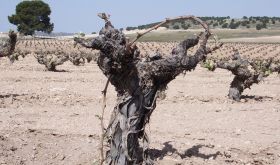
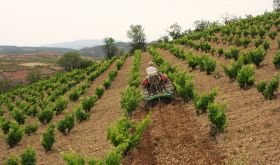
“The problem with aramon,” explained Monsieur Alauze with a degree of wistfulness, “is that it takes eighty years until it produces anything interesting. It is just that my father respected my grandfather so much that he kept these vines when the others pulled them up,” and he poured me another glass. “And after eighty years… you can taste for yourself.” After lunch, touring his vineyards, he showed me the gnarled aramon gobelets planted by his grandfather, still producing vigorously, in fact now in their pomp. Yet Domaine Lou Belvestit’s aramon remains the only aramon I have ever tasted.
In my mind’s eye, since then, I have envisaged a world that might have been, for just ten miles up the road, in Pinet, aramon finds a white equivalent: in 2000, what was picpoul but an anonymous, lemony coastal curiosity drunk only by the locals? 25 years and a triumphant marketing campaign later, Picpoul de Pinet is omnipresent, providing the second least expensive white wine on the list of nearly every midmarket restaurant in the United Kingdom. No one is claiming that picpoul makes truly great wine, but it has its place.
I am certain that given more old aramon vines of the quality you find at Domaine Lou Belvestit, bottles of aramon would be finding their way to the same consumers who now buy Picpoul de Pinet. Had the Midi’s vignerons not been lured five decades ago to the profitability of merlot, cabernet and syrah and scrubbed up their aramon, they would now be providing the world’s favourite party red wine, and making an excellent living out of it. Today’s wine world scratches its head in search of a natural, fruity red that is inherently low in alcohol, and has flavour that satisfies but does not overwhelm. And the answer is there, on a slope outside Magalas; but with an eighty year lead-time before its flavour will get interesting, no one will be planting aramon again, any time soon.
In a sense, aramon is a remnant, a once dominant variety, clinging on in a handful of eccentric properties in the south of France; but really aramon is something more than that, for if they could only taste old-vine aramon, today’s drinkers would cherish it. Aramon is the next big thing that will never actually happen; the solution to the wine world’s dilemma that exists but not in sufficient quantity to make any difference; a future that could have been but in the end will never come to pass.
Photo caption: 'Roland Alauze's aramon gobelet'.