
We’ve encountered many of the most famous volcanic terroirs for wine in Europe in our coverage so far of the 2026 Volcanic Wine Awards, but there are three more places that tend to run under the radar for great wines from volcanic soils: France, Germany and Armenia.
France
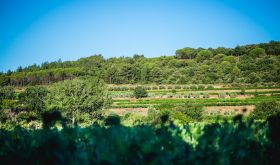
Volcanoes in France? They are old but numerous – around 80 – lined up in a north–south string called the Chaîne des Puys along the Limagne fault in the Auvergne. The fault is part of the West European Rift, which cracked open after the Alps were formed, turning the earth inside out in places; the geology shows the rifts so clearly that the area has been named a UNESCO World Heritage site. The region had been quite famous for its wines until phylloxera devastated the vineyards in the early 1900s, excelling especially in Pinot Noir; today, it’s Gamay that forms the majority of the region’s 400 ha (988 acres) of vineyards. Planted on the eastern slopes of the volcano chain at about 350–600 m (c 1,150–1,970 ft) in elevation, the vineyards sit on extremely varied soils, not all of them volcanic. The wines we tasted, however, were, as is clear from the names ‘Basalte’ and ‘Les Volcans’ in those from Desprat St-Verny. The Pierre Goigoux Les Amandiers comes from one of the region’s five crus, Châteaugay, and is grown in what’s called pépérite, a volcanic rock made of both igneous and sedimentary components. All have in common a cherry juiciness with bright, mouth-watering acidity and a peppery spice.
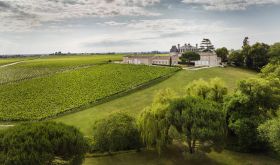
There is another, smaller volcanic area in France, and that’s in Alsace: the Grand Cru Rangen, the highest and steepest of all Alsace’s crus, sits on a hillside of volcanic soils created by eruptions some 300 million years ago. The entire cru is just 22.13 ha (54.68 acres); while volcanic rocks can be found in other areas, none has the concentration of them that Rangen does. The combination of dark, heat-absorbing stones, ample sun and high elevation (320–450 m/1,050–1,476 ft) allows for long, slow and ample ripening, which, in turn, makes for ripe, powerful wines. This is overt in the two Zind-Humbrecht wines we tasted that were grown on Rangen – a Riesling and a Pinot Gris – both heady in their combination of concentration and rocketing acidity, with a smoky warmth adding to the richness.
Germany
Like Alsace’s Rangen hillside, Germany’s Ürziger Würzgarten vineyard stands out as the only predominantly volcanic vineyard among those that line the Mosel. This aberration was created some 250 million years ago, when a tectonic rumbling on the fault line beneath the Wittlisch Depression rearranged the earth’s layers, letting magma escape to the surface. Some reached Ürzig, on the edge of the fault line, the magma mixing with the more common slate and sandstone. In the Würzgarten, a VDP Grosse Lage (grand cru) vineyard rising above the River Mosel to some 110–220 m (361–722 ft) in elevation, the resulting soils are so high in iron that they are deep red. Riesling from this 53-ha (131-acre) vineyard tends to be ripe, even slightly tropical in its fruitiness, with delicate saline and herbal notes. (Contrary to oft-repeated wisdom, according to the VDP ‘Würzgarten’, which means spice garden, refers not to the taste of its wines but to the medieval custom of growing herbs with which to spice wines.)
Armenia
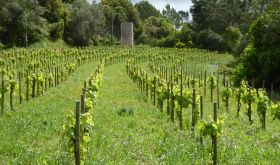
Armenia sits on the fault line of the Arabian and Eurasian tectonic plates, a line punctuated by hundreds of volcanoes, including Aragats, the highest of them all, and Mount Ararat, the most famous. Between the two is the Armavir Valley, a high plain sitting at 900–1,000 m (c 2,950–3,280 ft) in elevation, where Eduardo Eurnekian founded Karas Wines in 2003. The wines we tasted for the competition are made from Areni, an indigenous variety that has long been accustomed to the region’s stony basaltic soils.
In our tastings for the Volcanic Wine Awards, all the wines were presented blind, grouped by country, to a panel of wine experts headed by John Szabo MS, our own Sam Cole-Johnson or me. Here are the wines from Armenia, France and Germany the panels deemed medal-worthy or worth an honourable mention.
Gold
Desprat St-Verny, 348 Gamay 2023 Côtes d’Auvergne
Dr Loosen, Ürziger Würzgarten Unterst Pichter Réserve Riesling Grosses Gewächs 2018 Mosel
Wolfberger, Rangen Riesling 2021 Alsace Grand Cru
Zind-Humbrecht, Rangen de Thann Clos St Urbain Riesling 2022 Alsace Grand Cru
Silver
Desprat St-Verny, Basalte Gamay 2023 Côtes d’Auvergne
Desprat St-Verny, Les Volcans 2023 Côtes d’Auvergne
Karas Areni 2024 Armenia
Pierre Goigoux, Les Amandiers Gamay 2024 Côtes d’Auvergne, Châteaugay
Zind-Humbrecht, Rangen de Thann Clos St Urbain Pinot Gris 2022 Alsace Grand Cru
Bronze
Desprat St-Verny, L’Impromptu Gamay 2022 Côtes d’Auvergne
Dr Lippold, Ürziger Würzgarten Weltersberg Riesling Kabinett 2019 Mosel
Honourable mention
Karas, Reserve 2023 Armenia
Find tasting notes for all these wines in our tasting noted database, and come back next week for volcanic wines from the Americas.