
Volcanoes loom large in Italy’s history and culture (the word ‘volcano’ in fact comes from Vulcano, one of the seven islands in the Aeolian archipelago); Vesuvius is its most famous, having buried the city of Pompeii back in 79 CE and blown many times since then (the last major eruption was in 1944). But there are many more, tracing the western side of the boot all the way to its tip and over to Sicily, created by the collision of the African and Eurasian tectonic plates. The same tectonic movement that created both the Alps and Italy’s Apennines also created rifts for the molten liquids in the mantle to escape, finding their way, at different times, to the surface.

Wine wise, the volcanoes also pinpoint some of Italy’s top wine regions. In our tastings for the Volcanic Wine Awards, we didn’t taste wines from every volcanic complex in the country, but we did cover many of the most important.
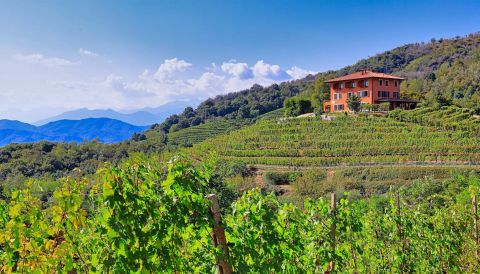
Take, for example, Soave, which provided a vivid example of the difference volcanic soils can make. Much of Soave is unremarkable in both landscape and in wine – nearly half of the appellation is planted on the plains. But head north-east of the town of Soave and you’ll climb into the jagged basalt-rich hillsides created by long-extinct Miocene-era volcanoes. The Soave produced on these soils is a clear step up.

Wines such as Inama’s I Palschi Foscarino – from an area defined by three volcanic cones (Foscarinetto, 282 m; Boccara, 292 m; and Monte Foscarino, 295 m) or Dal Cero’s, from a vineyard between the cones of Calvarina and Crocetta, almost smoulder in the glass with both fruit and powerful structure. These are no pushover whites; these are whites made for the cellar (as Inama’s 2016 Vintage Collection attests).
Farther south, most of the attention in Tuscany’s Maremma is on the coast, but head inland to Pitigliano and you’ll be on the western end of the Monti Vulsini volcanic district, which extends into Lazio. The town in fact is built into the top of a cliff made of sheer volcanic tuff – a clever defensive move by the Etruscans who first settled here. At Sassotondo, which sits within easy eyesight of the town, they’ve found these soils to work well for Ciliegiolo, giving the variety more depth of flavour and concentration than is typical in other parts of Tuscany.
Volcanically speaking, things get really exciting farther south, along the volcanic arc of Campania, from Vesuvio to Campi Flegrei across the water to Ischia. These volcanoes are, in volcano parlance, quiescent, but likely enough to erupt that the Istituto Nazionale di Geofisica e Volcanologia monitors them 24/7.
The attraction of living and working on these slopes has outweighed the danger for millions of people over thousands of years; this is, after all, the land the Greeks christened Oenotria. Despite the significant risk of another eruption, there are still winegrowers farming vines at its base for Lacryma Christi whites and reds, and others farming the rare Catalanesca on the slopes of the very nearby Monte Somma, part of the Vesuvius volcano complex.
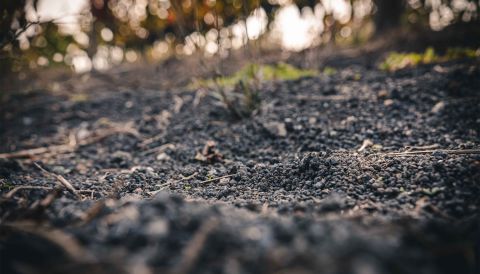
A little further south, between Vesuvius to the north and the Tyrrhenian Sea, the volcanic hills of Tramonti rise on the Costa d’Amalfi, where grapes such as Falanghina, Ginestra and Pepella make compelling whites and Tintore is the resident red. On the land to the north of Vesuvius, toward Campi Flegrei – an active underground supervolcano – Falanghina rules, turning out savoury, earthy white wines.
Head east and you’ll hit Taurasi – not on a volcano, but rich in volcanic soils thanks to Vesuvius’s eruptions. Keep going into the middle of the peninsula and you’re in Basilicata, where Monte Vulture rises to 1,326 m / 4,350 ft. This volcano – the only one of the major volcanoes on the Italian peninsula lying to the east of the Apennine chain – is dormant, its last major eruption 40 million years ago, which makes it less spectacular in appearance than its much newer (and sometimes actively smoking) Campanian neighbours, as well as very complex in a geological sense. What is easy to determine just from tasting, however, is that the volcanic slopes excel with Aglianico, turning out some of the most varied and characterful reds in our tastings. For a deep dive into the region, check out Walter Speller’s two-part story on Vulture’s new identity. Or try any of the Vulture wines listed below.
There are of course many more volcanic wine regions on Sicily and Pantelleria; for details on those wines, see our report on Volcanic island wines from the Volcanic Wine Awards tastings.
As with all our tastings for the Volcanic Wine Awards, the wines below were presented blind, grouped by region, to a panel of wine experts headed by Szabo, our own Sam Cole-Johnson or me. Here are the volcanic wines from mainland Italy that the panels deemed medal-worthy or worth an honourable mention.
Gold
Alois, Trebulanum Riserva 2017 Casavecchia di Pontelatone
Dal Cero, Tenuta Corte Giacobbe 1er Runcata 2017 Soave Superiore
De Falco Vini, Lahar Lacryma Christi Superiore 2023 Vesuvio
Elena Fucci, Titolo 2022 Aglianico del Vulture
Feudi di San Gregorio, Basilisco Sophia 2021 IGT Basilicata
Feudi di San Gregorio, Basilisco Superiore 2019 Aglianico del Vulture
Feudi di San Gregorio, Basilisco Teodosio 2021 Aglianico del Vulture
Feudi di San Gregorio, Piano di Montevergine Riserva 2018 Taurasi
Feudi di San Gregorio, Serpico Aglianico 2018 Irpinia
Inama, I Palchi Foscarino 2022 Soave Classico
Inama, Vintage Collection 2016 Soave Classico
Olivella, Summa 2023 IGP Catalanesca del Monte Somma
Olivella, Vipt Piedirosso 2023 Vesuvio
Poderi ai Valloni, Vigna Cristiana 2016 Boca
Tenuta San Francesco, Per Eva 2024 Costa d’Amalfi Tramonti
Vigneti del Vulture, Piano del Cerro 2021 Aglianico del Vulture
Villa Matilde Aglianico 2021 IGP Campania
Silver
Alois, Michele Alois Caiatì Pallagrello Bianco 2024 IGT Terre del Volturno
Alois, Michele Alois Caulino Falanghina 2024 IGP Campania
Casa Setaro, Don Vincenzo Lacryma Christi Riserva 2021 Vesuvio
Feudi di San Gregorio, Lacryma Christi 2024 Vesuvio
Olivella, Ereo Rosato 2024 Vesuvio
Olivella, Lacrimabianco Lacryma Christi 2024 Vesuvio
Olivella, Katà 2022 IGP Catalanesca del Monte Somma
Re Manfredi 2022 Aglianico del Vulture
Vigneti del Vulture, Pipoli 2024 Aglianico del Vulture
Bronze
Tenuta San Francesco 2024 Costa d’Amalfi Tramonti
Tenuta San Francesco 2021 Costa d’Amalfi Tramonti
Sassotondo, San Lorenzo Ciliegiolo 2021 Maremma Toscana
Honourable mention
Cantine del Notaio, La Firma 2018 Aglianico del Vulture
Villa Matilde Falanghina 2024 IGP Campania
You can find reviews of all the wines tasted, as well as the scores assigned by the JancisRobinson.com editor who tasted the wines (noted in the review). Many of these wines will also be shown at the International Volcanic Wines Conference in NYC on 10 June 2026. Come back next week for another instalment of volcanic wines.