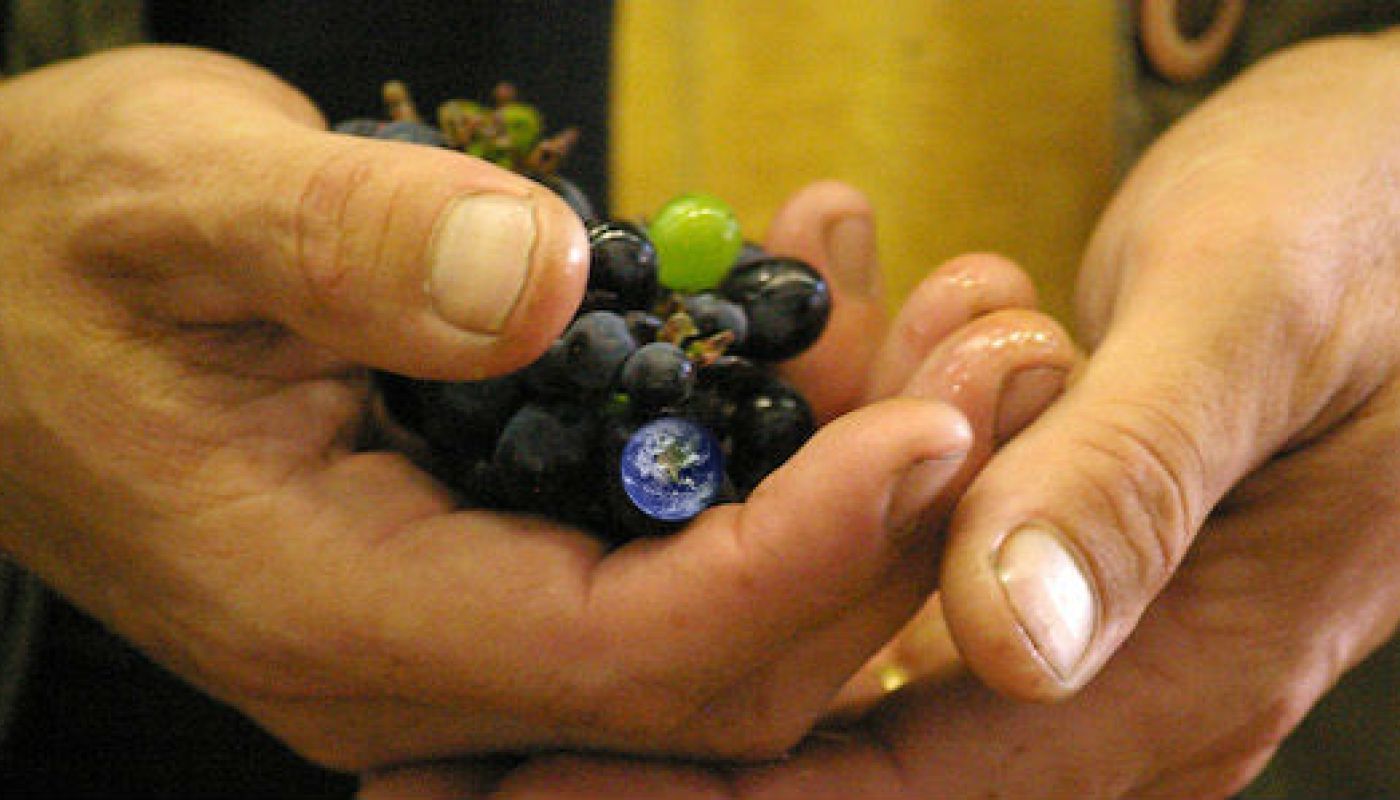
In the infinity of parallel universes, there is a world identical to ours in every way but one: wine doesn’t exist. Imagine, if you dare, a scenario so tasteless. Now imagine that through some shivering, unspeakable horror you are teleported there from our own dimension.
Robert Parker is a small-town lawyer. Riedel make decorative vases. Nobody names their baby Chardonnay. Maybe it’s not such bad place after all.
Anyway, grapevines exist there, as do oak trees and yeasts. All you need do is put them together to become the founder of wine for this poor, deprived populace. Obviously the first thing you do is surreptitiously buy up all the unwanted scrubland around a little backwater called Vosne-Romanée. Then it’s simply a matter of planting.
Or is it? Faced with the opportunity to invent wine from scratch, would you recreate it exactly as we know it in our universe?

For a start, the grapevine is notoriously difficult to work with. The plant itself is plagued with viral and bacterial diseases, while its fruit is highly susceptible to rot. It needs to be grafted onto different rootstocks according to soil conditions and requires a complicated and labour-intensive training system. Then you have to choose from thousands of different varieties, each of which has its own advantages and disadvantages, and on top of all of that, you can harvest only one crop each year (in most places) which leaves you vulnerable to potential devastation from the likes of frost and hail.
Residents of this parallel universe start thinking that maybe you’re not a visionary from another dimension after all, but an escaped lunatic. Suspicions are only increased when you use glass bottles stoppered with cork bark to contain your new invention. Why would any sane person choose a vessel so heavy, inflexible and breakable, and then seal it with an unreliable bung?
Their final proof of your delirium comes when you start describing something called appellations. You explain that this wine stuff is infinitely varied according to where it’s grown. That means that only a handful of locations are capable of creating sublime quality while the other 99% compete with each other for a barely profitable middle ground. This needs to be codified in law, you argue to the men in white coats, to ensure that consumers know exactly what they are getting. Appellations should be named after local place names with no intrinsic meaning, you protest as they pin you to the floor. There must be lengthy, bureaucratic documents imposing all manner of seemingly petty conditions, you scream – but it’s too late, and the sedative knocks you out.

Put like this, wine does indeed sound somewhat eccentric, but to abandon the concept of terroir would be to lose the soul of wine, the very thing that makes it so fascinating. Yet if wine is slightly mad, then the appellation system must be the full mouldy cellar of barrel-fermented insanity. All across the world, decades of compromise and tinkering have resulted in rules that range from quirky to outright bonkers.
The Bordeaux Supérieur appellation, for instance, requires white wines to have at least 17 grams per litre of residual sugar. Champagne has a special dispensation making it the only appellation that doesn’t have to state the words ‘appellation côntrolée’ on the label. When natural winemaker Oliver Cousin printed the word Anjou on his declassified Vin de Table, he was prosecuted by the appellation authorities.
Nor is it just France. There are examples all around the world of appellations prohibiting supposedly poor-quality varieties or obligating a certain ageing period in oak or requiring pagan chants to be recited during bottling. Probably.
So if we want to protect terroir, what would Appellation Utopia Côntrolée be like? Ideally, the boundaries would be defined strictly by soil type, although in reality that would result in so many subdivisions as to be impracticable. Deciding grape variety permissions should be easier, because surely they all have potential for greatness these days, so there should be no restrictions. Apart from hybrids, perhaps.
Okay, maybe we need to form a panel of local winemakers to determine this sort of thing. They could also be the tasting panel to agree a representative style for the appellation – although reaching consensus among rival producers is frankly impossible. Besides, we wouldn't want to restrict innovation. Perhaps some independent adjudicators should be brought in. But now there’s the question of how to fund this increasingly bloated operation ...
It may be exasperating, but when the alternative is no wine at all, then perhaps the madness of our own vinous universe isn't so bad.