Miguel A Torres became one of the most famous wine producers in the world when the 1970 Cabernet Sauvignon he made in his native Penedès in Barcelona’s hinterland triumphed over the likes of Ch La Mission Haut-Brion 1961 and Ch Latour 1970 in the 1979 Gault Millau Wine Olympics. (Some think the French gastronomic magazine organised this international taste-off in an attempt to re-establish French supremacy after California’s triumph in the so-called Judgment of Paris three years earlier. If so, they failed.)
At that time Torres was lauded for his cosmopolitan outlook and for following in the footsteps of the much smaller producer Jean León by importing well-known international grape varieties such as Cabernet and Chardonnay into Penedès.
But 10 years later, in a dramatic volte-face, he began a quest to find and rescue local Catalan grape varieties from various points on the spectrum between obscurity and near-extinction. The motivation was not just prescience – indigenous varieties are much more fashionable than the same-old at the moment – but also concern about climate change and sustainability, the theory being that vines with a long history in a region are likely to be particularly well acclimated to it.
This vine recovery programme, now involving his son Miguel Torres Maczassek, who returned from the company’s Chilean operation four years ago, has been an extremely long-term project, embarked upon in the late 1980s and dependent on the simple expedient of putting ads in the local press asking people to contact them if they came across unidentified grape varieties.
As a result, the Torres bodega in Vilafranca del Penedès received hundreds of telephone calls. Torres worked on samples of vine fragments in conjunction with the University of Montpellier and its DNA analysing equipment and in about 50 instances, the mystery vines turned out to be genuinely mysterious.
The next step was to treat the plant material to ensure it was entirely free of the viruses that plague so many grapevines, then to multiply it in vitro before planting the baby vines in their greenhouse nursery, grafting the cuttings on to rootstocks resistant to the phylloxera louse, the scourge of grapevines throughout the world, before planting out blocks of each variety that are big enough to yield grapes from which several hundred litres of a sample wine could be made. Torres now have a specific microvinification cellar where Miguel’s sister Mireia is in charge of research.
Tasting and analysing all 50 of these samples was a painstaking task, and disappointing in most cases. The varieties may have been rare and unequivocally Catalan, but very few of them yielded wine of any real interest. In the end, however, the Torres family’s patient researches have managed to identify and rescue six distinct and promising indigenous grape varieties.
The first proper, 2015, vintage of varietal versions of five of them were bottled earlier this year. A varietal 2014 Garró had already been bottled because this vine variety was identified as early as 1990 and has been part of the blend of Torres’ spicy, complex Grans Muralles blend of local grapes since its first vintage in 1996.
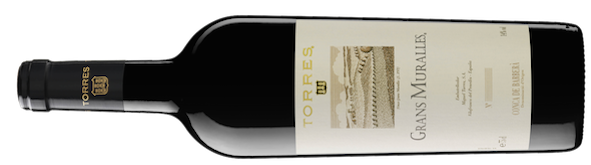
One problem was what to call these ‘new old’ varieties since they were by definition anonymous. Torres had to get creative with the names, seeking inspiration from the villages, hills and fields where they were found. Garró, for example, was named after El Garraf on the Catalan coast where Torres originally found it, although they have now established that it does much better on the slate soils of the much higher Conca de Barberà region well inland.
One of the most promising new finds is a white wine grape they call Forcada. They have fewer than three hectares (7 acres) planted, as high as 500 m (1,640 ft) in the Alt Penedès near the vines that produce Torres’ Sauvignon Blanc sold as Fransola. It has the disadvantage of being very late ripening, a whole month after Chardonnay, for instance. But it has great extract, acidity and firm flavours somewhere between peach and leafy. I could easily imagine it making fine base wine for classic sparkling wine such as the vast amount of Cava that is produced around Torres HQ in Penedès. But the still varietal 2015 I tasted in London in April was impressive in its own right.
Of the reds, in addition to the spicy, plummy Garró 2014, I tasted 2015s made respectively from Pirene (planted in Torres’ highest vineyard at an elevation of 950 m (3,120 ft), Moneu, Gonfaus and Querol. I was impressed by how distinctively different they were from each other. These were wines with real personalities, even if in the long run they may not be bottled as single-varietal wines but may be used more often as components to improve a blend.
From the 2015 vintage, the quantities made of these varietal wines vary from just 450 to 2,700 litres. The Torres are still waiting for the Spanish and Catalan authorities to recognise these new old vines officially and this may not happen for a year, or more in the case of particularly virused Pirene.
This is a great shame since Pirene was the most forward and expressive of them, charming, fruity and bursting with redcurrant flavours. It reminded me a little of the Mencía of Bierzo in north-west Spain. Moneu was grippy, even a little bitter, with great structure and seemed rather Italianate in structure – a good blender, perhaps? Gonfaus was also very impressive – the most voluptuous wine with a hint of orange peel, already quite well balanced and very direct but still quite youthful. As for Querol, it is extremely strong, almost feral, combining masses of tannin with wild elderberry flavours.
The Torres family is keen to encourage as many of their neighbours as possible to plant the varieties they have recently discovered – ‘especially Forcada’, says Miguel Torres Maczassek. There is no reason why this sort of recuperation could not be undertaken all over Spain, and the Torres team have already started putting small ads in the local press in Galicia, Rioja, Ribera del Duero and Rueda. They point out that it is the less productive varieties that are most likely to have fallen out of favour because producers in the recent past have tended to be motivated more by quantity than by quality.
And what is particularly exciting is that a similar sort of vine-sleuthing programme could in theory be undertaken in any region with a long history of wine production anywhere.