Most of us associate wine with play and relaxation, but for a few hundred scientists around the world, it is what they spend the working day studying, in sometimes headache-inducing detail.
The most cited articles listed by the American Journal of Enology & Viticulture , for instance, include ‘Colorimetry of Total Phenolics with Phosphomolybdic-Phosphotungstic Acid Reagents’ and ‘Measurement of Polymeric Pigments in Grape Berry Extracts and Wines Using a Protein Precipitation Assay Combined with Bisulfite Bleaching’. All apparently a rather long way from ‘a glass of red, please’ – but all aimed at improving the quality of that red, or white, or rosé.
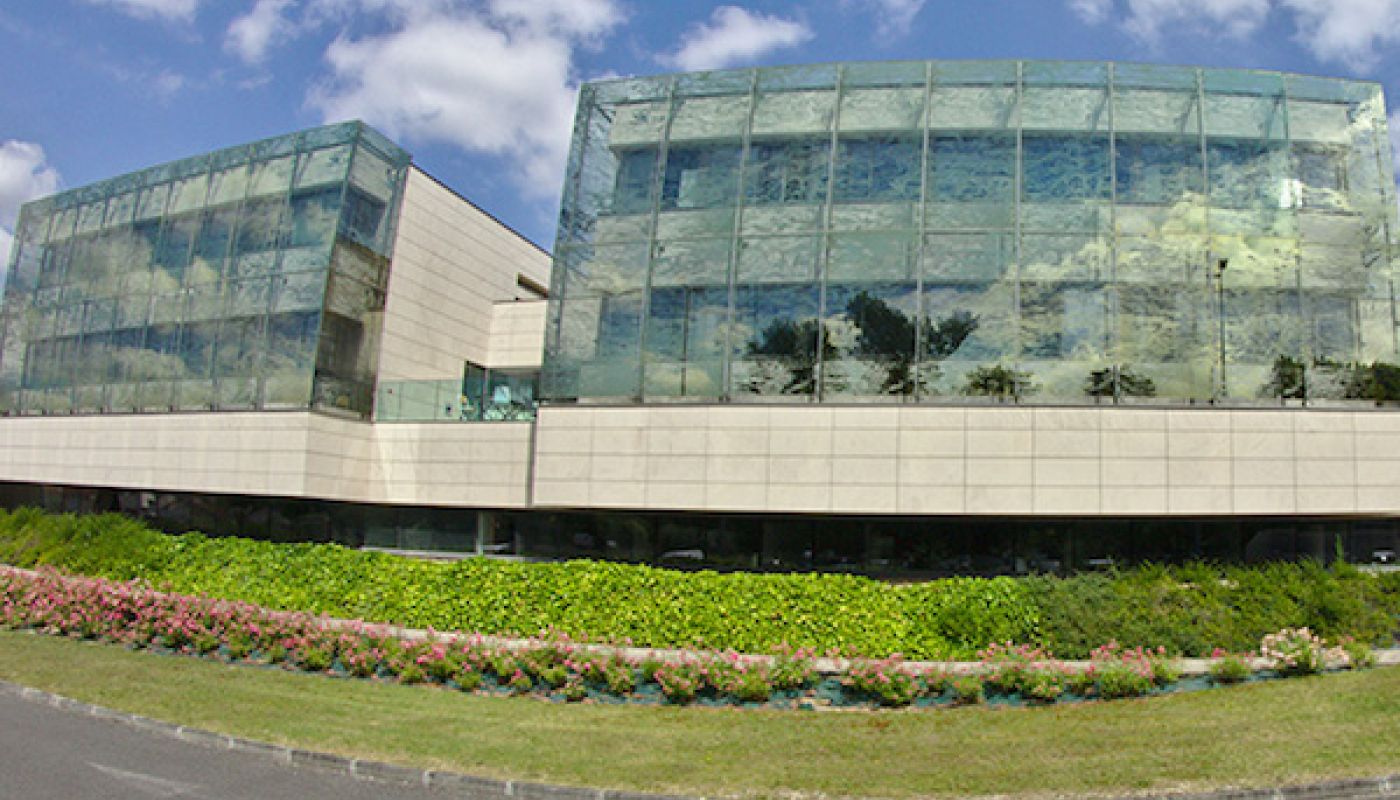
Every few years I take a look at the research preoccupations of the leading wine research centres around the world such as Bordeaux's new Institut des Sciences de la Vigne et du Vin (ISVV) pictured here, and it is always an illuminating reflection of how the wine world is evolving.
Responding to climate change is a major theme – and not just in the most obvious countries such as Australia, whose wine industry was the first to meet the challenges of hotter summers and water shortages head-on.
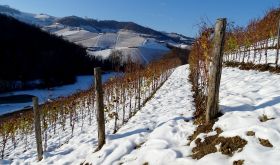
Researchers in Rioja, northern Spain, whose grape harvest has traditionally been one of the latest in Europe, have recently been looking into the effect of pruning dates on what has become an increasing problem for vine growers almost everywhere. Hotter summers mean that sugar levels all too often inconveniently gallop ahead of the ripening of the all-important phenolics that determine the interesting bits of wine: flavour, colour, tannins and so on. The result is, crudely, that either wines are inconveniently alcoholic (grape sugar being fermented to comprise the alcohol content of a wine) or the grapes, if picked at traditional grape sugar levels, produce wines with unpleasantly unripe tannins and callow flavours.
The Spanish researchers, in association with corresponding author Wei Zheng, a name that is itself a sign of our increasingly Chinese-influenced times, found that delaying the annual winter pruning of the vines usefully reduced yield, so there was no need for the expensive process of thinning the crop in summer, reduced the risk of spring frost, and – hooray – resulted in better wine. (Although see Less alcohol but no less flavour.)
Reading the small print of the 2017 report of the Australian Wine Research Institute reveals that the Australians and New Zealanders have decided to address the problem by the simple expedient of dilution. A year ago their Food Standards Code was amended to allow wine producers to add water to grape juice and must (fermenting grape juice) so long as the potential alcohol level of the resulting wine doesn’t fall below 13.5%. This sort of ‘humidification’, incidentally, has been officially allowed in the US since 2001.
The official reason is ‘to reduce the chance of fermentation problems’ and indeed the AWRI (always working particularly closely with the Australian wine industry) faithfully logs every request it receives to advise on a fermentation that comes to a sticky halt half-way through because the yeasts responsible for converting sugar into alcohol are simply overwhelmed. This was particularly common after the hot 2016 vintage, much less so after the cool 2017 season.
Adding water to the fermentation vat is not necessarily evil; it can result in a better-balanced wine. Even the great Ridge Vineyards has been known to do it (and to spell it out in their admirable list of ingredients on the label). But we must hope that Australia’s less quality-minded producers will not take advantage of this new concession.
That same report is telling in how enthusiastically and explicitly the Australian wine industry is courting China, now its most important customer by value and already the world’s fourth-biggest importer of wine. One of the many projects reported by the AWRI is ‘completing the development of product concepts designed to appeal for use in Chinese weddings’.
The Australians have also been studying which wine attributes appeal to the Chinese palate by evaluating the responses of 300 Chinese consumers to French, Australian and Chinese wines. It turns out that the favourite wines were generally high in flavours described as ‘fermented bean curd’, ‘hawthorn’ and ‘woody’.
It is interesting to contrast attitudes to organic wine production and matters green between various countries. Last year I toured the recently remodelled wine faculty at America’s most famous centre of wine academe, the University of California at Davis outside Sacramento. It seemed to me as though the prime focus here was on sustainability. The Jess S Jackson Sustainable Winery Building there, named after the creator of the hugely successful Kendall-Jackson Vintner’s Reserve Chardonnay and funded by his widow Barbara Banke, is billed as ‘the first self-sustainable, zero-carbon teaching and research facility in the world’ (pictured below by UC Davis). No external heating or cooling is required.

California wine production has recently been hit by drought as severe as that currently being experienced in the southern hemisphere – notably South Africa – and in California there has been considerable focus on recycling winery waste, for example. But, to judge from the AWRI report at least, Australians are still very much focused on efficiency, and agrochemical is not a dirty word.
With such a choice of wine bottle closures nowadays – screwcaps, natural corks and many other forms of cork – the number of controlled studies of their relative performance is not surprising. A group of southern French researchers looked in detail at the effect on shelf life of various different alternatives to natural cork. Eighteen months was taken as the effective maximum.
Of particular interest to us mere wine consumers perhaps is the 10-year project during which 100,000 entries in the International Wine Challenge in London were monitored to compare the performance of corks and screwcaps. The results, reported in this latest AWRI report, were that the rejection rate for bottles stoppered by a cork (unspecified which sort) was a rather horrifying 4.7% whereas the rejection rate of screwcapped bottles was ’only’ 1.6%, with about half of these faults being reduction, the cabbagey aroma that can result from a wine’s not being exposed to enough oxygen. The reduction rate of cork-stoppered bottles was apparently exactly the same, 0.81%, even though screwcaps have popularly been associated with reduction.
Buzzwords come and go. While minerality is on the wane, microbes are waxing. It seems they may hold the key to explaining the links between terroir, or place, and the wine it produces. Hail the new gods of wine, microbiologists.
SCIENTIFIC WINES
Some notable wine academics past and present who made or make wine.
Pascal Chatonnet Was in the oenology faculty at Bordeaux university but now concentrates on cleaning up cellars around the world and making wines such as L’Archange, Ch Haut-Chaigneau and La Sergue in Lalande-de-Pomerol.
Philippe Darriet Currently researching ‘wine minerality’ at Bordeaux and also makes sweet white Loupiac at Ch Dauphiné-Rondillon.
Denis Dubourdieu International consultant and much-admired instigator of Bordeaux’s ISVV died last year but his legacy lives on in Chx Doisy-Daëne, Reynon, Cantegril, Haura and Clos Floridène, all excellent wines from the south of Bordeaux.
Randolph Kauer Professor at the Geisenheim wine research institute in Germany and producer of eponymous wine in Mittelrhein.
Peter Leske Was at the AWRI and now makes wine in the Adelaide Hills, originally Nepenthe and now La Linea Tempranillo.
Carole Meredith Groundbreaking work on viticulture, especially vine variety detective work, at Davis but now grows fine reds, particularly Syrah, on Mount Veeder above Napa Valley with viticulturist husband Steve Lagier in the Lagier-Meredith vineyard.
Luigi Moio Professor of oenology at Naples makes Quintodecimo Campanian wines with his wife Laura.
Alain Razungles Professor of oenology at the ancient university of Montpellier, he also makes wine at his family’s Domaine des Chênes in the hills of Roussillon.
Kees Van Leeuwen Professor of Viticulture at Bordeaux’s ISVV, he is also viticulturist at St-Émilion first growth Ch Cheval Blanc.