France and Italy, the world’s most important wine-producing countries, saw this year’s grape crops shrivel thanks to a series of what we now call ‘weather events’, most of which put severe pressure on those trying to farm organically or biodynamically. The number of times vignerons had to spray their vineyards rose to record levels.
The new buzzword in farming is regenerative, putting all the emphasis on soil health rather than on what happens above ground. There’s an official certification body for regenerative viticulture, ROC. As Sam reported here, it has certified 13 wine estates in California, and one, Mirabeau, in France.
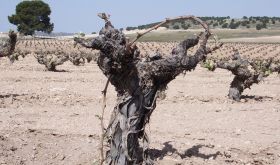
In these times of unpredictable weather, old vines have proved much more resilient, and there have recently been official moves to define what constitutes an ‘old’ vine, based on the definitions in the free online compendium of old vineyards worldwide, The Old Vine Registry. So with any luck, terms such as Vieilles Vignes on labels will come to mean something dependable.
While the world’s third and fourth most important wine producers Spain and California, plagued by drought until recently, have suffered extreme rainfall, grapes in countries regarded as cool climate not so long ago now suffer from sunburn. Wildfires are affecting even classic wine regions such as Bordeaux. Warmer winters encourage earlier budbreak, putting the nascent crop at increasing risk of spring frost. Whole wine regions such as Hawke’s Bay in New Zealand can be transformed by a cyclone.
Total wine production around the world continues to fall, and certainly won’t rally while so many French vignerons take advantage of the official vine-pull scheme. In a macro sense, this is not so bad since total wine consumption also continues to fall, but the effect on individual farmers can be tragic. One British professional wine buyer told me that Bordeaux négociants on each side of the Garonne estuary had told him of grape suppliers threatening suicide if the négociant didn’t take their grapes.
I haven’t heard of such drastic responses from those who sell rather than produce wine but there is widespread gloom in the fine-wine trade, of which London has been such a centre. Many consumers who would routinely stock up on each new vintage of bordeaux and burgundy have been put off by the relentlessly high prices. News of the crisis in Bordeaux’s overproduction has been focused on the bottom end, especially wine estates in the Entre-Deux-Mers that were blithely expanded when times were good, and indeed the landscape there is being transformed. But demand has been softening considerably even for quite smart bordeaux.
Burgundy is the one French wine region that saw an increase in sales in 2024, perhaps partly because the 2022s came on the market, a welcome successor to the difficult 2021 vintage. The head of the local generic body also suggested that Burgundy’s apparently inexorable price rises have plateaued. Some traders were hoping that the generous 2023 vintage to be offered early next year would see some softening of prices, but the 2024 crop in Burgundy has been so small that this looks less likely, unfortunately.
Wine producers all over Europe, a few in China, and possibly a handful in Mexico are braced for the possibility of import tariffs on their goods exported to the US, the world’s biggest wine market, once the Trump administration takes over. With the prospect of slimmer and slimmer margins, more and more producers of more expensive wines are increasingly trying to cut out distribution costs by selling direct. The dominant distributor in the US, Southern Glazer’s, was reported in October to have laid off hundreds of staff, including entire wine divisions.
Another important factor in reduced sales of fine wine is that a significant proportion of likely buyers simply have too much wine already. The collecting instinct is strong but many a wine lover realises they would have to drink something like two or three bottles a night to liquidate their collection. COVID played a significant part here. While wine lovers were locked down, it provided the time and means not just for them to drink more wine than usual, but also for them to stock their cellars – encouraged by the dramatic reduction in prices of the 2019 bordeaux vintage when it was released in the middle of lockdown without the usual hoo-ha.
COVID created a bump in wine sales figures which has rather exaggerated the current downward trend but there is admittedly a structural problem in the wine market. There are not enough newcomers to wine. The alternatives – cannabis, craft spirits and beers – are obvious, as are health concerns.
Speaking of health concerns, new no- and low-alcohol drinks are flooding on to the market. Although Tam has encountered non-alcoholic, wine-like drinks worth recommending (see this comprehensive guide), I have yet to do so – though I hesitate to write this for fear of finding my inbox bloated by even more emails about new products. Alcohol-free beers and spirits have enjoyed considerable success and there is so much R&D investment in trying to find a ‘wine’ version of them that I’m sure someone will manage it. The fact that the champagne giant Moët Hennessy has bought into the young, sparkling, alcohol-free brand French Bloom recently is significant.
In the UK, now that a horribly complex duty system dependent on alcoholic strength is threatened in February, we are seeing an increase in the number of wines at, say, 11% alcohol or lower which can too often taste expedient rather than delicious.
Meanwhile, thanks to the generally warmer summers, grapes are naturally reaching higher and higher potential alcohol levels. For many of us, potency is not a positive attribute in wine, but I take my hat off to producers who seem largely to have mastered the trick of producing wines at 14.5% – sometimes more – without the alcohol being so uncomfortably obvious that they leave a burning sensation on the finish.
As our diets lighten up, I’m seeing a resurgence of respect for white wines and their food-friendly nature. This year, in my pre-Christmas collections of wines to recommend in the FT, I found for the first time just as many whites as reds, largely because retailers are putting more emphasis on them.
I’m told by wine professionals in France that the natural wine boom there, so prevalent in Paris particularly, seems to have peaked. Or rather, as I had hoped, that the lines between natural and the rest are becoming blurred as low-intervention becomes much more normalised in the winery, and soapbox-mounting much less common in hospitality.
A major trend in wine-minded restaurants – apart from ongoing increases in costs and decreases in the pool of available staff – has been a noticeable uptick in the proportion of customers wanting to bring their own wine, possibly another lockdown effect in that they feel overstocked at home. They expect to pay corkage and the result has been a general increase in corkage charges. The Notting Hill restaurant Dorian secured a public-relations coup by increasing its corkage charge to £100 a bottle last summer. A much more usual price is around £40 a bottle and it is polite to order some wine from the restaurant’s list, too, even if it’s only a glass.
Thanks to the Coravin wine preservation system, now in various different formats, many establishments are offering really very smart wine indeed by the glass. All this is in line with the general decrease in alcohol consumption.
I should not criticise celebrity wines. They presumably do their bit to introduce new drinkers to the unique pleasures of wine. But I’m glad to report that in 2024 we saw a slowdown in new wine brands carrying a name that is presumed to help sell them. But in this category do we count the produce of the Trump winery in Virginia, so convenient for The White House?