Unlike most of the world’s wine producers, who are currently seeking consumers for their wines, the 285 vignerons of Sancerre have been much more likely, as after the frost-shrunk 2021 vintage, to seek enough wine for their keen customers.
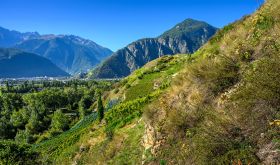
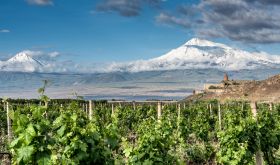
Sancerre, roughly halfway along the Loire from its source to its mouth, is in the enviable position of easily finding a position on wine lists all over the world and it exports almost 70% of its wine. It has a wonderfully pronounceable and memorable name, unlike Pouilly-Fumé, the similar Sauvignon Blanc grown across the river on the flatter, sandier land around Pouilly-sur-Loire. It's also rather pretty, as you can see below.

Sancerre is also benefiting from being seen as the classical inspiration for the upstart New Zealand Sauvignon Blanc, currently enjoying such popularity that the US imported more wine from relatively tiny New Zealand last year than from either Australia or Spain. The US overtook the UK as Sancerre’s thirstiest customer five years ago as American wine lovers turned away from Chardonnay towards the zestier Sauvignon Blanc and today almost 40% of all Sancerre exports go to the US.
So ubiquitous is Sancerre in the world of wine that it can be seen to be ‘boring’, as a leading wine-minded London restaurateur put it to me.
But currently real energy is evident in the little villages slotted into the folds of Sancerre’s rolling hillsides. Earlier this month I spent a couple of nights in the hilltop town of Sancerre for the first time in a shameful number of decades. I’d forgotten how small the town and wine region are. A single New Zealand producer, Delegat’s of Oyster Bay fame, owns more vineyard than Sancerre’s total of 3,053 ha (7,544 acres), with virtually every available hectare within the French appellation already planted with either Sauvignon Blanc or the grape responsible for the region’s pink and red wines, fashionable Pinot Noir.

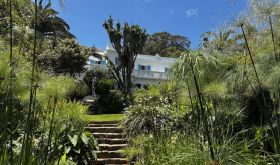
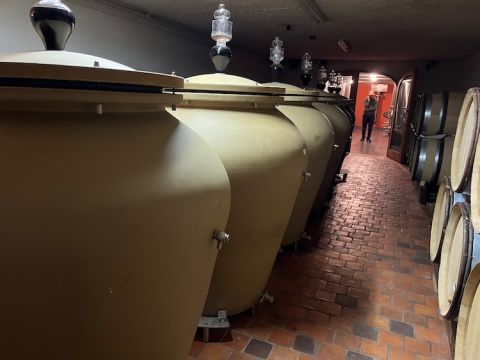
I was told by young grower Luc Prieur of Domaine Paul Prieur that the value of a hectare of planted Sancerre vineyard is probably about €250,000 (c $267,000) ‘but there’s nothing available for sale. We don’t have the mentality to want to sell to become rich.’ Below are some of the amphorae installed in Prieur's glamorous cellar under this period shopfront. Luc's wife Morgane runs La Petite Maison restaurant in Sancerre showcasing world cuisines.
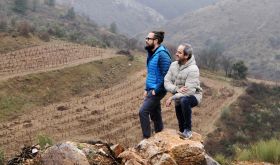
This little region of family farmers has a single co-op and a handful of growers who also buy grapes from their neighbours, but there is no destabilising foreign or big company ownership – just a handful of acquisitions by outfits based downriver in Anjou-Touraine. I was assured by Arnaud Bourgeois, one of Sancerre’s most energetic grower-merchants, who has even established Clos Henri winery in New Zealand, that this is a particularly friendly region – unlike Burgundy, he added, where he, like so many Sancerre growers, did his formal wine studies. During the Fête de St-Vincent in January, they all taste each others’ wines and, according to Bourgeois, ‘if someone has a health problem, their neighbour won’t hesitate to prune their vines for them’.
Sancerre may have enjoyed commercial success but it doesn’t seem complacent. SICAVAC, the technical arm of the generic winegrowers' association, has played a key role in its evolution. When agronomist François Dal arrived to lead it in 2002, he was asked to develop plant material more varied and interesting than the clones of Sauvignon Blanc on which growers then depended, so he set about painstakingly collecting and propagating 200 cuttings from pre-clonal-era vines to achieve what is known by growers as mass-selection vines, which can yield much more interesting wine than any single clone.
He has since performed the same feat for the Pinot Noir vines that constitute about 18% of Sancerre’s total – an even more valuable job since there were relatively few clones of this important variety – and next year will see the first harvest of the results.
Dal was brought up on a farm in northern France and originally wanted to work in forestry. In Rennes in Brittany he discovered the wines of Bordeaux and decided that vines, which yield something every year rather than every century or so, might be more interesting than trees. He was offered a job in Champagne but decided that would be a bit boring (that word again) so applied for the SICAVAC job instead. ‘I’m very happy here', he told me, ‘because it’s a family. The people are cool.’
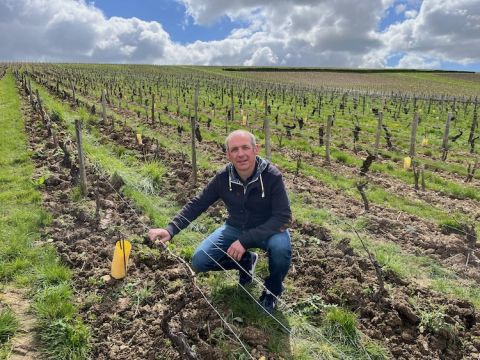
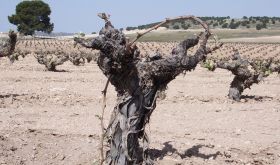
Sauvignon Blanc is unfortunately particularly prone to vine trunk diseases such as esca. All over the region, mature vineyards are dotted with the tubes that protect young vines from rabbits and the like because so many vines have succumbed and have had to be replaced. Above, Cyrille Reverdy of Domaine Daniel Reverdy (there are a lot of Reverdys), in his badly hit Clos de Chaudenay vineyard.
Soon after he arrived, Dal developed his own pruning technique to minimise esca’s ravages and has since managed to control them. It was Dal who was initially asked to teach his methods to Bordeaux growers in 2011 but couldn’t spare the time so instead recommended Marco Simonit, the Italian with whom he had shared his technique. Simonit says this paved the way to his international réclame and today he is much more famous than Dal.
The SICAVAC team is responsible not just for Sancerre, where they are based, but for all of the vineyards that make up what is known as Centre-Loire, so also Pouilly-Fumé, Menetou-Salon, Quincy, Reuilly and Coteaux du Giennois (all Sauvignon-dominant); the newish Gamay-led appellation Châteaumeillant; plus two new little appellations-in-waiting, Coteaux de Tannay and Côtes de la Charité.
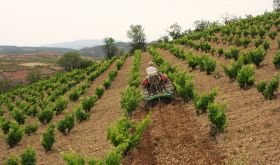
SICAVAC has been hugely helpful in Centre-Loire’s decision to transition to an agrochemical-free future. The aim, as in Bordeaux, is to have 100% of the vineyards anointed with one of the 20-odd official certifications of eco-virtue by 2030. By the end of last year they had got to 65%, of which 38% are certified either organic or biodynamic, or in conversion towards that goal. The impetus is not just saving the planet but the fact that many of the pesticides and fungicides once used are being banned.
Of most interest to wine lovers, however, is the progress of the wines themselves from dependable to exciting. There are now far more single-vineyard wines, typically demonstrating the differences between Sancerre’s three most important soil types: the white clay-limestone terres blanches, pebbly caillottes and silex, or flint. Most self-respecting growers are now aiming to make serious white wines that will age, even though Sauvignon Blanc is generally associated with early-drinking wines. But then, as Luc Prieur pointed out to me, ‘I hate varietal Sauvignon Blanc per se but we’re not producing Sauvignon Blanc. Terroir is more important than grape here. We could even switch to another grape. I’d love to plant Chenin Blanc, for instance.’
He is in the vanguard of the red-wine revolution in Sancerre, the proud owner of an unusually extensive 5-ha mass-selection 60-year-old Pinot Noir vineyard. There was a time when Sancerre Rouge was a pale, skinny thing found mainly in Paris wine bars but nowadays, thanks to warmer summers (in which August harvests are becoming more common), the best examples can rival much more expensive red burgundy and they are already sought-after on export markets. The fact that so many vignerons are trained in Burgundy has seen them come back home determined to make their own fine reds from the Pinot Noir grape.
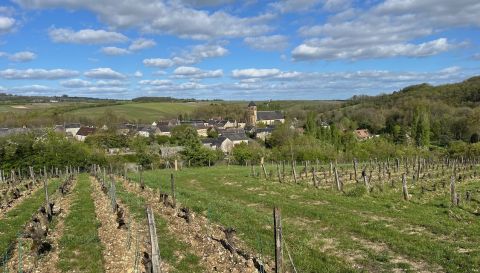
Sancerre and Pouilly-Fumé are so established that they carry a price premium but there are some excellent growers in Menetou-Salon, Quincy and Reuilly who can offer very similar wines, albeit from slightly different soils, at very attractive prices. Above, the village of Morogues in Menetou-Salon, where Domaine Pellé is based and where François Dal of SICAVAC lives.
Some superior Centre-Loire wines
I would have liked to recommend many more but they seem easier to find in the US than in the UK.
Whites
Domaine Philippe Raimbault 2022 Coteaux du Giennois 13.5%
£15.95 Whitebridge Wines
Domaine Pellé 2022 Menetou-Salon Morogues 13%
£16 The Wine Society, £18.79 Vinatis, and many others
Domaine de Patureaux, Organic 2022 Pouilly-Fumé 13.5%
£19.99 Majestic (sold elsewhere under the name Domaine Tabordet)
Domaine Serge Laloue, Cuvée Silex 2022 Sancerre 13%
£24 The Wine Society
Domaine Pellé, Les Blanchais 2020 Menetou-Salon 13%
£24 Terra Wines
Domaine Pellé, Les Vignes de Ratier 2021 Menetou-Salon Morogues 13%
£32.99 Bancroft
Domaine Paul Prieur, Pieuchaud Silex 2022 Sancerre 13%
£35 Huntsworth Wine
Domaine Paul Prieur, Les Monts Damnés 2022 Sancerre 13%
£38.50 Huntsworth Wine, £41 The Good Wine Shop, £42.49 The Wine Library
Reds
Dom Pellé, Le Carroir 2021 Menetou-Salon Morogues 13%
£24.29 All About Wine (sold in cases of 6 or more), £32.95 Mill Hill Wines
Dom Lucien Crochet, Cuvée Prestige 2016 Sancerre 14%
£460 per 6 magnums Millésima UK
Access to the tasting notes, scores and some surprisingly extended suggested drinking dates in The greening of Sancerre is included in membership of JancisRobinson.com. For international, especially US, stockists, see Wine-Searcher.com.