There are no great wines, only great bottles. This maxim, highlighting how much individual bottles of the same wine can vary, was brought home forcibly to us 21 tasters at this year’s 10 Years On blind tasting of 168 wines from the highly praised 2016 Bordeaux vintage.
A lowly St-Estèphe costing less than £36 a bottle held its own gloriously when tasted blind alongside wines costing more than five times more, being the group’s overall favourite wine from the appellation, trumping heavyweights Châteaux Montrose and Cos d’Estournel. Château Ormes de Pez, owned by the same family as Château Lynch-Bages, was one of the top scorers in this exercise focused on a vintage that is regarded, along with 2019 and 2022, as one of the best since 2010. (For what it’s worth – not much if, like me, you see scores as a necessary evil – I gave it 18.5 points out of 20 in 2026 whereas in 2017, 2018 and 2020 I had given it 16.5, 16 and 17 respectively.)
But of course tasting that many wines blind over one and a half days is a very different exercise from tasting wines when you know what they are. The blind tasting had taken place, like the examination of the 2022 vintage on which I reported two weeks ago, at the headquarters of Farr Vintners in London and was undertaken by wine professionals with a particular interest in Bordeaux. We had precisely 45 minutes to pour, taste and dissect the 12 wines in each flight and reel when their identities were revealed.
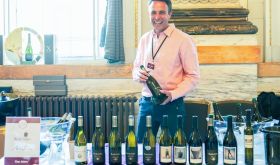
Three weeks earlier, one of Farr’s rivals, Bordeaux Index, had held their annual 10 Years On tasting of the 2016 vintage for customers and media. Perhaps because smart bordeaux needs a bigger push nowadays than it did when consumers were keener on it, Bordeaux Index put on a grander showing than usual. Rather than holding it in their offices, they took over the Grade II-listed building overlooking Hyde Park that is the headquarters of the Royal Aeronautical Society. Bollinger was offered as a palate cleanser and many a Bordeaux wine producer was in attendance, before being whisked off to dinner by their hosts.
Unfortunately the Bordeaux Index tasting took place on the same day as – and, for me, immediately after – Charles Sydney Wines’ Loire tasting, about which I also wrote recently. So I had perforce to be selective about which of the 87 2016 bordeaux on offer I tasted (I skipped the Ormes de Pez, for instance). But because I knew what I was tasting, my impressions were presumably and unavoidably coloured by my previous experiences of the producer and/or wine, as is evident in the notes in the two tasting articles devoted to these two 10 Years On tastings published this week.
Some conclusions were common to each showing. The 2016 vintage is weakest in St-Émilion, or rather among some St-Émilions. Wines from the most respected St-Émilion producers such as Angélus, Ausone, Canon, Cheval Blanc and Figeac showed extremely well. And there were some bargains in the lower ranks, but too many producers in-between still seemed to be in thrall to the over-extracted recipe they misguidedly thought would please the American wine critic Robert Parker, even though 2013 had been the last vintage he reviewed en primeur. Pavie, and Troplong Mondot at 15.5%, were a particular sinners in this respect although both châteaux today produce much more refined, appetising wines.
One problem was that, after a tricky spring, summer brought such drought that grapes stopped ripening. So the harvest was particularly late and there was a general lack of lusciousness, which called for particularly sensitive winemaking. And some of the St-Émilions seemed more dangerously evolved than one would want in a 10-year-old red bordeaux.
Pomerols were generally more successful than the St-Émilions, with Église-Clinet, Lafleur and Vieux Château Certan showing even better than Le Pin and Petrus did in the blind tasting, although both of these last two superstars shone brightly chez Bordeaux Index (as one would expect of wines at about £3,000 a bottle).
The wines from the left bank were definitely more consistent, with some real gems, and not a few bargains (see my recommendations below). The freshness of Pessac-Léognan was welcome, in Smith Haut Lafitte and Domaine de Chevalier in particular. Margaux was the least exciting of the four Médoc communes with too many wines showing the same sort of over-extraction as the lesser St-Émilions although Châteaux Margaux, Palmer, Rauzan-Ségla and Brane-Cantenac (a star of our recent 2022 tasting) showed particularly well, as did Pavillon Rouge, the second wine of Château Margaux, at the Bordeaux Index tasting, less so chez Farr.
St-Julien is always a safe haven for traditional British professional (and amateur?) tasters, being classically structured but a little more approachable than a stereotypical Pauillac. Moreover there are the usual relative bargains from the Barton stable and that shared by Gloria and St-Pierre. And these 2016s were indeed delightfully consistent, even if relatively youthful still. More storage charges needed! Even Léoville Poyferré, which has so often been the most obviously opulent of the St-Juliens, looked very impressive but was still tightly wound at both tastings.
The Pauillacs were slightly less consistent than the St-Juliens, with acidity sometimes being a little too prominent in some of the less successful examples. The surprise hit of the St-Estèphes outlined above was mirrored to a certain extent in the Pauillacs. One of the most successful Pauillacs was Ormes de Pez’s stablemate Lynch-Bages, although both Pichons (Lalande and, especially, Baron) were stunning. The standard of vine-growing and winemaking evident in such wines nowadays calls into question the need to stump up for a first growth at well over three times the price. (The three Pauillac first growths average around £600 a bottle while these other three Pauillacs are well under £200.)
2016 was not a classic Sauternes vintage but those producers who held on until late rains obliged with some concentrated noble rot produced some really fine wine, contrasting markedly with wines from those who lost their nerve and picked earlier. (This was at a time when a less significant proportion of grapes was diverted into dry wines than is the case now.)
Alcohols were generally modest in 2016 reds, rarely more than 13.5%. But one rather shocking statistic from the Farr tasting was that seven bottles were seriously affected by cork taint, a failure rate of over 4%.
So did 2016 live up to the hype? On the left bank definitely, and at the best addresses on the right bank. The finest should last into the 2050s but the most succulent right-bank wines are already giving pleasure.
Better-priced 2016s
Most of these wines are relatively easy to find by the case in bond. Single-bottle prices below are all duty paid.
Château Beaumont 2016 Haut-Médoc 13.5%
£17.98 Brunswick Fine Wines, from £145 per case of 12 in bond various retailers
Château Quinault l’Enclos 2016 St-Émilion 13.5%
£29.98 Nickolls & Perks, from £105 per case of 6 in bond various retailers
Château Les Ormes de Pez 2016 St-Estèphe 13.5%
£35.95 Mumbles Fine Wines, £44.70 Christopher Piper Wines, £125 per case of 6 in bond Farr Vintners
Château Tronquoy Lalande 2016 St-Estèphe 14.5%
£36 Four Walls, from £157 per case of 6 in bond various retailers
Château Les Cruzelles 2016 Lalande-de-Pomerol 13.5%
£37.20 Four Walls, £130 per case of 6 in bond various retailers
Clos La Madeleine 2016 St-Émilion 14%
£145 per case of 6 bottles in bond, £290 per case of 6 magnums in bond Farr Vintners
Château Calon Ségur, Le Marquis de Calon Ségur 2016 St-Estèphe 14%
£39 Huntsworth Wine, £155 per case of 6 in bond Farr Vintners
Château Lynch Moussas 2016 Pauillac 13.5%
£39.60 Four Walls, £280 per case of 12 in bond Farr Vintners
Château Monbrison 2016 Margaux 13.5%
£215 per case of 6 in bond Ideal Wine
Château La Tour Carnet 2016 Haut-Médoc 14%
£49.95 Vine & Bine, £140 per case of 6 in bond Ideal Wine
Château Batailley 2016 Pauillac 13%
£59 The Wine Society, from £230 per case of 6 in bond various retailers
For tasting notes, scores and suggested drinking dates, see tasting articles on right-bank reds and sweet whites and left-bank reds. For international stockists, see Wine-Searcher.com.
Back to basics
How do you taste red wine blind? |
|
This is a massive subject and I have space only to skim the surface. Firstly, the mechanics. You need a friendly accomplice who knows which wine is which and doesn’t need to taste blind. They can either bring you glasses already poured, preferably numbered, perhaps using a marker pen on the base of the glass, or they can swathe the bottles in silver foil or put them in paper or other opaque bags – again, clearly differentiating them with a number or letter. (Cheats may seek clues from the bottleneck – glass colour, remainders of the foil and/or evidence of a screwcap.)
If the aim is to identify the wine (an impressive party trick), colour can be a huge help. When wines are held at an angle against something white, the rim is particularly telling. Young wines have more depth of colour and tend to purple rather than orange. Very generally, wines based on these common grapes are successively deeper-coloured: Grenache, Pinot Noir and Gamay, Syrah and Merlot, Cabernet. But of course there are myriad variations. The drier the vintage, the thicker the skins, so there’s more colour and tannins and therefore the wine, if young, will be quite chewy. See Sam’s recent guide to blind tasting for more detail.
With experience, the first sniff can be the most revealing. Something happens in your brain to connect that aroma with something in your memory. But if that fails, it helps to keep a list of the most obvious possibilities and to match your impressions to what you know of each.
If, on the other hand, you are tasting blind to assess quality, as we were at Farr, just analyse what you’re sensing. Does it smell clean and attractive? Are the vital elements of acidity, sweetness, tannins and alcohol in balance? And key: how long does the wine last on the palate after swallowing or spitting it out? This last is a professional necessity. |