
See my tasting notes on all 48 vintages of Hill of Grace.
Australian Shiraz is not the most timid of wines. In fact it's the sort of wine I would choose to keep me warm on a polar expedition, so an ambient temperature approaching 100 °F (37.8 ºC) seemed far from ideal for a recent celebration of 50 vintages of the Henschke family's Hill of Grace Shiraz at the winery in South Australia. For various logistical reasons, we 16 tasters first met up in the Hill of Grace vineyard itself (where this photo of Prue Henschke and James Halliday was taken) and I still have the burn marks on my shoulders to prove it. It was almost too hot to talk, but Stephen and Prue Henschke, who met as science students at Adelaide University in the early 1970s and are now in charge of this celebrated eight-hectare vineyard, were determined that we should see for ourselves the fat, gnarled Shiraz vines they call the Grandfathers responsible for Hill of Grace.
The story begins with a mid-19th-century precursor of the boat people, an influx of Lutherans escaping religious persecution in Silesia in what is now south-west Poland. Like dozens of other families, the Henschkes made their way north from Port Adelaide to the Barossa Valley but, crucially, they settled not on the baking-hot Barossa Valley floor but a few hundred metres higher up in the rather cooler Eden Valley.
In 1860 the Henschkes and their (numerous) kin built themselves a pretty little church, called Gnadenberg after a place left far behind. Just in front of the church, in the same year, Lutheran Nicolaus Stanitzki planted a vineyard he called Hill of Grace, the English translation of Gnadenberg. By 1891 the vineyard belonged to a Henschke and Stephen and Prue's children will be the sixth generation to have custody of some of Australia's oldest vines, up to 150 years old. Most unusually for Australia, they thrive without any irrigation. Indeed it was the oldest vines that coped best with this year's punishing drought that has left other vines looking desiccated and droopy.
In the 1950s, when the Australian wine industry was devoted to producing fortified wines, Stephen's father Cyril thought that the family's vineyards, in the not-too-torrid heights of the Eden Valley, would be well suited to producing table wines and launched a very unusual wine, one carrying not just the name of the grape but also the name of one of his vineyards, Mount Edelstone Shiraz. It was a huge success, and is still highly regarded, but it was the Hill of Grace Shiraz, launched a few years later with the 1958 vintage, that really established the name Henschke with wine cognoscenti.
We had been summoned to the Eden Valley to taste every vintage of this wine that had ever been released, including the 2008 that will be launched at the beginning of next month. Wilting under the heat in the vineyard, I was seriously worried about how the temperatures of wine and tasters was to be managed , but  I'd forgotten that the Henschke winery had been built and designed by astute, hardworking Lutherans. A large, airy stone barn was part burrowed into the hillside. Insulated rafters and a modest evaporative air conditioning system was enough to keep both us and the wines comfortably cool.
We tasted from old to young so that the 48 vintages (three years were not made) really did tell the Hill of Grace tale with its quirks of winemaking and viticulture. The wines from the 1950s and 1960s were remarkable – perhaps not exactly subtle but still wonderfully vigorous and so obviously from the same vineyard. The trademarks were a certain saltiness and dried spice character – five spice, volunteered one seasoned Hill of Grace taster. The grapes had obviously been allowed to get pretty ripe. Perhaps, suggested Stephen Henschke, his canny forebears had been in the habit of picking as late as possible for their fortified wines so that they wouldn't have to pay for too much fortifying spirit.
Then came the 1970s and a change of direction. The fashion was for 'elegance' and the grapes were picked much earlier. Stephen Henschke recalled how, regrettably, during that era some of the really concentrated pressings were sold off to the Henschkes' friend Murray Tyrrell in the Hunter Valley, who was prepared to pay for this welcome extra stiffening. Cultured yeasts, rudimentary temperature control and some smaller, newer oak casks were introduced in the 1970s but the wines in general lacked the heart of their predecessors.
Stephen and Prue returned from their postgraduate studies at Geisenheim wine research institute in Germany in 1977 and two years later when Cyril died Stephen took over the winemaking. 'We young turks thought then we could control everything', he recalled at our tasting, admitting that he might have applied a bit too much squeaky clean white-winemaking technology to his first few harvests. I found the early years of the 1980s some of the least exciting wines in the line-up, but then came 1986, a year Prue Henschke described as 'Nature's gift to the winemaker'. It inspired her, always particularly interested in viticulture, to try to replicate that perfection by manipulating the vineyard of which she assumed control in 1990 on the death of Cyril's brother Louis. She realised that the precious dry-grown vines would benefit enormously from mulch that would retain moisture in the soil, and also embarked on a painstaking process of identifying and propagating the best ancient plants.
In the winery, Stephen started to study oak in just as much detail, seasoning it themselves for much longer than had been the norm, and experimenting with small French instead of large American oak. (Today, large French is favoured.) But they always retained the concrete open fermenting tanks that are now the height of fashion.
In our line-up of 48 giant Riedel glasses apiece the Hill of Grace wines really took off from 1986 and the wines of the 1990s were seriously impressive – savoury with flavours of dried herbs yet much fresher than the Australian Shiraz norm. The wines made this century continue to demonstrate the fine-tuning process in both cellar and vineyard but are still very youthful. I was convinced at the end that Hill of Grace deserves its pinnacle, and that it could not be in more appreciative hands.
But Hill of Grace is now released around Aus$600 a bottle, the same as the iconic Penfolds Grange, but Henschke Henry's Seven 2010, a Shiraz-based blend, shows some of the same Eden Valley elegance and bright fruit. It is currently just £19.51 from Slurp.co.uk. (See wine-searcher for other stockists around the world.) See also my tasting notes on their other, much less expensive releases next week.
The photo above shows the Henschke family, left to right: Stephen, Prue, Andreas, Justine and Johann.
MY FAVOURITE VINTAGES
1958
1963
1965
1986
1988
1991
1995
1996
1998
2005
2008
Divine providence – Henschkes' inheritance
• 4 min read

This is a longer version of an article also published in the Financial Times.


Wählen Sie Ihre Mitgliedschaft
Mitglied
$135
/Jahr
Ideal für Weinliebhaber
- Zugang zu 294,756 Weinbewertungen und 16,080 Artikeln
- Zugang zu The Oxford Companion to Wine und The World Atlas of Wine


Inner Circle
$249
/Jahr
Ideal für Sammler
- Zugang zu 294,756 Weinbewertungen und 16,080 Artikeln
- Zugang zu The Oxford Companion to Wine und The World Atlas of Wine
- Frühzeitiger Zugang zu den neuesten Weinbewertungen und Artikeln, 48 Stunden im Voraus
Professional
$299
/Jahr
Für Weinprofis (Einzelnutzer)
- Zugang zu 294,756 Weinbewertungen und 16,080 Artikeln
- Zugang zu The Oxford Companion to Wine und The World Atlas of Wine
- Frühzeitiger Zugang zu den neuesten Weinbewertungen und Artikeln, 48 Stunden im Voraus
- Gewerbliche Nutzung von bis zu 25 Weinbewertungen und -punkten für Marketingzwecke
Gewerblich
$399
/Jahr
Für Unternehmen in der Weinbranche
- Zugang zu 294,756 Weinbewertungen und 16,080 Artikeln
- Zugang zu The Oxford Companion to Wine und The World Atlas of Wine
- Frühzeitiger Zugang zu den neuesten Weinbewertungen und Artikeln, 48 Stunden im Voraus
- Gewerbliche Nutzung von bis zu 250 Weinbewertungen und -punkten für Marketingzwecke
More Gratis für alle

Gratis für alle
Jancis is put in her place, by the hybrid grapes of the Emerald Isle. A shorter version of this article...

Gratis für alle
4 June 2026 In advance of the 2026 Old Vine Conference on 8 June, we’re republishing this overview of our...

Gratis für alle
As our Sam Cole-Johnson and 216 others prepare for next week’s MW exams, we look back at the very first...

Gratis für alle
Great wine and pie in the Shires. Charlbury is pretty much the first stony outcrop of the Cotswolds that you...
More from JancisRobinson.com
Weine der Woche
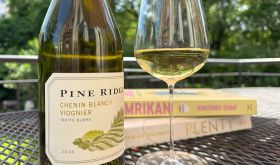
A summer-ready, silky white wine that’s widely available from just $8.99, £20.90 . The sleeper hit of Napa winery Pine...
Verkostungsberichte
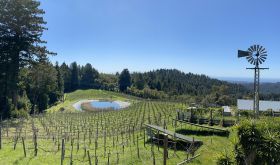
Part 4 of an exploration of California’s westernmost vineyards. Above, the Split Rail vineyard in Corralitos (credit: John Benedetti)...
Verkostungsberichte
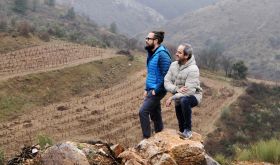
A close look at three of Zaragoza’s most important projects. Above, Fernando Mora MW (left) and Mario López of Bodegas...

Verkostungsberichte
To celebrate Aragón’s new map in the upcoming World Atlas of Wine , Ferran explores the wines of Zaragoza. Above...
Verkostungsberichte
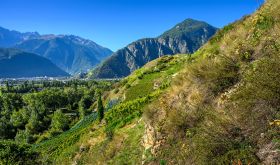
Red, white, young, old – there’s no shortage of diversity or deliciousness available in Swiss wines. You just need to...
Verkostungsberichte
Reasons to drink more Riesling; best buys; and far-flung finds – highlights from a month of tastings. Above, Mount Ararat...
Unverblümte Meinungen
Foreign parts feature heavily this month but that’s far from all. The villa pictured above overlooks Tangier. I hope you...

Nick über Restaurants
An exciting new addition to the East London restaurant scene. Above, Sally Abé. Everything is on the small side at...