
See my tasting notes on all 48 vintages of Hill of Grace.
Australian Shiraz is not the most timid of wines. In fact it's the sort of wine I would choose to keep me warm on a polar expedition, so an ambient temperature approaching 100 °F (37.8 ºC) seemed far from ideal for a recent celebration of 50 vintages of the Henschke family's Hill of Grace Shiraz at the winery in South Australia. For various logistical reasons, we 16 tasters first met up in the Hill of Grace vineyard itself (where this photo of Prue Henschke and James Halliday was taken) and I still have the burn marks on my shoulders to prove it. It was almost too hot to talk, but Stephen and Prue Henschke, who met as science students at Adelaide University in the early 1970s and are now in charge of this celebrated eight-hectare vineyard, were determined that we should see for ourselves the fat, gnarled Shiraz vines they call the Grandfathers responsible for Hill of Grace.
The story begins with a mid-19th-century precursor of the boat people, an influx of Lutherans escaping religious persecution in Silesia in what is now south-west Poland. Like dozens of other families, the Henschkes made their way north from Port Adelaide to the Barossa Valley but, crucially, they settled not on the baking-hot Barossa Valley floor but a few hundred metres higher up in the rather cooler Eden Valley.
In 1860 the Henschkes and their (numerous) kin built themselves a pretty little church, called Gnadenberg after a place left far behind. Just in front of the church, in the same year, Lutheran Nicolaus Stanitzki planted a vineyard he called Hill of Grace, the English translation of Gnadenberg. By 1891 the vineyard belonged to a Henschke and Stephen and Prue's children will be the sixth generation to have custody of some of Australia's oldest vines, up to 150 years old. Most unusually for Australia, they thrive without any irrigation. Indeed it was the oldest vines that coped best with this year's punishing drought that has left other vines looking desiccated and droopy.
In the 1950s, when the Australian wine industry was devoted to producing fortified wines, Stephen's father Cyril thought that the family's vineyards, in the not-too-torrid heights of the Eden Valley, would be well suited to producing table wines and launched a very unusual wine, one carrying not just the name of the grape but also the name of one of his vineyards, Mount Edelstone Shiraz. It was a huge success, and is still highly regarded, but it was the Hill of Grace Shiraz, launched a few years later with the 1958 vintage, that really established the name Henschke with wine cognoscenti.
We had been summoned to the Eden Valley to taste every vintage of this wine that had ever been released, including the 2008 that will be launched at the beginning of next month. Wilting under the heat in the vineyard, I was seriously worried about how the temperatures of wine and tasters was to be managed , but  I'd forgotten that the Henschke winery had been built and designed by astute, hardworking Lutherans. A large, airy stone barn was part burrowed into the hillside. Insulated rafters and a modest evaporative air conditioning system was enough to keep both us and the wines comfortably cool.
We tasted from old to young so that the 48 vintages (three years were not made) really did tell the Hill of Grace tale with its quirks of winemaking and viticulture. The wines from the 1950s and 1960s were remarkable – perhaps not exactly subtle but still wonderfully vigorous and so obviously from the same vineyard. The trademarks were a certain saltiness and dried spice character – five spice, volunteered one seasoned Hill of Grace taster. The grapes had obviously been allowed to get pretty ripe. Perhaps, suggested Stephen Henschke, his canny forebears had been in the habit of picking as late as possible for their fortified wines so that they wouldn't have to pay for too much fortifying spirit.
Then came the 1970s and a change of direction. The fashion was for 'elegance' and the grapes were picked much earlier. Stephen Henschke recalled how, regrettably, during that era some of the really concentrated pressings were sold off to the Henschkes' friend Murray Tyrrell in the Hunter Valley, who was prepared to pay for this welcome extra stiffening. Cultured yeasts, rudimentary temperature control and some smaller, newer oak casks were introduced in the 1970s but the wines in general lacked the heart of their predecessors.
Stephen and Prue returned from their postgraduate studies at Geisenheim wine research institute in Germany in 1977 and two years later when Cyril died Stephen took over the winemaking. 'We young turks thought then we could control everything', he recalled at our tasting, admitting that he might have applied a bit too much squeaky clean white-winemaking technology to his first few harvests. I found the early years of the 1980s some of the least exciting wines in the line-up, but then came 1986, a year Prue Henschke described as 'Nature's gift to the winemaker'. It inspired her, always particularly interested in viticulture, to try to replicate that perfection by manipulating the vineyard of which she assumed control in 1990 on the death of Cyril's brother Louis. She realised that the precious dry-grown vines would benefit enormously from mulch that would retain moisture in the soil, and also embarked on a painstaking process of identifying and propagating the best ancient plants.
In the winery, Stephen started to study oak in just as much detail, seasoning it themselves for much longer than had been the norm, and experimenting with small French instead of large American oak. (Today, large French is favoured.) But they always retained the concrete open fermenting tanks that are now the height of fashion.
In our line-up of 48 giant Riedel glasses apiece the Hill of Grace wines really took off from 1986 and the wines of the 1990s were seriously impressive – savoury with flavours of dried herbs yet much fresher than the Australian Shiraz norm. The wines made this century continue to demonstrate the fine-tuning process in both cellar and vineyard but are still very youthful. I was convinced at the end that Hill of Grace deserves its pinnacle, and that it could not be in more appreciative hands.
But Hill of Grace is now released around Aus$600 a bottle, the same as the iconic Penfolds Grange, but Henschke Henry's Seven 2010, a Shiraz-based blend, shows some of the same Eden Valley elegance and bright fruit. It is currently just £19.51 from Slurp.co.uk. (See wine-searcher for other stockists around the world.) See also my tasting notes on their other, much less expensive releases next week.
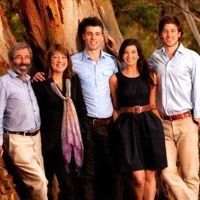
The photo above shows the Henschke family, left to right: Stephen, Prue, Andreas, Justine and Johann.
MY FAVOURITE VINTAGES
1958
1963
1965
1986
1988
1991
1995
1996
1998
2005
2008
Divine providence – Henschkes' inheritance
• 4 min read
This is a longer version of an article also published in the Financial Times.


选择方案
会员
$135
/year
适合葡萄酒爱好者
- 存取 296,928 条葡萄酒点评 & 16,145 篇文章
- 存取《牛津葡萄酒指南》及《世界葡萄酒地图集》
- Access askJancis, our AI wine assistant


核心会员
$249
/year
适合收藏家
Everything in “Member”, plus:
- Early access to the latest wine reviews, 48 hours in advance
- Early access to the latest articles, 48 hours in advance
专业版
$299
/year
供个人葡萄酒专业人士使用
- 存取 296,928 条葡萄酒点评 & 16,145 篇文章
- 存取《牛津葡萄酒指南》及《世界葡萄酒地图集》
- Access askJancis, our AI wine assistant
- 提前 48 小时获取最新葡萄酒点评与文章
- 可将最多 25 条葡萄酒点评与评分 用于市场宣传(商业用途)
商务版
$399
/year
供葡萄酒行业企业使用
Everything in “Professional”, plus:
- 可将最多 250 条葡萄酒点评与评分 用于市场宣传(商业用途)
- Access to submit wines for review
- Offer memberships to your employees and manage them from a single place
- API access available for an additional fee
More Free for all

Free for all
这家领先的新浪潮南非葡萄酒生产商正在展望未来。本文的一个版本由金融时报 发表。另请参阅这篇 帕拉迪乌斯垂直品鉴 ,他杰出的白葡萄酒混酿。...

Free for all
杰西斯 (Jancis) 回忆她遇到过的最迷人的葡萄酒生产者。上图为尼尔 (Neill) 在他的双桨园 (Two Paddocks)...

Free for all
在第一轮评审之后,我们很高兴开始发布今年写作比赛参赛作品中的最佳作品。所有入选作品均未经编辑发布...

Free for all
非凡的海鲜和完美搭配的魔力在火箭仓库 (The Rocket Store)。上图为博斯卡斯尔港 (Boscastle harbour)。...
More from JancisRobinson.com

Bite-sized
位于圣奥尔本斯 (St Albans) 大教堂区的一家 15 世纪酒吧,提供最新潮的美食盛宴。 前厅酒吧仍然令人安心地保持着酒吧风格...

Wines of the week
来自法国中部的一款红葡萄酒,带来解渴的清新感。售价 £15.50, $26.95 起。 对于一个在过去七百年中饱受诟病的品种来说,佳美...

Book reviews
经典葡萄酒图书馆系列的三本新书,以及一本自行出版的葡萄牙葡萄酒指南。 以下四篇评论中,有三篇是关于葡萄酒学院 (Académie du...

Tasting articles
一场揭示性的垂直品鉴,追溯南非最受追捧白葡萄酒的演变。这些酒款由英国进口商贝瑞兄弟与路德 (Berry Bros & Rudd)...

Tasting articles
来自一座传奇波尔多酒庄的四分之一世纪佳酿。另请参阅这份 波尔多垂直品鉴指南 。 尽管莱奥维尔巴顿酒庄 (Château Léoville...

Bite-sized
鲜味爱好者们,向东出发,品尝让人下巴酸痛的美味融合菜肴和本州酸味鸡尾酒 (Honshu sour)。 XO 厨房 (XO Kitchen)...

Tasting articles
这是一个极度平衡的年份,拥有明亮的酸度和近年来记忆中最好的庄园级葡萄酒。此外还有大量优质的雷司令 (Riesling)。上图为罗伯特·威尔...

Wines of the week
这款干白葡萄酒奠定了纽约手指湖 (Finger Lakes) 作为美国雷司令 (Riesling) 圣地的地位。而且它只会越来越好。售价...