When it comes to pairing beverages with Chinese food, it is best to obey the centuries-old rule: 'When in Rome, do as the Romans do'. So, let's just look at the two most common beverages in China – tea and Chinese wine.
There is a Chinese saying that before a man locks his front door for the day, he must be sure of having seven essential items in the house: wood, rice, oil, salt, sauce, vinegar and tea ('关门七件事,柴、米、油、盐、酱、醋、茶'). There's no doubt that tea has a special place in every Chinese family.
Tea appreciation began at least 7,000 years ago, popularised during the Tang Dynasty (唐朝) and flourished in the Song Dynasty (宋朝). Chinese tea culture combines the various schools of teachings such as Confucianism, Buddhism and Taoism into the art of tea appreciation, making it into an everyday beverage regardless of time and occasion.
Tea production in China demonstrates the same principle as western wine production, where terroir plays an important role in its flavours and tastes. To maximise the appreciation of tea, it is always matched with the appropriate style of food. For example, in Jiang Su and Zhe Jiang provinces (on the east coast of China), green tea that has less tannin is a preferred match with the delicate desserts in this region. In Guang Dong province (on the southern coast of China), black tea with higher tannin is a common beverage to accompany the sweet and salty preserved foods served along with the main dishes. The main dishes also tend to be quite oily.
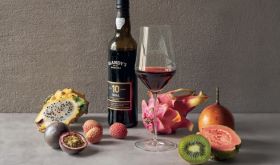
In addtion to tea, it is common to accompany food with Chinese wine, whose base ingredients are traditionally grains such as rice, millet and wheat. An example is the famous Huang Jiu yellow wine (黄酒) which is not distilled and has less than 20% alcohol. (My photograph shows a flask of a 10-year-old Shao Xing Jiu (yellow wine) from Zhe Jiang from China's east coast that we paired the other night with some of the Chinese dishes.) This 'wine' has a strong flavour and taste, almost savoury on its own, ideal for the equally heavy cuisines from Jiang Su and Zhe Jiang provinces. One delicious pairing is a warm yellow wine with the famous Shanghai hairy crabs, an incontrovertible match. When it comes to Guang Dong cuisine, which is lighter and less salty in style, yellow wine is replaced by the lower-alcohol rice wine(米酒) in order to harmonise with the cuisine.
So, what lessons do we learn here?
There is always a place for tea in Chinese dining. Whichever wines we choose, we must understand the contributions of tea as the consistent food beverage.
The strength of the alcohol and the savouriness in a wine are usually used to balance the food.
Often in the Chinese restaurants in international hotels in major Chinese cities, guests are handed a western wine list. It might be more interesting instead to introduce guests and especially foreigners to the traditional Chinese teas and wines for an age-old culinary experience. Properly matched, of course.
How to match China's own drinks
Guest contributor
• 2 min read
Cher Lim writes:
Wählen Sie Ihre Mitgliedschaft
Mitglied
$135
/Jahr
Ideal für Weinliebhaber
- Zugang zu 294,783 Weinbewertungen und 16,081 Artikeln
- Zugang zu The Oxford Companion to Wine und The World Atlas of Wine
Inner Circle
$249
/Jahr
Ideal für Sammler
- Zugang zu 294,783 Weinbewertungen und 16,081 Artikeln
- Zugang zu The Oxford Companion to Wine und The World Atlas of Wine
- Frühzeitiger Zugang zu den neuesten Weinbewertungen und Artikeln, 48 Stunden im Voraus
Professional
$299
/Jahr
Für Weinprofis (Einzelnutzer)
- Zugang zu 294,783 Weinbewertungen und 16,081 Artikeln
- Zugang zu The Oxford Companion to Wine und The World Atlas of Wine
- Frühzeitiger Zugang zu den neuesten Weinbewertungen und Artikeln, 48 Stunden im Voraus
- Gewerbliche Nutzung von bis zu 25 Weinbewertungen und -punkten für Marketingzwecke
Gewerblich
$399
/Jahr
Für Unternehmen in der Weinbranche
- Zugang zu 294,783 Weinbewertungen und 16,081 Artikeln
- Zugang zu The Oxford Companion to Wine und The World Atlas of Wine
- Frühzeitiger Zugang zu den neuesten Weinbewertungen und Artikeln, 48 Stunden im Voraus
- Gewerbliche Nutzung von bis zu 250 Weinbewertungen und -punkten für Marketingzwecke
More Insider-Informationen
Insider-Informationen
Tim Hall discusses market trends, climate challenges and punk with Champagne Louis Roederer’s vice-president and chef de caves. See also...
Insider-Informationen
A happy surprise after a hot and fast growing season. Above, harvest at Château Montrose in St-Estèphe on 18 September...
Insider-Informationen
The final instalment of an eight-part series on how to pair wine with Asian flavours, adapted from Richard’s book. Click...
Insider-Informationen
Under threat from the rising Mediterranean, Domaine de Vassal’s internationally renowned vinous heritage is finally being relocated, Louise Hurren reports...
More from JancisRobinson.com
Gratis für alle
Pauline Vicard asks, can wine still justify its cultural relevance? The answer to this question, rather than economics, may become...
Gratis für alle
Jancis is put in her place, by the hybrid grapes of the Emerald Isle. A shorter version of this article...
Weine der Woche
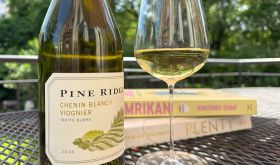
A summer-ready, silky white wine that’s widely available from just $8.99, £20.90 . The sleeper hit of Napa winery Pine...
Verkostungsberichte
Part 4 of an exploration of California’s westernmost vineyards. Above, the Split Rail vineyard in Corralitos (credit: John Benedetti)...
Verkostungsberichte
A close look at three of Zaragoza’s most important projects. Above, Fernando Mora MW (left) and Mario López of Bodegas...
Gratis für alle
4 June 2026 In advance of the 2026 Old Vine Conference on 8 June, we’re republishing this overview of our...
Verkostungsberichte
To celebrate Aragón’s new map in the upcoming World Atlas of Wine , Ferran explores the wines of Zaragoza. Above...
Verkostungsberichte
Red, white, young, old – there’s no shortage of diversity or deliciousness available in Swiss wines. You just need to...