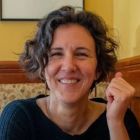

In April of 2012, a handful of wine writers travelled together on a tasting tour of Colli Orientali del Friuli in the north-east corner of Italy. Paolo (pictured below) and Dina Rapuzzi and their sons Pierpaolo and Ivan invited us into their home beside their winery Ronchi di Cialla to share a meal. As we ate, Paolo told us the story of how he and Dina started their winery.

Friuli had been greatly affected by both world wars. Through the first half of the 20th century, wine growing in the region had essentially been abandoned. When wine production returned to the area, the cultivation of international varieties was strongly encouraged as they were seen as more marketable and, therefore, better for the region’s economy. Such a view was common throughout Italy. Wine made from indigenous varieties was essentially illegal. Friuli had changed hands multiple times, serving as part of the Austro-Hungarian empire, then Italy, then portions of it as Yugoslavia, then Italy again. It even enjoyed independence for a time. The result is that to this day, most people of the region feel that although their home is now Italian, their hearts remain Friulian.
Paolo and Dina wished to grow only indigenous vines. They were Friulian, and sought to develop a wine operation that was Friulian too. In 1970 they planted their vineyards to indigenous grapes. As Paolo told us, their boys were quite small at the time. The Rapuzzis had little money. So he and Dina each put a son on their backs, and went off in search of ancient grape vines growing wild in the hills along the Slovenian border. They located 70 abandoned vines spread through the hills that would turn out to be Schioppettino, and in effect rescued a grape variety celebrated in Italy’s history for its excellent quality but believed to be extinct. By 1976, they had helped change the laws of Italy, making the production of Schioppettino legal again. In 1989, Schioppettino was given DOC status. The variety’s original clone is named Rapuzzi. [See also Julia's article today, Coinciding with Ronchi di Cialla.]
Meeting Paolo Rapuzzi felt momentous to me. We were standing with a man who in starting a winery had effectively changed the course of Italian history, and been given the opportunity to both taste his wine and listen to his story. During our week in Friuli, we would be lucky enough to meet others who had also made a significant impact: the family of Livio Falluga, the men of i Clivi, the head of agriculture for Friuli, to name a few. These are the Elders of Friuli.
I am an Aleut-Inupiat Alaska Native woman. My father’s family originates in the Norton Sound region of Alaska. His mother, Emily Ivanoff Ticasuk Brown, helped instigate the Alaska Native Heritage preservation movement in the state and was recognised by both the governor of Alaska and the President of the United States for her cultural work. She also published several books in her lifetime based on gathering her region’s oral histories. For her Master’s thesis she interviewed each of the Elders of her region, and compiled their stories. Her doctoral work included gathering knowledge of traditional practices, and medicinal uses of indigenous herbs. When she stayed with us, she would ask me to play the piano for her, and then I would sit on her bed as she told me stories of our people. She lived until I was eight years old.

My mother’s family originates in the Bristol Bay region (where this picture of my sister Melanie, mother Katherine and me was taken in July 2012), known as the headwaters of the largest wild salmon run in the world. I grew up spending every summer of my life in Bristol Bay, where my family still commercial fishes for salmon. In my childhood, I spent summers with my great-grandmother while the rest of the family fished. During breaks from her housework, she would tell me stories of her family, and the history of the region. While she worked I would follow her quietly to watch how she made her bread, washed the clothes by hand, and cleaned fish for dinner outside in the brush near the lake. My great-grandfather retired from fishing at the age of 84 so that I could begin at the age of nine. That first summer he still fished in the day. I went fishing at night. One of us was always home with my great-grandmother. They lived into my early twenties.
After the passing of my great-grandparents, I left the fishing industry and turned instead to work as an academic philosopher, doing doctoral work at McGill University in Montreal. Although my area of specialisation was normative philosophy (ethics and politics), my dissertation focused on the question of what it means to be indigenous. In Montreal I worked with a multinational, multi-disciplinary group from New Zealand and Canada examining resilience in indigenous communities. Later, after taking on professor duties at Northern Arizona University, I worked with another multi-disciplinary group, this time from New Zealand, Australia, and the United States. As in my dissertation work, we considered together what it means to be indigenous today. Our interest was in understanding distinctions between communities, while also finding common ground. What proved common for Native peoples across the four nations was the ability to find fortitude through sharing between multiple generations.
As the youngest of four generations, I was raised not only by my parents but also by our Elders. My position as youngest meant I had time at home with them uninterrupted while others attended school or worked. In Native life, our Elders are the centerpieces of our culture. Spending time with them is considered an honour, as it is through them we gain wisdom of our history, insight into life’s challenges, and the vision to seek better lives. But if being someone who gathers their stories is a position of honour, it is also a responsibility. We become the one who carries their stories, as well as insight from the success and challenge of their life work.
In April 2012 when we were asked into Paolo and Dina Rapuzzi’s home, we were invited into a similar position. In telling his story, Paolo offered us knowledge of his region’s history, insight into changes the people experienced, and a glimpse of their winery’s success and challenges through tasting their wine. With Paolo’s passing in 2014, that meal has proved an irreplaceable experience.
Later in 2012, I would meet the much younger California vintners Steve and Jill Matthiasson of Napa Valley. In walking their home vineyard, I listened to the story of how they arrived in a life of wine in California. Their home vineyard grows some of the only plantings of Schioppettino, Refosco and Ribolla Gialla in California, each of these varieties indigenous to Friuli. We also discussed the Rapuzzis’ recuperation of Schioppettino, and shared insights from tasting wines from each of the members of the Schioppettino DOC, as well as Refosco and Ribolla Gialla, from throughout Friuli during my trip that April.
I no longer live in Alaska. My daughter Rachel and I now reside in Sonoma, California. My family continues their annual migration from Anchorage and Juneau, where they spend their winters, to Bristol Bay in the summer for the salmon season. Rachel returns every year serving the salmon harvest, while also spending time listening to the stories of her grandparents. She is seen at work below.

Today, I travel continuously for wine. My work keeps me grounded primarily in California, where I listen and taste wine throughout the state. I also travel more broadly meeting vintners worldwide.
For me, meeting with people in wine, and tasting the success and challenge of a vintage through that year’s bottlings, places me in a very similar position as I enjoyed growing up, being in contact with the people whose work makes them centrepieces in a culture of wine.