See also the Natural wine discussion on our Members' forum.
First organic, then biodynamic, and now 'natural'. Natural wine is the latest position in holier than thou wine and has invaded Britain surprisingly recently. The British pride themselves on being in the vanguard of new wine fashions. Uruguayan Viognier? Turkish Öküzgözü? Bring them on. But as far as 'natural wines' go, they have been seriously behind the curve, starting to import these wines made with minimal interventions in both vineyard and cellar in any serious way only in the last five years or so.
France is the cradle of natural wine, so the French are way ahead of us in this respect. Thanks to pioneering work by the likes of idiosyncratic New York wine importer Joe Dressner and ex-Brooklyn restaurateur Arnaud Erhart, there has been a flourishing natural wine movement in the US for more than a decade. And the Japanese, the most enthusiastic importers of natural wines, were ahead even of the Americans, embracing natural wines back in the mid 1990s because there is something about the Japanese physiology that makes it difficult for them to metabolise alcohol and, especially, sulphur (soufre in French), the all-purpose fruit disinfectant.
There is no official definition of natural wine. Indeed one of the defining characteristics of the movement is a sort of deliberate and delighted anarchy. In my experience, its adherents would rather revel and party than define and organise. No tennis club ethos here. The closest I can find to any specification of natural wine is that drawn up for his bemused Anglo-Saxon clients by Douglas Wregg of UK importers Les Caves de Pyrène, which has done most to introduce the British, at last, to natural wine.
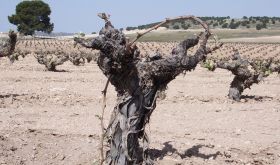
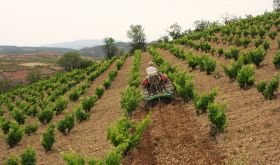
Basically a natural wine is designed to present the character of the place, grapes and growing season responsible for it as faithfully as possible. It is likely to have been made in small quantities by an individualist, grown either organically or biodynamically (although it may well not have been certified as such – way too heavy, man), but it will furthermore have experienced the lightest of hands in the cellar. No added yeasts – just those present in the vineyard and cellar. No physical manipulations such as pumping oxygen through the wine to soften it or filtering it to rid it of alcohol or water, the lightest of filtrations – no make-up, no Botox. Naked wine. No added sugar, acid, tannin or preservatives – other than minimal levels of sulphur. Sulphur being a natural by-product of fermentation, all wines contain some, but in general the reds will have under 10 and whites under 20 mg/l of sulphur dioxide, less than a tenth of the maximum levels allowed.
Given that asthmatics react badly to sulphur – like struck matches and coke (the fuel), it catches the back of the throat – why do conventional winemakers use it at all? As Pliny attests, those processing fruit and making fruit-based drinks have been using it since Roman times to preserve freshness, prevent browning and deter harmful bacteria. The small print on any container of fruit juice or dried fruit shows just how ubiquitous is sulphur dioxide, also known as preservative E220.
Because of their low sulphur levels, natural wines are extremely fragile. I recently visited one of the leading lights of the movement east of Tours in the Loire valley, Thierry Puzelat of Le Clos du Tue-Boeuf, who has been making wines naturally for the last 15 years. He allowed that they have to be very careful to keep the wines cool and always have to use refrigerated transport, aiming to keep the wine under 14 ºC to stop it re-fermenting, going cloudy or developing off-flavours. Indeed, critics of natural wine argue that keeping it cool can consume wasteful amounts of energy, a charge dismissed by Puzelat as minor in comparison to the harm done to the planet by agrochemicals. 'At first we had lots of accidents', he admitted ruefully, in his convincingly natural – not to say ramshackle – cellar. It contrasted with his neatly ironed black T-shirt adorned with the slogan A bout de soufre, presumably chosen carefully for the fortieth birthday celebrations later that day for Arnaud Erhart (who closed his groundbreaking Brooklyn 360 natural wine bar three years ago).
He was also quick to point out that he and his fellow naturalists, many of them clustered in the Loire, Beaujolais and Languedoc-Roussillon, were moved to change their methods less by any objective ideology than by selfishness. People like him and trailblazers the Bretons of Chinon and Marcel Lapierre of Morgon simply wanted to make wines that they found easy to drink, wines that they could drink in quantity without any physical ill-effects.
It was personal taste that motivated Les Caves de Pyrène, too. According to Wregg, 'The search for terroir and flavour integrity probably altered our pattern of buying. I think that we began to look for wines to excite and please us in equal measure.' By 2007 or so they were seeking out the natural wine fairs in France such as La Dive and La Remise, and touring the natural wine bars of Paris that provide such a useful showcase for natural wines, many of which qualify only as Vins de Table, so far outside the accepted norms of an appellation contrôlée tasting committee do they tend to be. By late 2008 Les Caves de Pyrène had opened their own fairly natural wine bar Terroirs in London (and will be opening a second branch, Brawn, in London E2 next month).
Having tried many of their finds both at their trade tastings and at Terroirs, I find myself bemused. I love the theory behind natural wines, but in practice I find them frustratingly unpredictable. I have never had a natural wine that I would put in the top hundred wines I have ever tasted. They tend to best represent youthful frankness and simplicity rather than the grandiose complexity of a wine long-aged in bottle. Successful natural wines have a vitality and personality that really does set them apart from the commercial mainstream, but some can be all too reminiscent of cider that's gone off.
That said, I'm sure the natural wine movement is here to stay – prominent wine writers Alice Feiring in the US and Dr Jamie Goode in the UK are writing books on the subject – and I feel confident that the proportion of hits rather than misses will steadily increase, unless we indulge them by encouraging faulty examples. Below are some of my current favourites.
A useful source of more information is www.morethanorganic.com
FAVOURITE 'NATURAL' WINES
WHITES
Breton, La Dilettante 2009 Vouvray Sec £14.49 Les Caves de Pyrène 01483 554750 (widely available in the US for $17-22)
Dom Olivier Pithon, Cuvée Laïs 2008 Côtes du Roussillon £16 HG Wines of London EC1, £18.40 Slurp.co.uk, Smiling Grape of Cambridge, £22.49 Les
Caves de Pyrène , Wadebridge Wines of Cornwall 01208 812692
Puzelat, Le Buisson Pouilleux 2009 and Brin de Chèvre 2009 Touraine £17.99 Les Caves de Pyrène 01483 554750
REDS
Mas Théo 2007 Coteaux du Tricastin £8.99 Oddbins
Dom d'Aupilhac, Servières Cinsault 2009 Vin de Pays de l'Hérault £9.40 Slurp.co.uk, The Sampler, Smiling Grape, Handford of London W11 and SW7
Dom Henri Marionnet, Première Vendange Gamay 2009 Touraine £9.95 The Wine Society
Dom d'Aupilhac 2006 Coteaux du Languedoc-Montpeyroux £15.40 The Sampler of London N1, Handford, £15.99 Les Caves de Pyrène
Rukumilla 2005 Maipo, Chile
NATURAL WINE BARS IN LONDON
Artisan & Vine, Clapham www.artisanandvine.com
Terroirs, London WC2 www.terroirswinebar.com
Brawn, London E2 (an offshoot of Terroirs opening in Nov)
BUYING NATURAL WINES IN PARIS
See this map of Paris showing where the natural wine bars and shops are.
SPECIALIST MERCHANTS
US
Louis Dressner www.louisdressner.com
UK
Aubert & Mascoli www.maisonaubert.com
Les Caves de Pyrène www.lescaves.co.uk
Dynamic Wines www.dynamicwinesuk.com
Zelas of Highgate www.zelas.co.uk (though not all of the wines they sell as 'natural' claim to be so)