For most of my adult life, the only European country I had never visited was Poland. Unlike most other European nations, Poles neither made serious wine nor seemed to me to have much interest in drinking it. The only intersection of wine and what is now Poland I was aware of was the nineteenth-century migration of vine-growing Silesians to the Barossa Valley in South Australia in response to religious persecution. (And possibly the most famous vintner of Polish extraction is Warren Winiarski, who produced the ‘winning’ Napa Cabernet in the famous France v California taste-off in 1976.)
But Poland has recently and rapidly been developing a wine culture. Sales of still wine in Poland have increased by almost 60% in the last 10 years. When I finally visited Poland last autumn, I was told that Poland had more wine bars than Germany. My hosts were not perhaps the most objective. I was invited to Krakow (where, incidentally, possibly coincidentally, the wine-buying decisions for British Airways are now made) by Czas Vina, one of two glossy consumer wine magazines that there now are in Poland – the same number as in Britain, and one more than in France.
I’m sure I was far from the only first-time British visitor to Poland to be struck by how prosperous both town and country looked – far more so than many parts of the UK. Presumably all this wine drinking is a reflection of that prosperity, and all those Ryanair miles travelled by Poles today.
While there I met the association of Polish women in wine, Kobiety I Wino, and have never come across a more active group of wine professionals. I’m still finding new bits of Kobiety I Wino-branded hardware in my possessions. The monochrome picture above shows Monika Bielka-Vescovi, the association's president (who once worked as a sommelier in the US) with me wearing the hat given me by Czas Vina when they made me their wine person of the year. (You cannot, alas, see the full glory of the peacock's feathers.)
But, partly thanks to climate change, Poland is now producing as well as consuming wine. In the much warmer climes of the early Middle Ages, Poland was an active vine grower but when cooler temperatures set in, beer and spirits took over. Although some Silesians in the far south west of what is now Poland (and was then Prussia) made wine for their own consumption, Poles were principally wine importers, particularly of Hungarian wines and especially of the famous dessert wine Tokaji.
From the sixteenth to the eighteenth centuries, Hungarian wine was regarded as more attractively sweet, spicy and robust than wimpy French wine, and many a wine merchant, especially in Krakow in the south of the country, would import Tokaji in barrel, improving it, in their view, by ageing it (and heaven knows what else). Even today a Polish saying has it that there is no wine above Hungarian wine.
With the partition of Poland at the end of the eighteenth century, trade with Hungary eased up and French wine became so fashionable that some Polish aristocrats sold off their Tokaji, including wines that were then more than a century old. But the Warsaw merchant Fukier amassed the world’s finest collection of Tokaji with wines going back to 1606. Unfortunately Fukier like so many went bankrupt in the 1920s, and what remained of the collection was looted by Germans and then Russians so that the precise whereabouts of the bottles is a mystery even to my Tokaji-specialist wine historian colleague Hugh Johnson. Fukier today is a well-known restaurant and location of some of the many wine events that take place in modern Poland.
I was a little surprised to spend my first few hours in Poland 150 metres below ground in a salt mine, but this is one of the jewels of the flourishing Krakow tourist industry and is a UNESCO world heritage site, no less. The vast church hollowed out of the salt mine shown below is a popular location for weddings.

My tour had a wine bent that included a first-class lunch served by top-quality waiting staff in a salty grotto after an aperitif of Philipponat’s Clos des Goisses single-vineyard champagne. The wines with lunch were provided, and personally presented, by Agnieszka Wyrobek-Rousseau, whose Wieliczka vineyards are nearby (‘130 m above the salt mine’ is how she described their location). Hers are the only Polish plantings to rely entirely on the European V vinifera vine species. The Chardonnay was entirely recognisable and a first-crop Merlot – reaching 12% alcohol with no alcohol-boosting sugar added to the fermentation vat – even creditable.
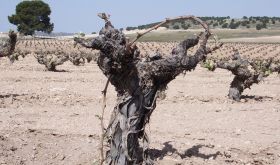
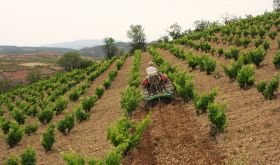
Most of the vines planted in the harshly continental climate of Poland are hybrids such as Solaris, Rondo and especially Regent (regarded as usefully compatible with French oak ageing) that can be persuaded to ripen early enough to escape the predations of a Polish winter, but the red burgundy grape Pinot Noir – plants from the Geisenheim wine research institute in Germany – is becoming increasingly popular. There are already more than 150 officially registered commercial vineyards with about 200 hectares (495 acres) of vines between them (the comparable figures for vineyards in England and Wales in 2013 were 1,571 ha and 537 ha respectively).
But wine is now so popular with Poles and there are so many new plantings not yet in production that some observers reckon it will not be long before the Polish vignoble totals 1,000 hectares.
Wyrobek-Rousseau is one of only two trained oenologists in the country but I also met Roman Myśliwieca, a photographer who planted vines as many as 35 years ago and makes Golesz wines. He was one of the first Polish vintners of the modern era and now advises many new entrants into the vinous fray.
Most but by no means all plantings are in the south of the country but there is one vineyard in the far north on the Polish coast where the relatively maritime climate helps extend the growing season. Polish vintners enjoyed their balmiest season ever in 2015 but there were some nasty shocks last year.
Even the most optimistic Polish wine lovers admit that it is probably only about a million consumers, most of them city dwellers, out of the country’s total population of more than 38 million who are responsible for the country’s wine boom. But they certainly could not be keener. The global educator the Wine & Spirit Education Trust works with no fewer than four wine schools in Poland. I enjoyed my time there, and in the 16 Polish wines I had a chance to taste I saw great sincerity in combatting the severity of the climate. Vodka, including the famous bisongrass, still seems to be the digestif of choice.
Polish cider, incidentally, is also enjoying a boom, as it has to since Russia, which once imported 70% of Poland’s apple production, no longer does. Drinking Polish cider is apparently seen as a patriotically anti-Russian activity, just like drinking Georgian wine.
REMARKABLE POLISH WINES
Purple Pagers can read the full tasting notes in Wines with real Polish.
Pałac Mierzęcin Riesling 2015
This did taste like Riesling.
Turnau Riesling 2015
Off-dry, recognisably Riesling again. Large estate in the north west part-owned by a well-known singer.
Płochockich, Inspira Volcano 2013
Fiery, Hungarian-inspired white made from the German hybrid Hibernal, most common in the Czech Republic.
Miłosz Pinot Noir 2014
Surprisingly burgundian, made by a journalist turned poet.
Wieliczka Merlot 2015
Very respectable varietal from the only Vitis vinifera-only producer.
Golesz, Feromer 2011
Not really a 2011, but a fortified blend of 2009 and 2013!