I’m often asked whether, like some of my wine-writing peers, I’d like to make my own wine. The answer is a definitive No. I am a self-confessed control freak. The idea of being in thrall to something as unpredictable and uncontrollable as Nature fills me with dread. I use the excuse of not wanting to be commercially involved in the field about which I write (glasses are different…). But I know only too well that I am not practical and have little proven success as a gardener and therefore would stand little chance of making a decent bottle of wine.
I deeply admire anyone who manages to transform a patch of earth and a plant into a delicious liquid, but my job is to critically assess the results and I have become increasingly aware of and amused by the differences between how wine producers see their wines and how I often do.
I’m not talking about how good I might think a wine is. Obviously, most wine producers are going to think their wines are terrific. I know that if I made wine, I would be mortally offended if someone with any sort of reputation gave one of my wines a low mark or wrote anything critical about it. Clearly, to be a farmer and a wine producer in today’s score-riddled market, you have to have an extremely thick skin, a surfeit of sangfroid – and perhaps a punchbag for letting off steam.
What my 43 years of writing about wine have taught me is that there can be a wide gulf between how producers see their wines and how those of us who taste them for a living perceive them.
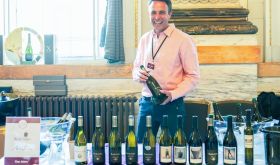
One or two wine writers are famous for the amount of advice they like to give wine producers. They comment out loud on their wines and tell producers how they could improve their technique. But in a professional setting I am a relatively passive taster. When meeting producers, whether in their own habitats or when they are travelling on sales trips, I tend to keep as quiet as possible, remaining very much in reception rather than transmission mode. After all, I want as much information as possible to flow from them to me. If they’re interested in what I think, they can always read it after I have fully digested everything.
And anyway, a lot of the time I am concentrating on the wine, very possibly with a mouthful of it, so I don’t have a lot of time left over to declaim, what with nosing, thinking and writing my notes. (And people wonder I don’t take more pictures and make more videos...)
I like to be told the background to individual wines, but I hope you will understand me when I say I prefer to make up my mind about them rather than be told how they taste. (Our picture was taken at the recent Masters of Wine tasting of 2014 Bordeaux, showing MWs David Peppercorn and Nancy Gilchrist making up their own minds about how the wines taste.)
The most extraordinary encounter I had with a winemaker was in Switzerland, in a particularly beautifully appointed winery. Perhaps the winemaker was new. Perhaps that was the reason that he accompanied his presentation of the wines with a set of printed tasting notes and read out every word (many of them superfluous) while I tasted my way through his range.
This reminds me to make the point that even more annoying than this is when a producer thinks it is helpful to present you with another wine writer’s tasting notes – generally accompanied by a favourable score, needless to say.
But in this era when most wine producers, and indeed most of us wine writers, seem obsessed by soil types and geology, it is becoming increasingly common for producers to predict how a wine is going to taste. I am finding it almost the norm nowadays when a producer presents a range of wines from different terroirs that the way they differ will be prescribed and described. As in, ‘this wine from a low-lying sandy vineyard is soft and open, while this one grown on our steep, south-facing slope of granite is particularly crisp and tense’.
Now this is sometimes true, but not always. You have doubtless heard of cellar palate, the condition from which it is difficult for many wine producers to escape. They become so used to their own wines that they become incapable of tasting them objectively – and may sometimes even become desensitised to their faults.
I think the same thing can be true of how winemakers see their own wines. They need to conveniently put them in boxes and therefore do so, regardless of whether the boxes are a good fit or not.
There are Burgundian cellars where you know that the vigneron will describe wines from his various parcels of vines in exactly the same way every year because he has convinced himself that that is the character of that plot of land, when you see enormous variations in character from vintage to vintage. Some years the descriptions correspond to how the wines taste. Some years they definitely don’t.
This discordance can be true of producers anywhere and it can apply to all sorts of aspects of wine. The other day I was with a small group of my peers tasting some stunningly good southern hemisphere wines in a succession of verticals. The producer was convinced that his wines from the difficult 2016 vintage were very backward and that those from the easy-peasy 2015 vintage (the Bordelais call such a year ‘a deckchair vintage’ to acknowledge how little work was required) were tasting best at the moment. In fact those of us slovenly scribes who didn’t have to labour to produce these wines were unanimous that the 2015s were not in fact showing as well as the 2016s and 2014s. Just one example of the possible gulf between winemaker and commentator.
Apart from the obvious one of course, that one of them is an achiever. The other is a parasite.