‘This couldn’t possibly happen in Spain', leading Spanish wine writer Luis Gutiérrez assured me at the end of last month as he looked round one of the Royal Horticultural Halls in London packed with Spanish wine producers.
We were at a wine tasting billed as ‘Viñateros – a Spanish wine revolution’, a tasting (described in full in Viñateros – bigger and even better) that, most unusually, had a real buzz about it, a feeling of excitement energising the blasé British wine-trade attendees that I had not felt since the New Wave South Africa tastings that take place every other September. One of London’s most thoughtful wine merchants Simon Farr came up to me as I was tasting, surveyed the scene and observed, ‘I just wish I were starting up Bibendum Wine again. There are so many great wines to choose from nowadays.’
Young Master of Wine and Aragón wine producer Fernando Mora echoed Gutiérrez’s sentiment, explaining that in Spain rival wine distributors wouldn’t dream of co-operating in an event at which the best wines of their competitors were shown to their best customers. But at this second and much bigger edition of Viñateros in London were the crème de la crème of Spanish wines brought into the UK by no fewer than 14 different importers and – this is the key – strict criteria were imposed on the sort of wines that were poured at the tables ranged around the hall.
We had none of the big-volume brands (and actually relatively few wines from the flagship red-wine regions Rioja and Ribera del Duero). To be shown at the event, wines had to be made by the outfit that grew the grapes (much less common than you might think), and preference was given to indigenous grape varieties. The producer had to be committed to the health of their vineyards by following at the very least sustainable farming practices and preferably organic or biodynamic protocols. There were also rules for how the wine was made. The winemaker had to be more interested in expressing the vineyard than applying fancy, intrusive winemaking techniques (so there was very little new oak on show). Fermentations had to be initiated by yeasts that were local rather than bought in, and only ‘judicious’ use of additives, typically minimal additions of the preservative sulphur dioxide, were allowed.
UK wine importers Indigo had the initial idea and approached other importers in this admirably and effectively collaborative venture. The importers then proposed the growers they would like to see included in Viñateros. Their names were submitted for approval to Madrid-based Amaya Cervera of the bilingual website SpanishWineLover.com and she had the power to decide whether they qualified as one of the best of their region. Some of those who were suggested were rejected but 76 growers made the grade and brought themselves and their wines to London.
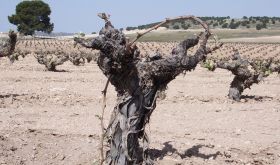
Many a generic wine tasting is held in the RHS’s Lindley Hall but this one looked rather different. There were no large banners or flashy point of sale accoutrements. Instead it all looked rather rustic. There was the odd beanie and not a suit in sight. This was a very different snapshot of Spanish wine that was largely about very local terroir and, often, unfamiliar but indigenous grapes. The official statistics show a Spain that is disproportionately dependent on Tempranillo, the dominant grape of Rioja and Ribera del Duero. But here in the Lindley Hall we were presented with the evidence of a new wave of wine producers, often pretty small-scale, who are unearthing forgotten local varieties and, like their counterparts outside Spain, returning to the ways of those who grew and made wine before the late-twentieth-century advent of agrochemicals and embrace of technology. Tasters were heard to describe wines as ‘elegant’, ‘pretty’, ‘fine-grained’ – words that would have been unthinkable a decade ago.
There is a newfound confidence in what Spain, and Spain alone, can offer today’s wine lover. As Gutiérrez put it when introducing a masterclass devoted to wines emblematic of this movement, including a stunning, ageworthy pale red clarete from Ribera del Duero, ‘we used to look to France. The hardest thing to overcome was our old inferiority complex.’
Hardly surprisingly for such a large country, there is huge variation between different regions. The damp green north-west can offer wines that least conform to the image of Spain as a hot, dry country. The Albariño grape, responsible for so many of the breezy Atlantic whites of the coastal Rías Baixas region, is the best-known wine emissary of Galicia but, as Viñateros showed, it is only part of the story. The same grapes such as Loureira, Treixadura and Caiño Blanco, responsible for Vinho Verde over the Miño/Minho river, are grown in Rías Baixas too. Whites made from the Godello grape can be even more serious and long-lived, especially the best from the Valdeorras region.
But there are fascinating, generally aromatic, appetising reds from this corner of Spain too, from grapes such as Mouratón (also known as Juan García), Merenzao (called Trousseau in the Jura) and, especially, Mencía. This last is the signature grape of the Bierzo region just outside Galicia which is currently on a roll, thanks to a rich heritage of really old vines, some particularly propitious terrains and a group of dedicated, small-scale producers.
The excitement of the current Spanish wine scene is more about terroir than about grape varieties. And about presenting the unique qualities of a particular combination of land and plant. This means adapting what happens in the cellar to individual requirements, which often means ignoring the requirements of the official denominations – particularly those that demand prolonged oak ageing. (Spain is still living with the legacy of a belief that the best wines are those that spend longest in barrel.) A considerable proportion of the wines on show at Viñateros were therefore sold simply as Vino de España rather than with any more geographically specific clue.
I tasted my first wine from the Canary Islands as recently as 2004, but there were four tiptop producers of them at Viñateros (which of course was a very partial presentation of the current Spanish wine scene), as well as three presenting evidence of the revolution that is at last affecting sherry country in Andalucía where stasis is being replaced by single-vineyard wines, and some lighter whites made, unlike sherry, without the addition of alcohol (see Jerez unfortified – a glimpse into the future?).
The future looks bright indeed for new-wave Spain.
Some great new-wave Spanish wines
Whites
Borja Perez Viticultor, Viduenos Artifice 2017 Ycoden Daute Isora
£18.08 Justerini & Brooks
Dominio do Bibei, Lapola 2017 Ribeira Sacra
£24.50 VinCognito
Barco del Corneta, Parajes del Infierno La Silleria 2017 Vino de la Tierra Castilla y Léon
£34.10 Indigo Wine
Dominio del Águila Blanco 2015 Vino de España
£59.80 Hedonism, Bottle Apostle
Reds
4 Monos Viticultores, Tierra de Luna 2017 Vinos de Madrid
£19.18 J&B
Bodegas Bernabeleva, Navaherreros Garnacha 2017 Vinos de Madrid
£19.49 Hay Wines, Herefordshire
Guimaro, Camino Real 2017 Ribeira Sacra
£21.90 Les Caves de Pyrène
Domaines Lupier, El Terroir 2015 Navarra
£22.95 Berry Bros & Rudd
Daniel Landi, Las Uvas de la Ira 2018 Méntrida
£26 The Laughing Heart, The Sampler Islington
Dominio del Águila, Picaro del Águila Clarete 2016 Ribera del Duero
£27.50 Hedonism, Vagabond
Remelluri Reserva 2012 Rioja
About £35 Noble Green, Forest Wines, Bottle Apostle, Hedonism
Casa Castillo, Las Gravas 2017 Jumilla
£37.60 Indigo Wine
Castro Ventosa, Valtuille Rapolao 2015 Bierzo
£41 Indigo Wine
See tasting notes in Viñateros – bigger and even better. International stockists on Wine-Searcher.com.