Number 30 in our series of entries to our wine writing competition comes from Richard Ashton, who writes:
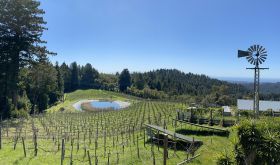
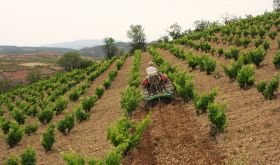
I’m in my early sixties and living in the Lima Valley of northern Portugal, where I have been building a house and experimenting with a micro-vineyard, now three years old, with Riesling, Jaen (Mencía) and Vinhão vines. I’ve made my living for the past few decades by writing, but these days I’d really rather be on my tractor.
Down to earth in the Minho
‘The state of bondage is overcome through perfectly maintained discrimination.' There are numerous ways of looking at our culture of consumerism, and perhaps this yoga sutra is as good as any. The particular form of bondage created for ourselves by our affluent, high-pressure, achievement-driven lifestyle is at least loosened by the feeling that we have ever-greater control in the choice of things with which we fill our leisure hours.
In entertainment, in fashion and food, as in wine, variety and profusion is a powerfully alluring antidote to the monotony of the everyday struggle. Profusion is almost the thing we want, regardless of the medium in which we find it expressed.
The luxury of being a wine enthusiast in a country like Britain, where wine merchants vie with one another other to tickle this fancy for variety, is that there is always something new, something a little more finessed, some fascinating alternative.
At the other end of the telescope, in the cobbled back lanes winding between the village smallholdings in a wine-producing region like Portugal’s Minho, choice, variety and finesse may not be uppermost in the wine drinker’s mind. Here, almost everyone who drinks wine also produces it, and the pleasure of drinking is closely bound with proprietorial pride: drink with me, I made this.
The older generation of smallholders in the Minho lead an almost self-sufficient life, not quite off-grid but still preferring ‘mountain water’ from an uncertified spring to the chemically-sanitised municipal supply, still restricting their use of electricity to the absolute minimum, and relying on their own harvest of firewood for heating and cooking fuel. Husband and wife tend a few scattered plots of land, planting them with covas, the long-stemmed straggly cabbage beloved in the region, potatoes, corn (for animal feed), olives, fruit and vines. They may keep three or four cows, some goats, chickens, turkeys, or perhaps a sheep or two. If there’s any produce left after their own needs have been met, they may take it to the local market to make a little cash, but this, like the keeping of cows, is almost a gesture to the disappearing traditions of the local way of life, rather than a real contributor to household income.
Profusion and choice is not part of their lives, and the wine they make reflects this. It is a basic staple, made with the absolute minimum of technology or fuss. There’s a rough and ready process for it, like the process for husking the corn and grinding the stalks to make bedding for the animals. You get it done quickly late at night after a hot day picking the grapes, and you get to bed as quickly as possible because there is a field of potatoes to weed tomorrow.
Vinho Verde branco is appreciated internationally for its spritzy charm, but it’s the village winemaker’s tinto that seems most closely expressive of local tradition, and the appeal of this is strictly parochial. In its most intense manifestation, it can be as bracing as a full-body plunge into an icy lake. It’s likely to be offered to you from the musty gloom of a cramped adega still cluttered with obsolete equipment and cobwebbed barrels not used for forty years. The bowl you drink it from may not have been washed since it was last used, and your host may scoop a fly out before handing it to you. But he and his wife made it themselves, and here, that gives it a special value.
I once tried to thank a neighbour in our village for a favour by making him a present of an expensive bottle from the Douro. He cast it aside without a glimmer of interest, and pulled me by the elbow into his adega, to share another purple-stained bowl.

Last year on the festival day of Sao Martinho (11 November), the builders who were working on my house held a barbecue to broach the new season’s just-made tinto verde, to roast chestnuts and devour half a pig. I saw that, at the first taste of the frothing black liquid, the drinkers’ features set into a mask of stoical determination. Loins girded and with an air of shared endeavour, they went stolidly and gallantly about the business of consuming the 40 litres laid on by the host. (After grimacing my way to the bottom of a single cup, I spent the rest of the evening with a tight grip on the one bottle of supermarket Alentejo laid on for the lesser mortal at the party). I watched as, in an exhibition of machismo parallel to the wine-quaffing, they took turns to handle the hot metal of the barbecue with bare hands. At one point the plumber picked up the searing grill directly from the coals and flipped it through 180 degrees, joking with the others as he did so. And then they looked the other way as he sidled round the corner to a butt full of water where he could relieve the terrible pain. Local wine and local culture, hand in throbbing hand.
Can such an uncommercial and un-exportable style of wine survive much longer? At times it seems almost as if it is in danger of becoming a heritage item, a piece of tradition preserved beyond its natural life, a yearly rite of passage to be chortled over by strong men around the churrasco, or drunk dutifully at Christmas by the family returning from France or Switzerland to celebrate with the grandparents, or offered to the tourist who dares to peer into the soul of the local gastronomy. Once the living memory of the generations who lived through the hardship of the Portuguese dictatorship is gone, will this token of the old days still make sense? As my neighbour said as we pushed the last of his black grapes through the crusher towards midnight last October, ‘we don’t make so much of it now because when our sons come to stay, they drink beer.’