Alessandro Sgariglia writes my name is Alessandro Sgariglia, and I was born in Rome in 1989. I work as a sommelier in Seychelles. I believe that food and beverages are the key to understanding a culture, and I travel the world seeking these experiences. I enjoy sitting with people I barely know, sharing food, stories, and something to drink. I think wine acts as a bridge between history, communities, nature, and philosophy. Some call it terroir. I’m still trying to figure it out, but it’s about emotions, and emotions are not always easy to explain. Sometimes, you just feel it—or taste it.
Cesanese: an apology
I never cared much about wine.
I know it sounds shameful for someone born and raised in Italy, but until 2016, my relationship with wine was based on a mutual agreement to ignore each other.
Wine has always been on my table since I was a kid, but I’ve never been a fan. Since we were a working-class family, we couldn’t afford the wine excellences that made my country famous worldwide, and even if we could, no one had the palate to appreciate them. For our meals, we had two wine-pairing choices: a tasteless, technically perfect, good-for-cooking, €1-per-liter box wine, or Grandpa’s Cesanese.
Yes, my grandfather was a winemaker. Not a good one, though.
It wasn’t his primary job, to be fair. He owned a small plot of vineyard—just a zero-point-something hectare—around Castelli Romani, in Rome’s countryside, inherited from his family. He would go every weekend to take care of the vines and manage to make some wine from it.
He wasn’t a talkative person, but he had two favorite topics that he always loved to bring to the table, and there was no stopping him: about chasing Nazis in the towns around Rome during WWII, and his Cesanese. Sometimes, the two stories even crossed paths.
“We were organizing a strategic fallback in my hometown. We found shelter in the surrounding woods. We were waiting for our comrades to join, planning a counterstrike against the main barrack. The town was almost deserted. We managed to evacuate most of the people, except for this die-hard local priest. He didn’t want to leave. He was afraid of soldiers looting the church, and there was no way to move him out. So, we decided to hide him in my mother’s cellar, where we kept the chestnut barrels and the bottles of our Cesanese. It was in the basement of the house, right in front of the church. From there, he was able to observe the situation and stay safe. It wasn’t a comfortable place—dark, humid, almost no food. But he stayed there for two weeks. He came out when everything was finished.”
“The war?”
“No, not the war. The wine. He drank it all.”
Cesanese is an insidious grape to grow, and it’s even worse for vinification. Low acidity, varying colors each season. Picking at the right time, the timing for harvest—it’s challenging. If harvested too early to preserve more acidity, the chances of losing the typical sour cherry notes are high. If picked too late, the acidity disappears, and what’s left in the glass is a cooked, high-alcohol cherry jam. It requires patience, a discerning palate, skills, a good pruning background, and daily visits to taste the berries.
As a man of quick manners, my grandfather was not the right person for the job. But every weekend, he would leave early in the morning to drive up to the vineyard and stay overnight. I didn’t go often, but I liked it. It wasn’t the manual labor, nor the wine; I just liked how he looked when he was working there: an 80-year-old amateur enjoying what he was doing.
There, he was serene and calm in a way he wasn’t during the week. I could feel his sense of peace just by looking at him standing next to the vine to take a break. Maybe it was more about taking care of his memories than making wine. A ritual repeated every year since his great-grandfather purchased that piece of land. His way of being part of something, of keeping alive his family history, brutally interrupted by the tragedy of war.
A last man standing of a fading tradition.
He never shared anything about it with any of us. And the tradition faded.
He died, and shortly after, the vineyard was sold to someone with more time and interest in taking care of it.
I didn’t have a glass of Cesanese for almost 12 years.
After a while, I started to enjoy wine. I fell in love with it, and it became my full-time job.
One day, I was scouting wineries for a new opening in Rome focused on sustainability and a farm-to-table approach. They wanted only wines from the region, not big producers. A friend advised me to meet a garage-winemaker guy in the Castelli Romani area, and he gave me his number. I met him at 12:00 in a small bar outside Rome, in Castel Gandolfo. There was a crowd of old people playing cards, and he was waiting for me at the table with a transparent glass bottle—no label. The color was shiny red, bright even in the light of June: an alchemic love potion made of liquid ruby. It made me thirsty. I sat, and he poured the wine into a water glass. Holding it, I thought it was maybe too chilled for a red. A very intense cherry-pie aroma was coming up, but it didn’t have particular complexity on the nose: easy, fresh, juicy. The sip was explosive, like the Death Star explosion in Star Wars: a lightning spark in a dark galaxy. Deep primary fruits, balanced acidity, and pound-for-pound structure.
“It’s Cesanese.”
I was shocked. How? From where?
“Not far from here. 15 minutes, maybe. I’ll drive you there.”
It wasn’t my grandfather’s vineyard.
I hoped for a moment that it was, but no. Different hill, different area. But I finally understood why he was so stubborn in his attempts. It wasn’t just about family heritage or sentiment. He knew that good wine could be made from there.
Because he tasted it.
From that day, Cesanese has always been on my wine lists.
It’s my signature. “My must try”. My story to tell. My way to take care of my memories. My ode to a grape.
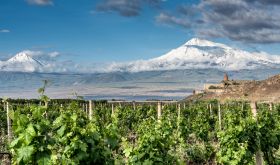
Image by diane555 via iStock.