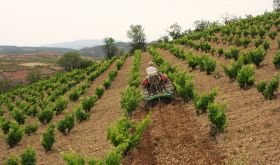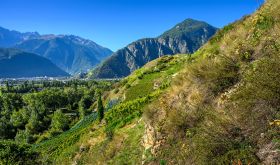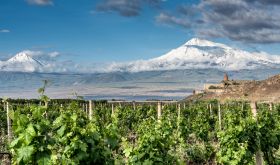

Chile’s new grape varieties and DOs
First, a bit of background – in 1994 Chile’s Ministry of Agriculture laid out Decree 464 – which governs all the Denominaciónes de Origen, or DOs, in Chile and what a wine producer must do in order be legally allowed to put a region of origin on their label. One of the things that this document stipulates is which varieties are allowed to be noted on wine labels. Since its publication it has been amended to account for new appellations and grape varieties three times – in 2012, in 2018, and on 29 July 2024. And the most recent changes are pretty big ones.
The Minister of Agriculture and Vinos de Chile have revised the decree to allow 51 new grape varieties on labels. As of the last amendment in 2018 the decree only listed 47 varieties – this change more than doubles that! Because varietal labelling is popular, restricting which grape varieties are allowed to be listed on a label often disincentivizes planting grape varieties that don’t qualify. Adding 51 new grape varieties to this decree encourages experimentation and adaptation.
The decree has also been updated to include two new DOs. The first is on Rapa Nui – also known as Easter Island, 3,700 km/2,299 miles off the coast of South America, in the most remote place for winegrowing in all of Chile. If you open your 5th edition of The Oxford Companion to Wine you will see that journalist Patricio Tapia has written, ‘this far-flung Pacific island is thought to have been first planted to vines around 1860 by French missionaries. They sited them on the slopes of the Rano Kau volcano to protect them from the wind, the main viticultural challenge here, but they ultimately abandoned their efforts.’ He goes on to report that there is a revival underway and that by the early 2020s two new projects had launched and 10 acres/4 hectares of Chardonnay, Pinot Noir and Garnacha had been cultivated. In addition, cuttings had been taken from the vineyards that had been abandoned 150 years prior. Genetic studies completed this year show that the abandoned vineyards are made up of six varieties – País, Moscatel de Alejandría, three native Criolla varieties, and one that has yet to be identified. In less than six years the island has gone from viticulturally abandoned to having its own DO – Rapa Nui. 2023 marked the production of the first wine known to have been grown and produced on the island.
The second new Chilean DO is the Chiloé DO in the Chiloé Archipelago in Patagonia. The area’s first vineyard was planted in 2018 by Aurelio Montes of Montes Wines and consists of two hectares of Pinot Noir, Chardonnay, Sauvignon Blanc, Riesling and Albariño.
Now, while the decree has been updated, the changes are currently sitting with congress, so the official documents are unlikely to be published for another six months. I will keep my eye out for when they are!
Treasury’s sell-off
The number of shifts, mergers and acquisitions in Australian wine in the last six months is hard to keep up with but I did briefly mention, back in May, that Treasury Wine Estate had announced that it was looking to restructure. On 6 August the company announced that it would be selling Wolf Blass, Lindeman’s, Yellowglen and Blossom Hill. The brands make up less than 5% of the company’s profits but are estimated to make up around 26% of Treasury’s total volume. It seems highly unlikely that the company stands to profit much from the sale of these brands considering the rapidly shrinking market for commercial wine and the abundance of similar sales in recent months. The company’s ‘premium’ brands (those retailing at AU$10–$30) including Wynn’s, Pepperjack, Squealing Pig and 19 Crimes – have seen 10% annual growth for the last three years. Considering this, it makes sense that the company is pursuing a premiumisation strategy.
Hail in Beaujolais and Barolo
Around a month and a half ago I told you about the hailstorm that hit Beaujolais on 18 June. On 31 July the region was struck by hail again. According to Vitisphere around a fifth of the hectares under vine in the communes of Vauxrenard and Chiroubles were affected and damage ranged from 20–35%.
In Barolo, Giuseppe Vajra tells us that on the evening of Friday 2 August hail hit the area between the communes of La Morra and Barolo. Vajra estimated the worst affected areas saw about 30% damage. While many in the region work with hail nets, Vajra chooses not to because the netting blocks the wind from being able to fully infiltrate the canopy – which they find crucial to decreasing fungal pressure while farming organically.
Portugal protests
First a bit of background.
Every year the Instituto dos Vinhos do Douro e Porto (IVDP) set the limit on how much port can be produced – this is referred to as the ‘beneficio’ and it is set in order to avoid an oversupply. The IVDP recently set the beneficio at 90,000 pipes of port, down from 104,000 in 2023.
While this does represent a 13.4% cut, according to a report on 29 July written by Adrian Bridge, CEO of The Fladgate Partnership, this really shouldn’t have been a surprise. The 2022 beneficio, at 116,000 pipes, was very high. The IDVP initially recommended that production in 2023 be set at 96,000 pipes but, for political reasons, it was set at 104,000. Meanwhile, overall sales of port dropped 7.1% in 2023 and now the category is dealing with a potential oversupply. The 90,000-pipe production limit for 2024 is still considered by many to be too high.
Nonetheless, on Wednesday 7 August more than 500 port growers protested outside the IVDP building in the city of Régua, saying that too much imported wine was flooding the market …
Let’s be clear: these are two very different gripes. The cuts are necessary to maintain the value of port. The cuts don’t affect dry wine production. However, grapes for dry wines do not command the same price as port grapes even though the farming cost can be equivalent. And farming in the Douro Valley, which has more steep mountain vineyard than any other wine region in the world, is incredibly expensive! So the disquiet over imported wine – which as I discussed on 20 July is often being passed off as local – is entirely fair … but the conflation of the two is dangerous.
2024 harvest starts
July 2024 was the second hottest July worldwide – outdone only by July 2023. As a result of the sweltering heat many areas of the world have begun harvesting.
Sicily, which has seen extreme drought and water rationing this year, began harvest the fourth week of July.
Hungary and California, which have both experienced their hottest Julys on record, began harvesting this week. This is around two weeks earlier than normal for Hungary. For California, it is similarly early but both 2015 and 2021 were earlier.
€650,000 in wine theft
On 6 August a maintenance worker who had been employed by Albert Bichot and Joseph Drouhin was sentenced to a year in prison and a €10,000 fine. It seems that this man had, between 2017 and the present day, slowly stolen 7,000–8,000 bottles of wine, 1,285 of which were grands crus. In total the bottles were worth €650,000. He seemingly drank none of them, sold none of them, and all were found in the cellars of his and his mother’s house.
Now, I know I should be wondering where this man’s morals are but … I’m still wondering how he got away with this for so long! It seems that he was caught on CCTV footage stealing four bottles. But when police searched his house all of the reports read like they thought they were going to find four bottles … and they found three full cellars of blue-chip burgundy!
This is a transcript of our weekly five-minute news broadcast, which you can watch below. You can also listen to it on The Wine News in 5 Podcast. If you have breaking news in your area, please email [email protected]. And if you enjoy this content and would like to see more like it, please subscribe to our site and our weekly newsletter.
Photo at top courtesy Montes Wines.