Nika Shevela writes Nika Shevela is a wine educator and communicator specialising in Spanish and Catalan wines. Born near the Caucasus, bred and based in Barcelona, she holds the WSET Diploma and Spanish Wine Scholar credentials, among others. She teaches formal qualifications like WSET courses and Wine Scholar Guild, as well as delivers other types of training and tastings through her Wine Alphabet project. With an academic background in translation, Nika bridges wine and communication worlds, focusing on reshaping wine conversation through education and writing.
Sumoll, a story of rediscovery and resilience
“Catalonian Girls, meditеrrànies
Tenim fama internacional
Fеm un brindis amb les copes cap a dalt
Oh-oh, oh-oh, oh-oh, oh-oh, oh-oh, oh-oh”
"Catalonian Girls, Mediterranean,
We have an international reputation,
We toast with our glasses raised,
Oh-oh, oh-oh, oh-oh, oh-oh, oh-oh, oh-oh",
goes the chorus of a catchy tune by Fades, a Catalan-speaking pop band from Mallorca founded by three Catalan Philology graduates. It soundtracked my hedonistic Barcelona summer in 2024, but all Fades output is intrinsically political. "50% queer, 50% Catalan, our identity is already the political discourse," they've often said in interviews.
Key to the Catalan identity, the Catalan language was prohibited during Franco's nearly 40-year dictatorship, with regional autonomies suppressed across Spain. Democracy in the late 1970s changed this, giving Catalonia control of its education system.
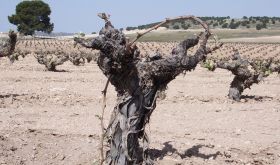
Cultural erasure extended into the vineyards. Sumoll, a historic Catalan grape, used to be among the most planted red varieties in Catalonia; particularly in Penedès until the early 20th century. It was essentially banned when DO Penedès was established in the 1960s, excluded as a 'low-quality variety', with plantings plummeting in favour of Tempranillo and Bordeaux varietals.
"My father and grandfather never believed in Sumoll. They would say that there must have been good reasons for uprooting it back in the day," says Roc Gramona, technical director of Gramona and the current generation of this leading Catalan winemaking family. But things are changing, and today Sumoll is gaining strength again. Roc reveals plans for a promising single-parcel sparkling Sumoll.
Sumoll also shines in the younger, ambitious project by cousins Roc and Leo Gramona that is redefining Penedès. It features in their Vi Fi blend alongside Garnatxa and Carinyena, and in the single-parcel La Peça Coll de Guix from a 1961 Sumoll vineyard.
The latter is a product of shared love between Enclòs de Peralba and Pardas. Pardas is key in the Sumoll revival: winegrowers turned winemakers who rented small old Sumoll vineyards, selecting old vine material before planting their own in 2000 on their stunning estate high in Penedès. Their first Sumoll bottlings from 2004 were rejected by DO Penedès, which didn't admit Sumoll until years later. Even the Catalan Wine Institute advised against the plantings.
So seemingly maligned and almost feared historically… what is Sumoll even like?
My first encounter with Sumoll was in 2015. ‘Mestre Vilavell’ by Bodegas Puiggròs from the small DO of Pla de Bages was carrying all the force and purity of 80+ year-old vines from this continental corner of Catalonia in Barcelona province.
I dug out my tasting journal from that year (well in my pre-spreadsheet era) with these notes: "These tannins will keep you wide awake. Chewy, sticky, and grippy, they are not the type to leave quietly either. And is this black mulberry I am tasting? Searing acidity, but well wrapped in dusty spice, touch of barberries and almost cumin?"
While in this case I’m glad to have had my notes, some associations persist in memory strongly without the need for documentation. I spent my first fourteen years in Rostov-on-Don, Russia, often called 'the gateway to the Caucasus' (and Central Asia), and it’s where my olfactory memory was shaped. Rostov's geography meant Caucasian fruits like black mulberry and feijoa joined my summer haul with northern cousins like gooseberry. The first wines I saw my parents drink were Georgian Saperavi and Armenian pomegranate wine. My godmother's Kazakh lamb plov a was Sunday tradition, like beachside fideuà with friends today. Migrating to the Mediterranean, I embraced new flavours, thinking I'd abandon childhood ones. Until Sumoll, Catalonia's forgotten grape, transported me all the way back.
Excited beyond belief, I set out to find all the Sumoll I could. Availability, variety and quality kept improving over years. A couple of years after that first taste, I tried the whole Gaintus range by Montrubí, fierce proponents of grape recovery in Penedès who released the world's first 100% Sumoll in 2001. Gaintus Radical always takes me to Italy, but also back to the Caucasus, with its tangy hibiscus, pomegranate and full-on savouriness, while Gaintus Vertical is all about my Black Sea childhood summers amongst pine and cypress, with strong smoke. Both have edgy, slightly wild tannins even after years in bottle. Montrubí uses Sumoll in ancestral and passito sweet wines too — relying on the grape's fresh, firm acidity even when fully ripe.
Red fruit potpourri with a vegetal and earthy touch is exactly how Núria Avinyó from Clos Lentiscus describes Sumoll. "It's a wild one, Sumoll. But also telluric, as it roots us to the land in a very primitive way. And ironic: it seems light [Sumoll wines tend to be light-coloured], but this wine takes you deep." In the Massís del Garraf, where Núria Avinyó and her father Manel craft some of the most characterful Catalan wines, Sumoll thrives in calcareous soils with little rainfall, yielding lighter, fresher and mineral-driven wines touched with salinity.
"Acidic, resilient, rustic - it has to be handled properly in the vineyard and in the winery - and extremely ageworthy," is Roc Gramona's verdict on Sumoll. He's hopeful about its future in the Mediterranean climate with all its "tension, verticality and freshness".
Was it these qualities that attracted my former wine students and now wine friends Giulio and Gaia of Giulio & Gaia Vinyataires to bet on this stubborn variety in two of their Penedès wines? Young, vibrant Rumore is a Sumoll blend, while Piel con Piel is a crunchy, yet complex oak-aged Sumoll… with just 11.5% ABV!
"If Sumoll were an artist, I'd compare it to the great Sixto Rodriguez — the American singer-songwriter of Mexican descent who only found success, almost unknowingly, toward the very end of his life. For many years, his immense talent remained hidden from the public eye and got rediscovered only recently, thanks to an Oscar-winning documentary,” says Giulio.
A story of Sumoll is yet another story of rediscovery and resilience. I'll be watching this 'Catalonian girl, Mediterranean' rather closely, toasting her with my glass raised.
Photo: Sumoll grapes in Santa Margarida de Montbui, Penedès. Credit: Roc Gramona i Simó (Gramona, Enclòs de Peralba).