In a way there’s nothing new about foreign interest in English wine. The seminal wine that launched the tidal wave of English sparkling wine made in the image of champagne, Nyetimber, was made, with French help, by an American couple back in the early 1990s. Today Nyetimber is owned by Dutch-born Eric Heerema.
Admittedly it was a long while before champagne companies themselves took a direct stake in English fizz: Pommery in 2014 with a joint venture with Hattingley Valley in Hampshire and, the next year, Taittinger with a serious investment in the form of Domaine Evremond on a Kentish fruit farm. This was after another sign of French interest. Winemaker Corinne Seely had already moved from Bordeaux in 2011 to build up a library of older vintages to blend into Exton Park sparkling wines in Hampshire.
The German sparkling wine producer Henkell-Freixenet bought Bolney wine estate in Sussex in 2022 but the foreign country with a particularly marked stake in English wine is South Africa. In the early years of this century, South African Andrew Weeber laid the foundations of one of the best-known of the new wave of English sparkling-wine producers, Gusbourne. Leonardslee outside Horsham in Sussex was founded as a sparkling-wine estate in 2017 by South African Penny Streeter, who had already established Benguela Cove Lagoon wine estate in Walker Bay on the Cape South Coast.
The latest South African wine operation to try its hand at English sparkling wine could hardly be more experienced. The name Graham Beck is synonymous with top-quality bottlings of Cap Classique, South Africa’s traditional-method sparkling wines and a 2018 Graham Beck English sparkling wine has just been launched.
In the same year as the first vines went into the ground at Leonardslee, the Jordan family, whose eponymous Stellenbosch winery is well known, acquired the Mousehall estate near Wadhurst in East Sussex and initially concentrated on producing Mousehall spirits. But, while their Tidebrook sparkling wines were maturing in bottle, unlike earlier investors in cooler times, they have also been able to produce a range of still wines, from the 2022 vintage onwards.
Thanks to warming summers, English and Welsh vineyards can now yield some really quite creditable still wines (see below), typically Chardonnay and Pinot Noir because those are the grapes that were planted for classic sparkling wines. Many an established English wine producer nowadays has added a few still wines to its range of sparkling cuvées but the interesting thing is how many of them depend on grapes bought in from England’s warmest, driest county, Essex in the east.
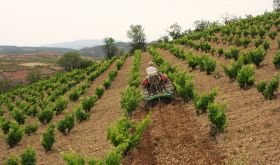
The Crouch Valley, south-east of Chelmsford towards the coast, with a climate moderated by the Crouch and Blackwater rivers and usefully water-retaining London clay underfoot, has proved unexpectedly successful at ripening grapes to very respectable natural potential alcohol levels.
So much so that in 2023 it attracted investment from one of the world’s most successful and globally spread wine companies, California-based Jackson Family Wines. Jackson’s initial focus is entirely on still wines branded Marbury: Chardonnay (first vintage 2023) and a sprightly 2024 Pinot Noir from 8- to 12-year-old vines with ‘Crouch Valley’ written prominently on the labels.
As I pointed out in 2024 burgundies in vineyard and glass, 2024 was a nightmare cool, wet growing season in Burgundy. Vignerons there had to revert to the old custom of adding sugar to the fermentation vat to achieve a decent alcohol level in the final wine. The 2024 season was no walk in the park for most English vignerons either, but Crouch Valley suffered much less. Marbury Pinot Noir 2024 reached a respectable 12.5% naturally and the two growers who supplied the grapes were able to leave them on the (still leafy) vines until well into November. Autumn rains are much less of a threat in Essex than in the Côte d’Or. Jackson have their wines made at contract winery Defined, which has, significantly, branched out from its base in Kent and opened a second site in East Anglia.
But the most significant development in English still wine is that last year two very well respected Burgundy producers made a commitment to Crouch Valley. Alex Moreau of Chassagne-Montrachet has made a 2025 Essex Chardonnay and Pierre and Marianne Duroché of Gevrey-Chambertin have not only made a 2025 Pinot Noir in partnership with Danbury Ridge, Crouch Valley’s foremost winery, but are now actively looking to buy land in the valley themselves and have plans to plant their own selection of top Côte d’Or Pinot Noir plants there. (Essex land prices are a fraction of those on the Côte d’Or.)
It all came about thanks to Jason Haynes of UK wine importer and burgundy specialist Flint Wines, who is so well entrenched in the Côte d’Or that he is married to Aurélia, daughter of the famous Henri Gouges of Nuits-St-Georges. Three years ago a Cambridge farmer who was a customer of Flint invited Haynes to inspect his land with a view to planting some vines. It wasn’t quite right but Master of Wine John Atkinson, who works for Danbury Ridge, producer of the first serious still Chardonnay and Pinot Noir in the UK, convinced him of the superiority of the Crouch Valley. (Atkinson can talk for hours about the virtues of the area’s smectite clay.)
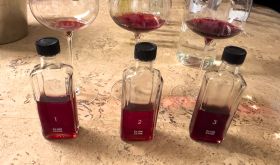
Haynes then took a bottle of Danbury’s 2021 Chardonnay and 2020 Pinot Noir on his next trip to Burgundy and gave his grower-suppliers a taste without saying where it came from. The wines were well received, even chez Étienne Sauzet, where the Chardonnay was tasted immediately after Sauzet’s powerful 2022 Montrachet. Cyprien Arlaud of Morey-St-Denis even observed that the wines had the vitality that burgundy used to have.
Haynes’s idea was (and still is) that a small group of Burgundian vignerons would club together and buy a bit of Crouch Valley land on which to make their own versions of English wine. A suitable site became available in 2024 but the rain in Burgundy was so incessant that the locals didn’t dare leave their vineyards unsprayed for even a couple of days, so the opportunity came and went.
But in 2025 Alex Moreau agreed to buy Chardonnay grapes from the Speakman family’s well-established Missing Gate vineyard in Crouch Valley, where the Burgundian was allowed to pick his plots and clones and to exercise some control over the viticulture. Haynes was a bit worried that there wouldn’t be the necessary four- to five-week interval between the Burgundy and Essex harvests but in the event there was enough time for Moreau to supervise his fermentations and see the wines into barrel in Chassagne before setting off for England on the last day of September.
Moreau now visits every few weeks to see how his English Chardonnay is coming on and is apparently keen to continue with the current, promisingly precocious, 2026 season. His two sons look highly likely to join their father. The Essex project may well appeal to them.
Twenty François Frères barrels, four new, had been shipped over to the brand-new Royal Albert Dock winery near London City Airport, where, eventually in this extremely neutral environment without an established yeast population, the Chardonnay grapes finally started to ferment.
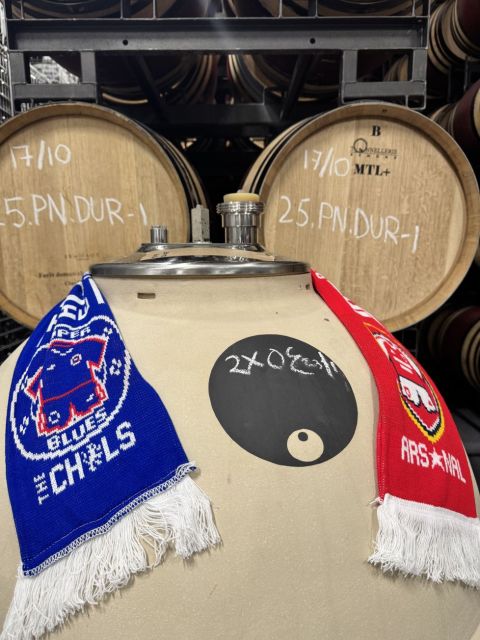
The 2025 Chardonnay is still much more backward than the wine currently, but not necessarily, called ‘Danroché’ 2025 Pinot Noir being made at Danbury Ridge, which is already showing well. Haynes hardly needed to encourage the Durochés’ Essex adventure. It turned out that Marianne Duroché had worked with Danbury’s talented winemaker Liam Idzikowski at Tyrrell’s in Australia’s Hunter Valley in 2009 and the joint venture is very much a collaboration, with plenty of ideas exchanged in both directions across the Channel. Pierre Duroché is a big Arsenal fan while Liam supports Chelsea. He took the Frenchman to Stamford Bridge and has since draped the ceramic Clayver they use with one of each team scarf.
In general, apparently, the Burgundians have shown more confidence and propensity to take risks, which is perhaps not surprising considering the relative ages of the English and Burgundian wine industries.
According to Haynes, who will be selling these wines through Flint, ‘Danbury is really pushing the boundaries of what is possible with English still wine and their 2025s will set new benchmarks without a doubt’. He says he would love to see Moreau’s English Chardonnay on the lists of Beaune restaurants, ‘if they could stomach it’.
English wines with a foreign accent
Sparkling wine
Domaine Evremond, Classic Cuvée Edition I NV England 12%
Now tasting much more interesting than when first released last year. Very refreshing but by no means meagre. (Edition II, to be released in two or three months, is based on the cooler 2021 but is fuller-bodied.)
£44.99 Dike & Son, £46.99 Drink Finder, £50 The Oxford Wine Co
Graham Beck, English Sparkling 2018 England 12.5%
Relatively rich with some obvious evolution.
£45 RRP stockists as yet undetermined
Nyetimber, 1086 Brut 2014 England 12.5%
Nyetimber’s ambitiously priced but impressively persistent top cuvée, a reference to when the estate was first mentioned in the Domesday Book. Winemakers are a Canadian couple.
£149 Tanners, £150 nyetimber.com
Still wine
Marbury Chardonnay 2023 Crouch Valley, Essex 12.5%
An English answer to Chablis? Very different from neighbour Danbury Ridge’s richer Chardonnays.
£35 92 or More, £39 Elementary Wine Co, £40 Hedonism
Tidebrook, Six Petals Rosé 2023 Sussex 12.5%
No shortage of acidity, extremely pale, but a definite whiff of Pinot.
£25 mousehall.com (the delicate Pinot Noir 2024 is sold out)
‘Danroché’ Pinot Noir 2025 Crouch Valley, Essex
Cask sample was already flattering and full of ripe Pinot Noir fruit. A little suaver than Danbury’s own Pinots.
To be released en primeur to Flint customers in the autumn.
Alex Moreau’s Chardonnay 2025 Crouch Valley, Essex
Not tasted, as yet unnamed, but eagerly anticipated. To be released even later than the ‘Danroché’ red.
For tasting notes, scores and suggested drinking dates on wines from all the producers mentioned above, see our tasting notes database.
Back to basics
Still v sparkling wines |
|
The high levels of acidity associated with slightly underripe grapes in a cool climate are ideal for sparkling wines, which need to be crisp and refreshing, and also have their alcohol level subsequently raised and the flavour deepened by the second fermentation that produces the bubbles. This is why sparkling-wine production is particularly well suited to the world’s coolest wine regions such as England and Wales, Scandinavia and Nova Scotia in Canada.
But to make a satisfying still wine that is not too tart, less acidity and higher levels of grape sugar and therefore higher temperatures are needed. This means that most still wine is made in two bands around the earth. We used to say these were between 28 and 50 degrees of latitude but this has been changing as the planet warms up. Delhi, for example, is on 28 degrees north but would be far too hot to produce wine with any refreshment value.
Even Mendoza in Argentina, which used to be viewed as ideal for wine production, is becoming a bit too warm and, as reported in Mendoza Malbec – reaching new heights, vine growers have been moving up into the Andes because a high elevation, with its accompanying cool nights, can compensate for a low latitude.
Wine is produced in the tropics but usually as a result of more than one harvest a year, which means that grapes rarely develop the same level of flavour as those grown in more temperate climes. See the Oxford Companion to Wine entry on tropical viticulture. |