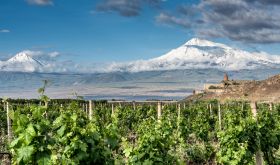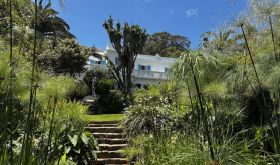

If there’s one thing that Australia does well, it’s isolation. With three million square miles of land, there are plenty of options. And if there’s another thing Australia does well, it’s Riesling, albeit from a mere three thousand hectares. Frankland Estate in Great Southern are masters of both.
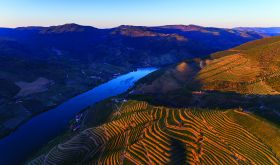
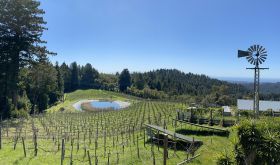
With their first planting in 1988 and practising organic since 2005, the Smith family have plenty of experience making Riesling, and there is little to distract them in the fittingly named Isolation Ridge vineyard that surrounds their property (pictured above). That lack of distraction – focus, in other words – shows in their excellent 2024 vintage as well as in a stretch of vintages that you can buy in wine shops today.
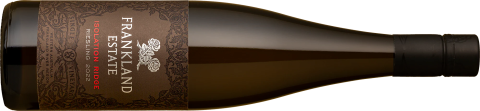
That isolation might well be one of the secrets to the purity of their Riesling. ‘Freedom from noise and light pollution makes for a beautifully clean growing environment’, they declare. In the glass, the result is a steely, chalky, intensely lime-scented wine – descriptors which are found repeatedly in the 18 wine reviews our database holds for Isolation Ridge Riesling.
As the wine ages in bottle, that intense primary fruit gives way to the toasted, smoky complexity that is a particular signature for Australian Riesling. It’s a different style of development to the petrol-and-slate of German Riesling, as you’d expect from such different terroir. The landscape is not steep Teutonic slopes but the gently undulating land that I describe in Visiting Great Southern. The soil is what they call ‘coffee rock – ironstone gravel over a clay subsoil’, although I didn’t notice anything ferrous in the wine, which is sometimes a characteristic of iron-rich soils. But even so, there is a distinct sense of place, that cryptic but quintessential quality of wine.
The cool climate of Great Southern makes itself felt in the wine’s high acidity and modest alcohol, with an average of 13%. And the purity of the fruit is testament to the pristine, isolated biosphere in which the grapes grow.
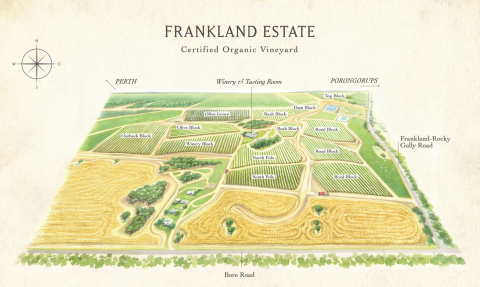
The Isolation Ridge vineyard is divided into several parcels. The oldest Riesling dates from the original plantings in 1988, which are found in the Olive, North Pole and Outback blocks. Fermentation mostly takes place in stainless steel, with multiple small lots to reflect different parcels of fruit. Around 5% is fermented and matured in barrel. These different elements are then blended together to make their flagship Riesling.
I scored the 2024 vintage 17 out of 20 when I tasted it in November, as did Jancis in January last year. It was a dry and relatively warm vintage for the region, with an early but small harvest of especially concentrated fruit.
In the UK, Berry Bros & Rudd is the retailer, where the 2024 vintage is available for £25.50 and the 2016 for £36. In the US, Isolation Ridge Riesling is available in at least three states (Michigan, Indiana and California). Most stores have the 2022 vintage but the 2021, 2020, 2019 and 2017 are also available, starting from $29.99. In Japan, the 2024 vintage is available for ¥4,796 and the 2023 vintage for ¥4,719.
Frankland Estate’s handy exporter page shows that they are distributed in 15 countries.
All photos courtesy the winery.
What are some of your favourite Rieslings? Share them in our forum!