The Bedeviling Minerality Question
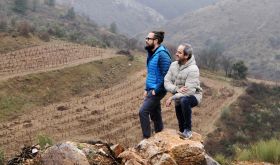
The terroir expert and winegrower Pedro Parra (he holds a PhD in terroir and a master’s in precision agriculture from the Institut National Agronomique Paris-Grignon) explained to us that these days he tries to avoid using the term minerality.' Why? 'Every time you mention it,' he says, 'the soil scientists and geologists go searching through the wines for examples of minerals that we can taste. Of course, they never find any and then make a big stink.'
To Parra’s point, the geologist and well-known wine researcher Alex Maltman wrote in a 2013 takedown of minerality as a wine descriptor that though tasting 'minerality' in wine is suddenly fashionable, 'whatever minerality is, it cannot literally be the taste of minerals in the vineyard rocks and soils.'
Literalism in popular wine rhetoric vexes Maltman, because the language tasters use makes it seem as though there’s a direct connection between geology and flavor. He notes that suggestion of the flavors of hay or leather in wine doesn’t lead people to think those things are actually dissolved in it. Fair enough. But does this make it foolish to use them? If you’re talking to an old friend on the phone and you say, “It’s good to hear your voice,” you’re not actually hearing that person’s voice; you’re hearing a reproduction of it thanks to signals sent over thousands of miles and reconstructed by a miniature speaker. Yet you don’t feel obligated to say, 'it’s good to hear a reproduction of your voice.' Or, as another example, upholsterers don’t get flummoxed when we describe wines as 'velvety.' Perhaps we can all agree that what we call minerality in wine is not the direct taste of minerals, many of which have no flavor. But can minerals in the soil, feeding the vines and ultimately the grapes, create a signal that is ultimately picked up by our sense of taste? Who knows? It seems plausible, at least, even if we’re not responding directly to the “taste” of the minerals, but tasting some effect they have on the wine.
However, people can’t even agree on what minerality is. We’ve heard it variously described as a flavor, a texture, and an energy. In his book Postmodern Winemaking, winemaker and consultant Clark Smith defines it as resembling “the aftertaste of a half-shell oyster or of a tiny electrical current in the throat.” For others, it can be the slightly grainy texture exhibited by mineral-rich water or licking a wet stone. Some people associate it with a smoky characteristic like sparked gunpowder.
Instead of the problematic word 'minerality,' Parra says, 'I use the word "electricity.”' He refers to it as a physical sensation and says it can manifest in wine in numerous ways. He equates it to an electric sensation that produces tension in the wine. It arises, most of the time, from vines planted in intensely rocky sites, he says.
We agree with Parra and Maltman that minerality is a tricky and controversial word for various reasons. More vexingly, however, is its slippery usage. Much like terroir, it means different things to different people, and is thus hard to define and perhaps of questionable value. Yet, for those who sense it—whatever it is—minerality is a terribly compelling and powerful component of wine to deserve all this fuss. Minerality, electricity, or whatever you want to call it ('salinity' and 'saltiness' are now fashionable)—it has some connection to a wine’s vitality.
Thus, minerality’s value is not as a scientific term, but as a metaphor. We don’t speak of literal minerals in wine; we speak of a poetic characteristic that reminds us in some way of stones, rocks, metals, and minerals. Maltman helpfully lists the most common mineral cues: flinty taste/smell, or flintiness; gun-flint aroma/struck flint and matches; earthy smell; smell of warm/wet stones; seashells and fossilized shells; and metallic smell. It turns out, many of these notes might arise from organic compounds in wines (or wineries) and from bacteria and moulds found in nature.
While soil is talked about ad nauseum by many students of wine (including us), most people who study it seriously believe climate to be a greater determining factor of the nature of wine. We agree. Climate controls which grapes you can grow in a region more definitively than soil does. If we don’t write about climate as extensively as this notion might suggest, it’s just that in each section we’re focused more on the dynamics within a region rather than between regions. Therefore, when significant climactic differences exist in one region—such as between Spain’s subregion of Rioja Baja [Oriental] and Alavesa, or in Austria’s Spitzergraben, or on the various faces of Mount Etna—we will mention it. But, in general, when the climate of a region is consistent throughout, we focus on other questions.
This excerpt from the Introduction is reprinted with permission from The Sommelier's Atlas of Taste: A Field Guide to the Great Wines of Europe by Rajat Parr and Jordan Mackay, copyright © 2018. Published by Ten Speed Press, an imprint of Penguin Random House. You can buy the book from BarnesandNoble.com and Amazon.co.uk.