
Which has changed for the better over the past 50 or 60 years? Greek food, Greek wine or Greek music?
As Julia has so often reminded us, the era of heavy, even oxidised, Greek wines is long past. Greece is home to numerous fascinating winemakers and many indigenous grape varieties. Talented chefs also abound as the explosion of new restaurants across the country testifies. Top-quality Greek restaurants have spread around the world. And the doleful songs of Nana Mouskouri as well as the music that impelled Anthony Quinn to teach Alan Bates the steps of the sirtaki at the end of Zorba The Greek are mainly forgotten as the musical beat, at least in Greek tourist spots, is now more electric, much heavier and far noisier.
All three evolutions were on display during my stay in Chania on Crete’s northern coast, in a highly concentrated area around the city’s old Venetian harbour (the main commercial port is seven kilometres away). There was, in addition, snow on the White Mountains in the distance. The sea was blue, the countryside a deep green. Plus, wherever I sat – whether having yoghurt and honey for breakfast or a glass of ouzo presented with the restaurant’s compliments in the evening – there is the bonus of people-watching as they stroll by the water, the ritual the Italians call the passeggiata when conducted in the evening.
As you approach the old harbour, you face a simple choice. Turn left for the string of cafes whose chairs face the morning sun, turn right for those that face the setting sun and the sunset. Walk right, past the importuning waiters and waitresses, walk past a restaurant named Canale and The Grand Arsenal built by the Venetians in the 16th century, and you come to a couple of floating shops, selling sponges inter alia. Just opposite the second one you will find a restaurant called Salis. Stop there.
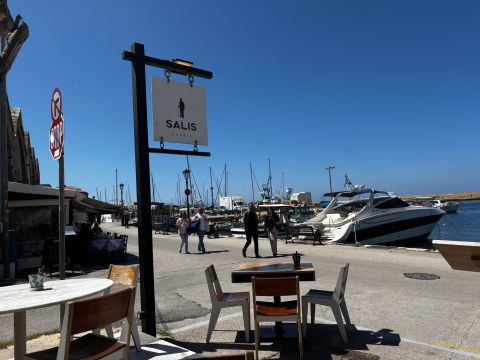
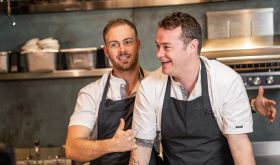
This restaurant has everything anybody will need during their stay. The view across the harbour is magnificent. So is its massive wine list. Its menu is fascinating. The restaurant belongs to a man whose credo is that his food must be undersold on the menu but must overdeliver on the plate. He is also someone who believes that however good his kitchen may be, the actual ‘selling’ and delivery of the food is down to his waiting staff. ‘It’s their job to convince our customers’, he explained, ‘and because we are open all year round they get the opportunity to understand our food and the wines we offer.’
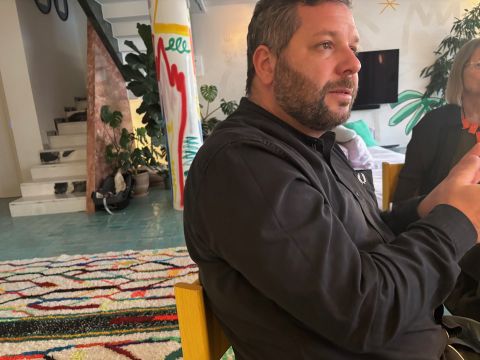
His name is Afshin Molavi. He was born in 1985 to Iranian parents who emigrated to Sweden where he studied sommellerie at Grythyttan hospitality school after which he was told that to complete his studies he had to find a position in a three-star Michelin restaurant. This was in 2008 when Greece, and particularly Athens spurred on by the 2004 Olympics, was benefiting from several new and exciting restaurants. Molavi managed to get a job at 48 The Restaurant. Here the chef was the extremely talented Christoforos Peskias and the wine list was drawn from the personal cellar of the late Theodore Margellos, who had also helped to found L’Atelier de Joël Robuchon.
It was in Athens that Molavi was to meet and fall in love with the artist Alexandra Manousakis, who was there to sell her family’s Cretan wines to the city’s sommeliers. They returned to Crete. The day after their wedding for 1,000 guests they opened the restaurant. Molavi is now working as a winemaker, a restaurateur, trading wine, and – possibly the most taxing role of all – as the father of their three young children.
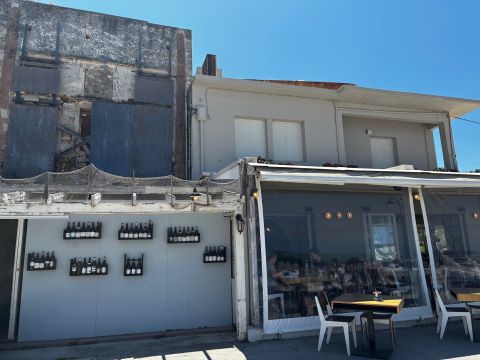
For my first lunch in Chania I had made a reservation at Salis, named after a philanthropic Sudanese boatman (a ‘modern saint’ according to Molavi), and had even chosen a wine from the 100-page online wine list with its enviable allocations of rarer burgundies and the rest. The shelves, both inside and outside the restaurant, are lined with an impressive array of empty bottles and, like a great deal in Chania, there is the juxtaposition of the old and the new. Above the modern restaurant is a ruin that could have been a hotel with wonderful views had the landlord been more accommodating. My table was in the sun and the views of the Venetian lighthouse, the people walking by and even the occasional three-wheeled vehicle that manages to keep this densely populated area extremely clean were spectacular. I felt extremely fortunate.
Then minor disappointment ensued. The menu arrived, its pages in plastic and its contents appeared a little ordinary. The Thymiopoulos Earth & Sky Xinomavro 2017 was no longer, although our waiter immediately proposed the delicious 2020 instead, at the reduced price of €40.
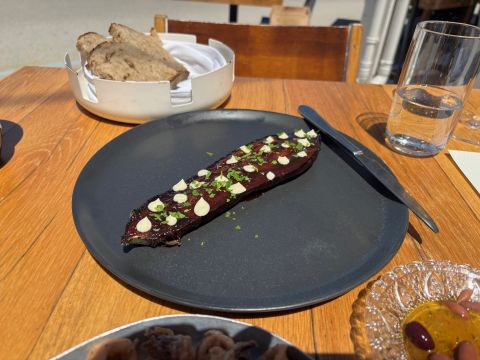
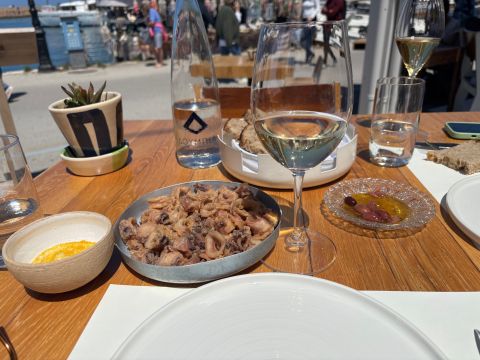
But the food turned out to be much more impressive than it seemed on the menu. With the house bread and came a large handful of the most moreish olives swimming in a special oily marinade, followed promptly by two dishes. The first was described simply as ‘eggplant with fermented fava and thyme honey’, the second as ‘shortfin squid with lime aioli and sumac’ but these descriptions barely did the plates justice. The half eggplant (aubergine) had been grilled like a piece of meat but tasted far sweeter and strongly umami, with just a hint of spice. The juicy-but-crisp squid had been diced and then extremely cleanly fried and served alongside a dish of lime aioli which, as I finished the dish, I realised had also coated my fingers. From these two dishes I learned firstly that portion sizes in Crete are at least twice as big as those we Londoners are used to – harking back, perhaps, to the hardships of the civil war in the late 1940s. And one skill has not changed: Greek cooks are still extremely impressive with whatever they put in a frying pan. I played with a beautifully seasoned dish of spaghetti with prawns from the Thermaic Gulf with cherry tomatoes but was almost defeated – although I did manage to taste the creamy ouzo ice cream. My bill for two came to €140 including excellent service.
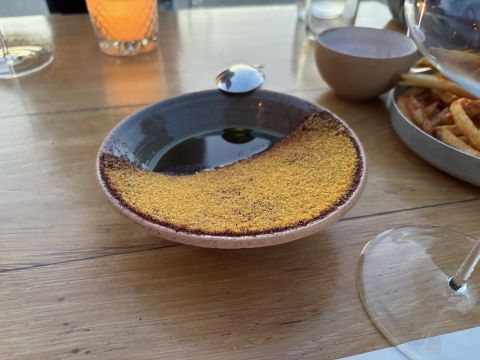
It was all so good that a return to Salis for dinner was inevitable. The views were different but the crescent moon was unforgettable. And I learned from the highly talkative Molavi that the owner of the floating shop simply moves his boat a few metres out to sea to keep its contents safe at night. And I also learned that his favourite accompaniment to a glass of champagne is a plate of their particularly flavourful French fries with sriracha oil and sumac; that their taramosalata (pictured below), made here with avocado, sumac and bottarga, is unlike any other preparation of this iconic Greek dish (it has a crust and swims in olive oil suffused with chives); and that their version of spaghetti cacio e pepe is, thanks to the addition of fermented fava, buckwheat and quite a lot of pepper, a fabulous dish. Desserts, and in particular their dill ice cream, are equally impressive.
We eschewed the mouth-watering range of wines from France, Italy, Spain, California and even Australia and instead enjoyed, for €140, another bottle of Thymiopoulos’s Xinomavro, this time the Aftorizo 2018 from an ungrafted vineyard which was presented and served by Grigoris Rappos, Salis’s knowledgeable sommelier, pictured below. The walk back to the hotel was more of a float.
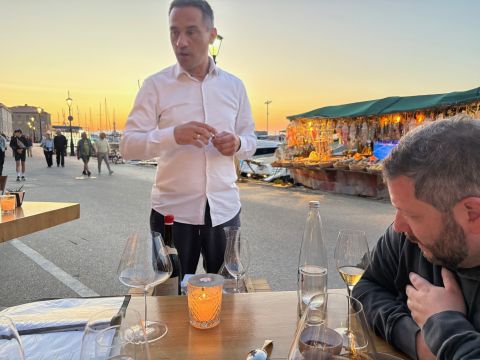
Before he left, I asked Molavi what his biggest challenge was as a restaurateur in an area where even at the end of April there seemed to be so many tourists. Was it buying the wine, coping with customers or finding enough staff? His response was emphatic. ‘Finding wine is not a problem. The surge in demand is tricky: one day when a cruise ship comes in and everybody wants a table to a very hot day in July or August when nobody wants to come in and eat because they all want to be on the beach. But finding staff is the perennial challenge. I have a street-food business called Alba round the corner but I haven’t been able to open it yet because I can’t find enough staff.’
Happily, Salis will always be open.
Salis Akti Enoseos 3, Chania 731 32, Crete, Greece; tel: +30 2821 043700
Every Sunday, Nick writes about restaurants. To stay abreast of his reviews, sign up for our weekly newsletter.