9 October 2017 Jan-Erik Paulson of specialist fine-wine retailer www.rare-wine.com in southern Germany sends this report of a roll call of rarities.
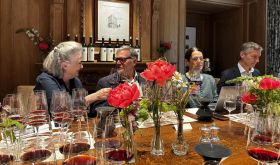
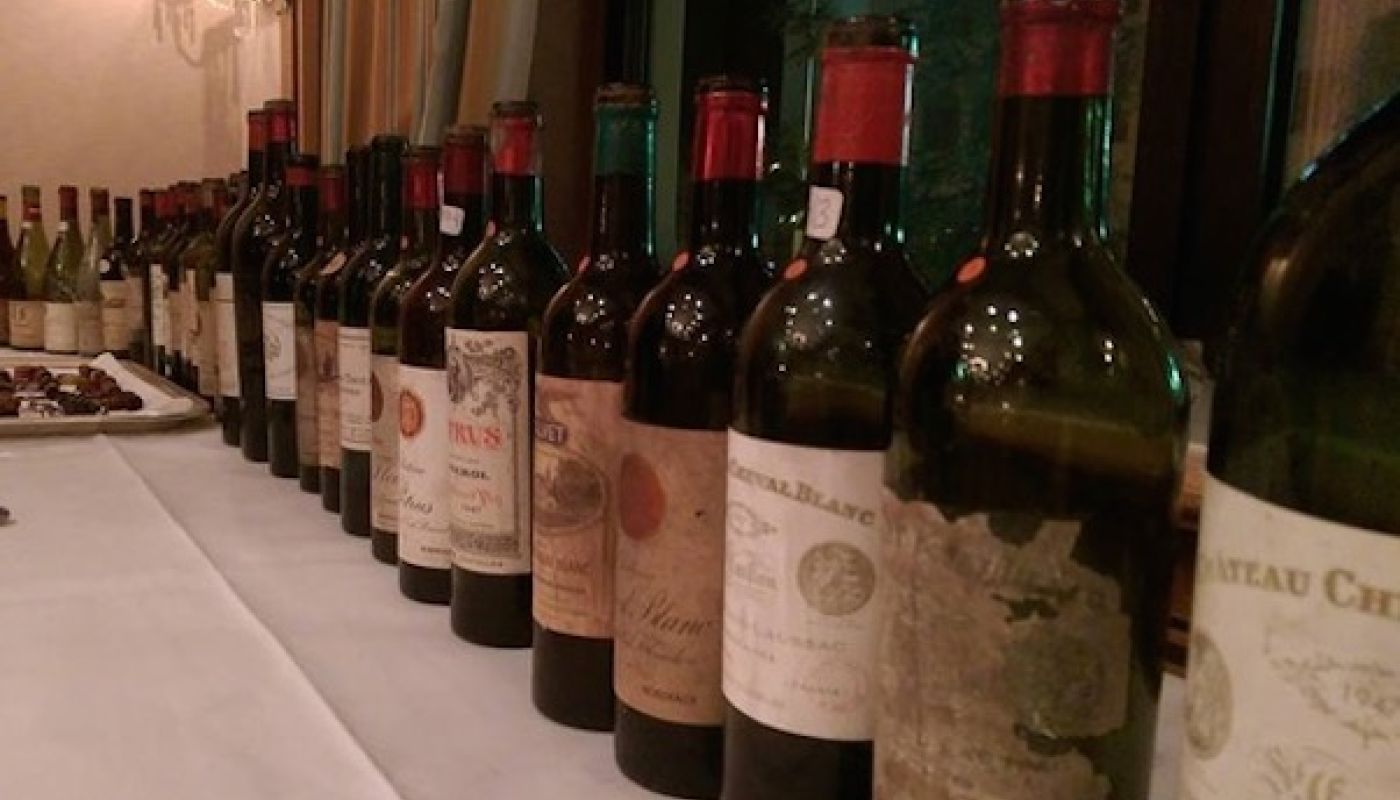
On a Saturday in September 2017 I was a guest at, yet again, one of the greatest wine dinners I have had the pleasure to enjoy for the last 35 years or so. Thirty wines from 1947.
The host, Robert Langer, is the same generous wine lover who organised a splendid dinner with the top 1961s a year ago. He also takes great care when sourcing his bottles, which explains the splendid condition of the wines we were served. The venue was again Restaurant Königshof in Munich. Their chef, Martin Fauster, is one of Europe’s best in matching food to great wines. The service was perfect with their sommelier, Stephane Thuriot, not only overseeing everything but also able to coax old corks out of bottles like no one else I know.
I had organised a major tasting of wines from 1947 together with Dr Peter Baumann in Linz, Austria, 25 years ago so it was interesting to see how the wines had developed over a quarter of a century.
The problem of acquiring well-stored bottles was difficult then and must have been much more so now. So I was a bit apprehensive before the tasting, fearing that a number of wines would be at the end of their lives. This was not at all so; most wines were at their very best with many still having a few years’ reserve. I dug out my tasting notes from the 1992 tasting and was surprised how similar they were to the ones 25 years later. It was as though the wines hadn't aged at all in all these years.
The 1947 vintage belongs to the small group of legendary Bordeaux vintages from the twentieth century together with 1928, 1945, 1949, 1953, 1959, 1961, 1982 and 1990. The year was marked by a very hot August and September. The grapes were harvested in a heatwave with a sugar content no one knew how to handle at the time. There were no temperature-controlled fermentation vats nor cultivated yeasts that could cope with such ripe grapes. This led to many wines’ showing volatile acidity that would become more obvious as the wines aged. Many wines also show much more residual sugar than any respectable cellarmaster would allow now.

The wines from the Médoc have not aged as well as the wines from the right bank as a whole. There are, however, two Médocs that stand out from all the rest – Mouton and Margaux. The Mouton is a fantastic wine (we had a perfect magnum at the Langer tasting) – on par with the wonderful 1949 and maybe very close to the great 1945. I was once told at a dinner at Mouton by their director that they had blocks of ice delivered from Bordeaux to be put into the fermentation vats to cool the must in 1947.
Château Margaux made one of their best wines ever in 1947. I have often had this wine, both château bottled and the bottlings from van der Meulen. To me both are equally good, the van der Meulen bottling being a touch sweeter in Munich.
Latour and Lafite are both quite disappointing in this vintage. Palmer and Calon Ségur are two of the better Médocs and are still drinking well out of well-stored bottles.
Graves produced some fine wines – La Mission Haut-Brion and La Tour Haut-Brion are both very good. I only just preferred the La Tour Haut-Brion to La Mission on both occasions. The Haut-Brion shows quite a bit of volatile acidity and is not a success for the vintage.
Two wines from Pomerol stand out – Petrus and Lafleur. I have unfortunately had the experience of tasting fake bottles of Petrus more than once and was very happy to be able to drink at Langer’s dinner two bottles that, in my opinion, were the real stuff. The château bottling was very powerful and concentrated whereas the van der Meulen bottling was sweeter and showed a bit more age. Both very good.
Château Lafleur 1947 is one of the rarest and also most faked wines of all. I had searched for a bottle for the 1992 tasting for three years without success. My luck changed as I ran in to John Avery, whose father Ronald Avery had imported this wine to England for his company Avery's of Bristol. Only five magnums were bottled according to the château and we enjoyed one of these next to magnums of Cheval Blanc and Figeac at a dinner the evening before the tasting in 1992. It was such an amazing wine that John Avery invited us all to join him in Bristol the following spring to open his last remaining magnum.
The Lafleur in Munich was very good, and perhaps it was because it was négociant-bottled that it was slightly different from the wine I remember.
St-Émilion produced a number of very good wines. Some that I remember with fondness are Figeac and Canon but one wine stands out – Cheval Blanc.
Château Cheval Blanc 1947 is, rightly, a legend and a living one at that. It is, however, also a wine that would be classed as faulty by today’s standards, with volatile acidity and residual sugar levels enough to fire any winemaker producing such a wine. Thankfully, Cheval Blanc produced a large harvest in 1947, more than double the 1945 vintage. I have therefore had the pleasure of drinking this giant of a wine on numerous occasions over the last 30 years. With the exception of some poor négociant bottlings, this has always been a stunning experience. The wine bowls you over with its sweetness, voluptousness and richness. It’s always recognisable in its unique style.
At the Munich tasting we were served five different bottles of 1947 Cheval Blanc – could paradise be better than this? First a Calvet bottling that showed quite hard tannins and little of the sweetness of the other bottles. Van der Meulen bottlings are generally far better than other négociant bottlings, and often equal to the château bottlings. The bottle here was absolutely lovely. The third bottle was château-bottled with the stamp of Nicolas on the label – possibly recorked. Again a fantastic bottle. The fourth bottle was also château-bottled but with its original cork. This was the favourite of mine – perfection and spellbinding! This was rounded off with a magnum in great condition. Very, very good but not quite as exuberant as the wine before.
By the time we arrived at the Sauternes I was not really able to concentrate and make legible notes any more. It was just not possible to spit or leave empty glasses of these amazing wines.
A problem that was not so big in 1992 is the number of fake bottles of top 1947s on the market at the moment. Thankfully, I didn’t spot any obvious ones at Robert Langer’s tasting in Munich and I was particularly happy to enjoy two wonderful bottles of Petrus – a wine of which I have had too many questionable bottles.