The following report on Argentina is in two halves. The first, written by Tim Johns of Wines of Argentina in London is a useful overview of the different regions in a vast country that is becoming inceasingly important on the international wine scene. The second is the official report on Argentina's 2007 vintage. See here for brief news of Chile's 2007 vintage.
ARGENTINA - A SNAPSHOT
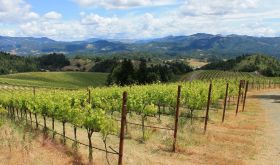
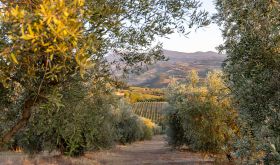
Vintage reports: they’re a bit like asking mums to talk about their children – they’re not going to be packed full of criticism are they? Well, apart from the annual hail dodging in the south (golf ball sized, ping pong ball sized, choose your sporting metaphor, this is hail that hurts!) Argentina’s wine regions are blessed with a dry, predominantly rot-free climate, thanks to the huge 6000 meter high rain shadow cast by the Andes. This is in contrast to the party-loving but humidity ridden city of Buenos Aires. However, the official harvest report issued by The Centre of Graduates in Oenology and Fruit and Vegetable Industry of Argentina (C.L.E.I.F.R.A) does show the breath and variety of vines that Argentina, the world’s fifth largest wine producer, has to offer. Here’s a quick province guide, followed by the report on pages two and three.
Cafayate – a valley that crosses three provinces (Salta, Tucuman & Catamarca)
· A true two-sided beautiful valley that has an untouched feel about it – surely it’s only a matter of time before a Hollywood locations man decides to set a horse-riding chick flick here?
· Home to ‘new wave’ Torrontés: a fresh, crisp and aromatic style, perfect for spicy food
· Keep an eye out for seriously old vine Tannat (80 to 100 years old) – another ‘discarded’ French variety that Argentina will make its own?
La Rioja – warm, traditional and with increasing importance in the UK market
· Criss-crossed by several mountain ranges, the vineyards are planted on the flatter areas in between and cultivated mainly by a multitude of smallholders, with just a handful of big players
· The Torrontés in the province is a slightly different clone to elsewhere and produces very grapey aromatics – you can definitely taste the Muscat lineage of the grape
· Bonarda here produces fresh cherry fruitiness to rival Italian reds
San Juan – San Juan Syrah: the new regional brand?
· Only a couple of hours drive north of Mendoza this is the country’s second most important wine producing province – the consigliere to Mendoza’s capo de tutti – with recent investment seeing a switch to higher altitudes and quality wines.
· Quickly carving out a reputation for Syrah with a distinctive fresh style: less jammy than most New Worlders, but with pure fruit as opposed to dry herb flavours.
Mendoza – city, province and largest wine procuring area; all 155 000ha
· Quite easily one of the most beautiful wine cities in the world – I see your Table Mountain and raise you Aconcagua; and yes, Chile might name one of their wine regions after that mountain, but the highest peak in the world outside of the Himalayas is actually in Argentina!
· Mendoza has it all, Sangiovese, Petit Verdot, Tempranillo, Chenin Blanc, but it is its distinctive Cot-busting Malbec that is grabbing peoples’ imaginations: fruit, perfume and food friendliness
· In the highlands of the Uco Valley (about two hours south of Mendoza city) Argentines have found their cool climate heaven with incisive Sauvignon Blanc the new kid on the block
Patagonia – the land of the viticultural gold rush
· Increasingly on the adventure holiday makers ‘Must Go To’ list (and also for those Ernesto 'Che' Guevara fans wishing to follow in the footsteps of the Motorcycle Diaries) this relatively low-lying windswept land has seen massive investment since 2001/2
· The land of cool climate winemaking, Pinot Noir is very much the buzz word(s) around here.
ARGENTINA – THE 2007 VINTAGE
Official harvest report issued by Centro de Licenciados en Enologia y en Industria Frutihorticola de la Republica Argentina (C.L.E.I.F.R.A) – The Centre Of Graduates in Oenology and Fruit and Vegetable Industry Of Argentina)
• Calchaquies Valleys (Salta – Tucumán – Catamarca)
“This was a year of dry weather, low rainfalls and wide temperature ranges, which resulted in exceptionally healthy fruit and deep concentration of flavours and aromas.”
Torrontés was one of the most successful varieties, with outstanding purity and intensity of its aromatic characteristics. The long sunlight hours of this year are evident in the intense colour concentration and polyphenols of the Tannat, Malbec and Syrah. In the case of Cabernet Sauvignon, careful canopy management was used to protect the clusters from excessive sun exposure. Those who managed to get balanced production on their vines and wait for proper final polyphenolic maturity, achieved varietal expression and complexity.
• La Rioja
“A typical winter, with a spring and summer that allowed notable maturity and health.”
In high regions (1450 meters above sea level) Torrontés Riojano, Chardonnay, Sauvignon Blanc, Chenin Blanc, Cabernet Sauvignon and Petit Verdot found their best expressions. Good to very good quality for Merlot, Bonarda and Malbec. Wine management is improving more and more every day in this region. This year mechanical harvesting was used in vineyard lots destined for basic wines.
• San Juan
“Very good quality white wines and excellent quality red wines.”
A cool winter (790 accumulated hours of cold weather) was followed by good and even bud burst. A spring with very little of the Zonda Wind (a dry dusty wind from the Andes) allowed good fruit set and an opening of the bunch stem structure, thus avoiding compact bunches and disease. Late ripening varieties were affected by rainfalls, which delayed maturity, but remained healthy. Irrigation systems have been improved in the region, resulting in excellent leaf/bud ratios and canopy management. During summer, timely irrigations stimulated the vines to achieve proper fruit maturity. The white wines show a lot of varietal characteristics, whist the red wines show intense colours, with ripe fruit aromas and a correct tannic structure.
• Mendoza
“El Niño was lenient with the vineyards this year. This vintage, though complicated, was very good: Mendoza wine quality is guaranteed one more year.”
Northern Oasis
“Normal winter and spring led to good vegetative development and setting.”
Summer was hot and dangerously wet, but fortunately it was controlled by good vineyard management, which allowed regular photosynthesis, good bud development and satisfactory health. White wines are expressive and elegant, such Chenin Blanc, Semillon, Torrontés and Chardonnay. Among the red varieties, Merlot, Tempranillo, Sangiovese, Syrah and Bonarda are deep in colour with sweet tannins.
Eastern Oasis
“Early maturation, long and complex harvest, optimum quality.”
A benign winter, mild spring and no frosts all guaranteed good bud burst, flower set and maturity. A hot December and January resulted in maturation being ahead in early ripening varieties. Vineyards which used the canopy as protection from the excessive heat, produced grapes with a better sugar/acidity balance. Late ripening varieties behaved perfectly, with Bonarda the stand out variety, though it was not a good year for Cabernet Sauvignon. White wines are well balanced and mature, full of tropical aromas but lacking herbaceous nuances.
Mendoza River Area
“Hail storms affected the area very badly. But some privileged terroirs produced exceptional wines.”
Winter was mild in the flat areas, and snowfalls were abundant in the high mountains, which guaranteed the water for this oasis. The necessary amount of cold hours was reached earlier than expected, so bud burst was advanced. A cool spring with no frosts assured a good flower set, maturity and big clusters. The vineyards that received preventive treatments showed healthy fruit. Hailstorms caused a hyper sensitivity to mildew in Chardonnay and Cabernet Sauvignon. Summer was warm, and rainfalls were intermittent, which demanded a very complex harvest logistics program.
Early varieties matured ahead of time. Sauvignon Blanc stands out for its citrus and herbal aromas. Chardonnay developed tropical bouquets. Middle maturation varieties suffered complication at the beginnings of April. Malbec from vineyards located at Cruz de Piedra, Lunlunta, Vistalba, Las Compuertas and Drummond stands out. April late harvest varieties show extraordinary quality. In areas which were not affected by hailstorms, Cabernet Sauvignon, Cabernet Franc, Bonarda and Tannat show a great potential.
Uco Valley
“Thanks to clever vine managements maintaining the quality and the prestige of the zone, the constant threats of rainstorms and heat waves were put under control.”
Spring was warm, with no cool or rainy days. Maturation was superior to previous years. Towards December, the weather got hotter, which led into an early summer. January was warm and dry. In high vineyards, bunches dehydrated because of evaporation-transpiration. February was full of heavy but brief rainfalls. March was wet and the temperature spread was quite wide. In some areas, rain thinned down grape concentration.
With respect to red wines Malbec showed optimum quality and intensity with expressive colours and considerable aromatic. Merlot grew ripe, concentrated and spicy, while Cabernet Franc offered excellent results. As for white wines quality was outstanding; grapes were perfectly healthy up to point of maturity, with aromas typical of each variety. In every zone, fermentation processes were clean and complete.
South Oasis
“Regular harvest and quality wines.”
Winter and spring were benign, and rainfalls were not severe allowing for normal flower set. Summer was wet and rainy with hailstorms. The significant improvements in the installation of hail protection systems, and outstanding vine management prevented the vineyards from most common diseases; only a few isolated spots of vineyards were affected by the weather conditions, resulting in delayed maturity. Merlot enjoyed great maturation conditions, as well other early ripening varieties. Malbec and other mid cycle varieties were affected by weather conditions, while Cabernet and late varieties achieved good health and better quality.
The white wines are full of complex aromas. Chardonnay stands out with a nice natural acidity and an excellent varietal expression. Red wines: good aromatic expression; fruity and spicy with excellent colour and intensity, full in the mouth and well balanced in terms of acidity. Pinot Noir, Malbec, Merlot and Cabernet Franc were exceptional.
• Neuquén – Rio Negro (Patagonia)
“The excellent weather conditions led to a clear Patagonia style in the wines. Great varietal wines.”
Spring was benign, with no frosts or winds, which allowed even bud break, flower set, fertilization and normal and healthy development of bunches. Summer was optimum; mild temperatures, regular winds and very little rain. Maturation came a week early in the case of early maturing varieties. Some early frosts affected late harvest varieties such as Cabernet Sauvignon. White wines have an accurate varietal expression with Sauvignon Blanc being the best example of this. Pinot Noir, Merlot, Malbec and Syrah are on the way to top quality.