Brian Croser is an industry leader who has constantly upset the industry he leads. Blessed with a superior intellect, a naturally didactic personality and a proven excess of winemaking talent at his showcase Petaluma winery in the Adelaide Hills, he has had only his equally acute wife and three daughters to keep his ego in check.
Now that his business empire has been swallowed up by Asian brewers Lion Nathan, he has unaccustomed time on his hands but no shortage of self-confidence, which is presumably why he has recently taken a pot shot at one of Australia's most sacred cows, the quality of its wines.
His main point, made to a journalist at an award ceremony in Australia at which one of his wines was deemed Australia's Best Red 2003, is that Australia is good at making good wine but hopeless at making great wine. And this largely because too little attention to detail has been paid in the vineyard.
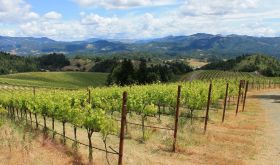
What is needed according to Croser is 'more effort over the long term in special site vineyards to elevate wines that have the potential to be at once unique and concentrated but also to have finesse. Cabernets from Coonawarra and Wrattonbully; Shirazes from Mount Barker (both Western and South Australia) and central Victoria; Chardonnays and Pinots from Yarra, Tasmania and the Adelaide Hills, all of these require dedicated long-term proprietors with the right commitment of resources to ratchet up the vineyard effort to the levels being applied in Bordeaux, Burgundy, Napa and Sonoma.'
Ouch. That casual reference to California, still producing twice as much wine as Australia, and its most obvious rival in the increasingly important American market, will hit home in some Australian boardrooms.
It is certainly true that the prevailing Australian viticultural ethic has been one of efficiency rather than excellence. Stick those vines in carefully prepared soil, add water and watch those profits grow. This compares markedly with the sort of nail-scissor cosseting that vines grown to produce first-growth bordeaux, grand cru burgundy and, especially, California's cult Cabernets have come to expect. Truly quality-conscious Napa wine estates have armies of vineyard workers swarming over each minutely mapped and individually treated block of vines.
Croser reserves particular scorn for many of the big company vineyards of Coonawarra in a far-flung corner of South Australia with, significantly, practically zero local labour. This has spawned an official policy in some quarters of 'minimal pruning', hacking vines extremely roughly with machines, and even a phase of zero pruning, whereby vines are left to their own devices and virtually grow wild.
'To drive through Coonawarra at the moment after pruning and before bud burst is a journey of shame,' according to Croser, 'because of the birds' nest machine and minimal pruning on some of the nation's best vineyard sites with mature vines with the potential to produce wines at the very pinnacle of world quality and prestige. Economics dictate the chainsaw massacre because we don't have the market recognition at the top level of quality and price to justify the alternative. But that is the chicken and egg argument which needs the commitment of more than a handful, and especially the commitment of the large companies, to establish Australia's legitimate place at the pinnacle.'
(It is perhaps significant that Croser's award-winning wine was Petaluma Coonawarra 2000 red which was certainly not the product of accountancy-driven viticultural lassitude.)
There is of course one (small) category of Australian wine which does currently achieve some high, not to say, exorbitant prices, tiny lots of extremely concentrated wine typically made from late-picked, old-vine Shiraz grown in such warm South Australian wine regions as Barossa Valley and McLaren Vale. Penfolds Grange from the giant Southcorp was the prototype but now there is a rash of new labels, many of them devised especially for the lucrative American market where they have done well in comparative tastings.
But this is not enough for Croser: 'I acknowledge the Barossa and McLaren Vale Shirazes as Australia's signature wines of the moment but my plea is for more diversity in the diet – the Rieslings from Clare and Springton/Eden Valley also have the potential to be refined to the top echelons of world quality as determined by auction prices, positions on the great wine lists of the world, in the great cellars and on the great tables.'
'My point is that winning wine competitions is not the correct measure because of the idiosyncrasies of extensive comparative tastings. The real finesse and terroir-driven qualities of the world's finest cannot be judged in that arena. Dead fruit Shiraz lavished with sweet oak does well in the extensive line ups but it is a monotonous, terroir-submerging, reproducible style and good luck to it. My criticism holds as much for my own efforts as it does for my colleagues' and I am raising the ante for my own vineyards, with closer spacing, shoot thinning, fruit exposure and all of the time-honoured fastidious practices which are behind the world's best.'
This is fighting talk and no one will presumably be more delighted than Australia's big company executives to see future vintages of Croser's own wines fail to meet the demanding criteria he has set for them. They may continue to ignore his blandishments using the argument that Coonawarra in particular is notably devoid of the large, skilled Mexican labour force on which the California wine industry depends.
But they will do so at their peril. If France has a problem it is that it makes most of the world's finest wines but cannot sell its middle and lower levels of quality. Australia's situation is almost a mirror image of this. It is difficult for anyone who follows sport to imagine that Australians are really content to be seen as second best.
Here are some of my personal Australian favourites which, in my view, obviously aspire to the sort of heights cited by Brian Croser:
- Brokenwood Graveyard Shiraz
- Bowen Estate Cabernet
- Clonakilla Shiraz/Viognier
- Craiglee Shiraz
- Cullen Cabernet/Merlot
- Giaconda Chardonnay
- Grosset Polish Hill Riesling
- Henschke Hill of Grace Shiraz
- Leeuwin Art Series Chardonnay
- McWilliams [Mount Pleasant] Elizabeth Semillon
- Mount Langi Ghiran Shiraz
- Morris Rare Muscat
- Moss Wood Cabernet
- Petaluma Riesling
- Yarra Yering No 1