Last month I attempted to prove that the label on a bottle of wine is far more important to us than its contents. This month I’ve got a headache.
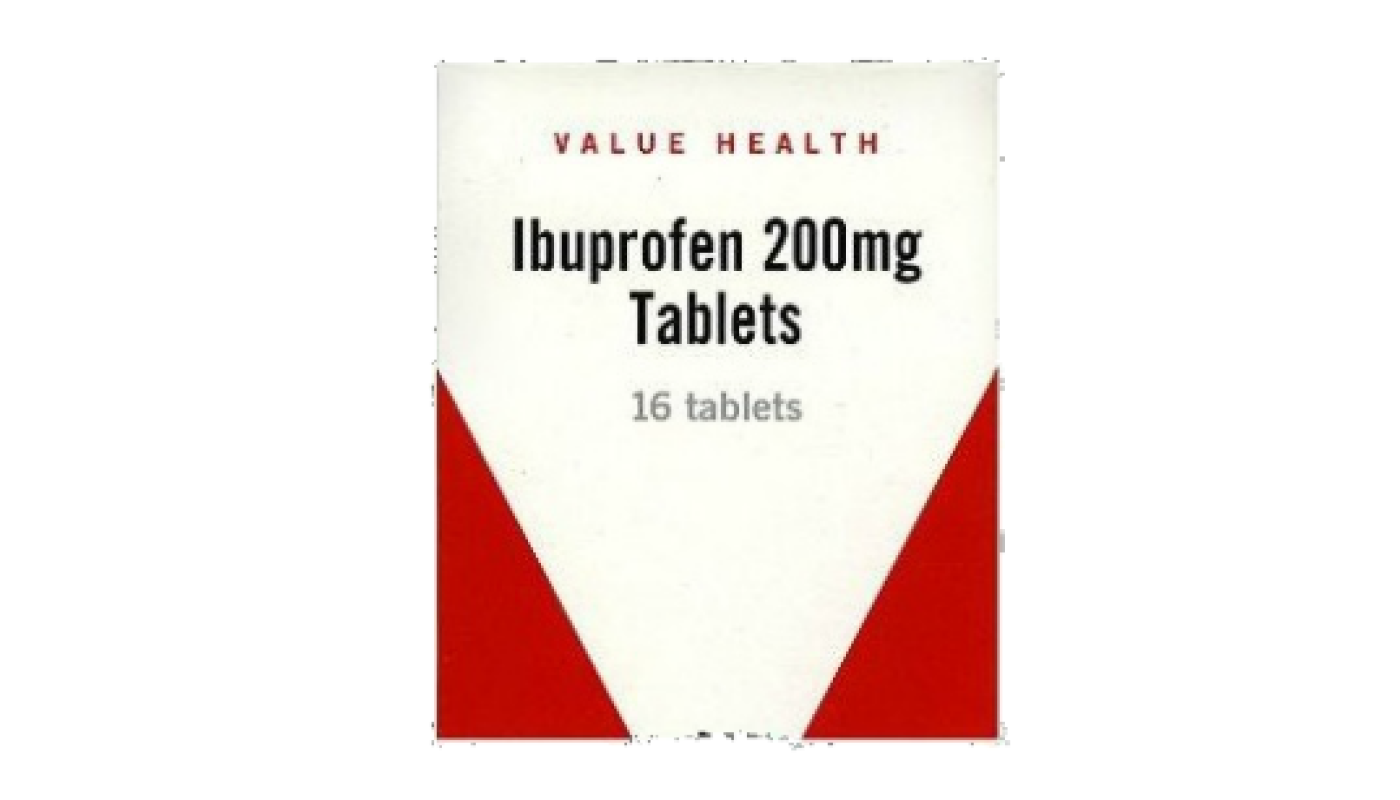
Searching online for painkillers, I find that generic ibuprofen costs 35 pence for 16 tablets. The branded equivalent, which contains the exact same drug, costs over six times the price. But why would anyone pay so much more for a product which is medically identical?

Well, they'd do so because the psychological effect of branding has been shown to provide more effective pain relief via the placebo effect. That seems a not dissimilar phenomenon to the one I was investigating last month. What if it were possible to get two bottles of identical wine that had different branding to test people’s preferences? Cleanskins, for example?
Cleanskins are wines (supposedly) made by top producers whose name mustn’t be revealed, like some kind of mass-produced Secret Santa. They tend to be accompanied by tantalising hints about the winemaker’s identity, some of which are rather more subtle than others.
For example, the description of this cleanskin Barossa Valley Reserve Shiraz from Virgin Wines gives little away:
This premium wine exists as winemaker & estate owner ended up sitting on it, without a home. Despite this, it's made by one of Australia's finest outfits.
No clues there, not least because it barely makes sense. Yet other disguises are rather less opaque. Another cleanskin Barossa red, sold in the UK by Laithwaite's, is described thus:
We can't disclose the name of this Barossa cellar but it was founded in 1888 and James Halliday gives it 5-Stars, describing it as producing wines of "great skill and abundant personality".
Now, one of the internet’s defining features these days has become its wilfully indiscriminate indiscretion. Asking the internet to keep a secret is like asking a Champagne producer to recommend their favourite Prosecco.
Sure enough, a simple search for 'great skill and abundant personality' reveals that the producer is Glaetzer. It’s hardly Wikileaks, but it does make you wonder why something should be concealed when it is so easily discoverable. Some further searching reveals that Glaetzer’s own-brand Grenache/Shiraz costs a very similar price: £15.50 for their Wallace, while the Laithwaite's cleanskin costs £14.99.

The blend, incidentally, is not the same (the former is majority Grenache, the latter is majority Shiraz) so there’s no suggestion that these are identical wines. As for whether people would prefer the branded one over the cleanskin, the mundane truth is that some probably would and some probably wouldn’t. But perhaps a more pertinent question is why the producer has disowned the cleanskin in the first place?
There are plenty of potential explanations. After making their main blends, wineries often have leftovers which are sold off in bulk or under alternative labels. Or perhaps a previous, already-bottled vintage needs to be sold quickly to free up valuable storage space. Even more pragmatically, a need for cold hard cash is one understandable reason many cleanskins come into being.
Alternatively, it might be an entirely predetermined plan, which is the norm for ‘buyers own brand’ wines – that is, those made for a label designed (and owned) by its retailer. In some cases, no secret is made of the winemaker. Waitrose’s ‘in partnership with’ range boasts Rioja from CVNE, Sauternes from Ch Suduiraut and sherry from Lustau, while The Wine Society has Hermitage made by Jean-Louis Chave, Zinfandel from Frog’s Leap and Chardonnay from Kumeu River. Such names are clearly too prestigious to keep concealed.

In another part of the wine world, however, the scenario is reversed. In Champagne, bottles can be bought sur lattes – in other words, ready-made bottles which just need disgorgement and dosage before being labelled and sold on. This allows champagne houses to buy someone else’s wine and release it under their own brand.
Concrete examples of such practice are hard to come by because it is so controversial. After all, it permits a major brand to flog any old fizz under their marque. When sur lattes champagne can be bought for under €10 and sold for potentially double that once branded, only the most naive observer would believe it had never happened.
Winemaking may be an arcane art, but wine branding is even more so. Sometimes the label can be more important than the quality of the liquid, but at other times it must be kept shrouded in mystery. Only one thing is certain: I've still got a headache.