Arvine, Coteaux Bourguignons, CellarTracker, colluvium, Stéphane Derenoncourt, vineyard ecosystem, geosmin, Grignan-les-Adhémar, Historic Vineyard Society, ingredient labelling, Laithwaite’s, Mavrotragano, microbial terroir, Mtsvane, optical sorting, planting rights, plastic bottles, Plumpton, proximal sensing, red blotch, rotundone, Sauvignon Gris, soil biota, Suntory, Tribidrag…
This selection from the list of 300 new entries in the new, fourth edition of The Oxford Companion to Wine, and those in bold below, is as revealing a barometer as any of the evolution of the world of wine. And some of them signal a return to tradition more than a hurtle into the future.
We are now irrevocably in an era when wines are judged by quite different standards from those prevailing in the early years of this century. Heft is out; subtlety is in. Technology, the darling of winemakers the world over when Australia was so confidently in the ascendant, has become almost a dirty word in the winery – however enthusiastically harnessed in the vineyard to try to ensure perfect grapes are picked at the perfect time.
Old-fashioned horses are the accoutrement du jour in French biodynamic vineyards because they compact the soil so much less than tractors, and tend therefore indirectly to increase the population of beneficial earthworms. Both have their own entry for the first time.
Natural wine has been around for decades, but it has been only in the last few years that it has become mainstream, with producers throughout the world espousing these additive-free wines. Associated phenomena accorded their own entries for the first time include the semi-sparkling versions known as pet-nat, and orange wine, white wines fermented with grape skins and all, like reds.
Associated trends (definitively away from the reviled imprint of new oak) are reflected in new entries for concrete, a material once viewed as irredeemably passé but now enjoying a new lease of life because it is neutral and, unlike stainless steel, promotes only gentle changes in temperature. Even St-Émilion first growth Château Cheval Blanc, backed by the coffers of LVMH, chose concrete for its serried ranks of artfully shaped new fermentation vats. All the rage in certain wineries around the world are concrete eggs, thought to promote optimal contact between young wine and the fermentation lees.
To the entry on amphora, until recently strictly of interest to the many eminent academic historians who have always contributed to the Oxford Companion to Wine, we have added a section headed ‘Modern usage’, so popular has its shape and materials such as concrete and clay become for both fermentation and ageing of wine. This move, partly inspired by the iconoclastic Friulian winemaker Josko Gravner, has been encouraged by the emergence of distinctive, often-natural wines from the republic of Georgia. Georgia’s entry is one of many that has been dramatically rewritten. And it is no accident that the qvevri, Georgia’s own very special clay wine vessel, now has its own entry.
Renaming has spawned some new headwords, even if the concepts themselves are not new. The producers of one of the contemporary wine world’s extraordinary success stories, Prosecco, realised that, since their increasingly popular wine was named after the grape responsible for it, anyone could plant that grape and call their wine Prosecco. They therefore cunningly renamed the grape Glera in 2009 and managed to register Prosecco as a protected geographical name with the EU by enlarging it so much that it includes a village of that name in Friuli (and indeed most of north-east Italy).
This is far from the only new grape name in this part of Italy. The Hungarians, proud of their dessert wine Tokaj, managed finally to prevent anyone else from using the name Tokaj, Tokay or Tocai. Thus the Sauvignonasse/Sauvignon Vert grape known for centuries in Friuli as Tocai Friulano is now known simply as Friulano, a new entry. On the other side of the Slovenian border, some inventive Slovenes sell their wines once labelled Tokaj palindromically as Jakot, another (very brief) new entry. Tai Bianco is an alternative north-east Italian name for the variety, while Tai Rosso is used for Grenache and is new enough to be a (minor) addition to this new edition.
One group of new entries is both more important and more sinister. Our entry on adulteration and fraud, in the book since the first edition appeared in 1994, used to be largely historical. But no longer. And it has been joined by such brand new headwords as counterfeit wine, authentication, and provenance, along with dramatically extended entries on investment in wine and auctions. At least one wine fund (listed as funds, wine) designed to transform cases of wine into cash existed when the third edition was published in 2006, but the heyday of the phenomenon was arguably in the seven or eight years since, as fine-wine prices really waxed, and then waned. The brand new entry on Hong Kong also reflects matters financial, the fact that it has become Asia’s fine-wine hub since 2008 when wine duties were abandoned.
Admittedly Honkers has its own representative of the fashion for urban wineries, but most of the place names to feature in our list of new entries produce wine from grapes grown in their own vineyards rather than from imported grape must. Most of them, such as Sweden and Norway, are at the outer limits of viticultural possibility, earning their place in the Companion thanks to the effects of climate change. Some, such as Tahiti and Lesotho, are in our list of new entries simply because in 2006 I didn’t know they grew vines for winemaking purposes, whereas British Columbia and Elim feature because they have broken out of bigger entries (Canada and South Africa respectively) in the third edition. In the entry on Chile, Elqui was mentioned only en passant in the third edition and has established itself since as a genuinely new wine region while, 800 km south, Itata is a dramatically revived one.
Some new entries simply reflect our changing times and would presumably feature in an Oxford Companion to any contemporary subject: apps, social media, films and sustainability. Others reflect less palatable developments: smoke taint, ladybug taint, Syrah decline, (vine) trunk diseases and, in recognition of some nefarious acts by would-be blackmailers and disgruntled ex-employees, vandalism.
Some new entries solidify phenomena that were apparent only on a much smaller scale when the third edition was being prepared. If any wine lover doubts that they need this new fourth edition, I mention just two new entries: premature oxidation and minerality.
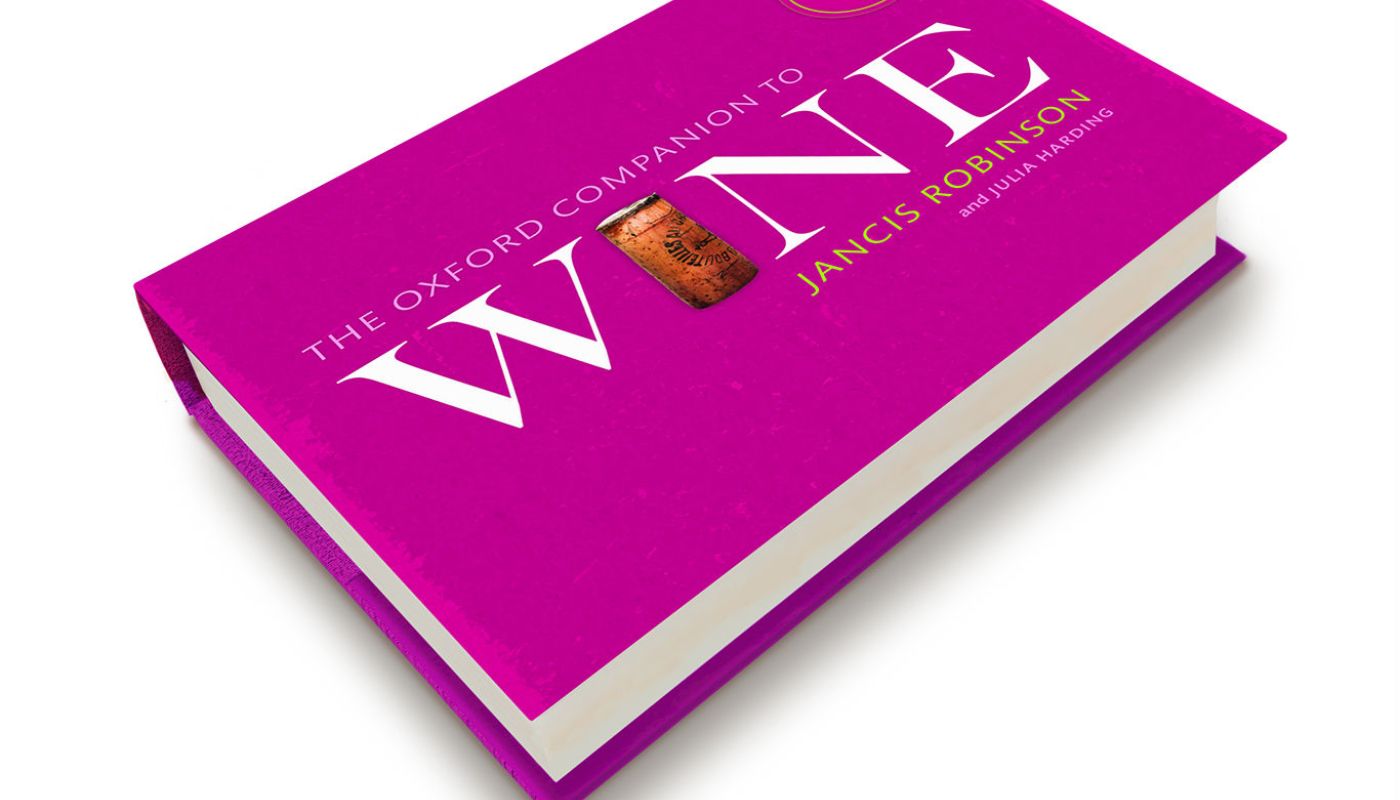
The fourth edition of The Oxford Companion to Wine (£40/$65 OUP) is officially published this Thursday 17 September, nine years after publication of the third edition – the longest interval yet between editions.
Assistant editor Julia Harding and I devoted more than two years to updating more than 60% of the entries in the third edition and adding 300 new ones so that there are almost 4,000 entries in the new fourth edition.
Almost a million words, 912 three-column pages and 90 photographs, thoroughly updated maps and illustrations. More than 180 contributors, experts in their fields, 58 of them new.
See more at www.oxfordcompaniontowine.com.