
See tasting notes on 170 northern Rhône 2012s and the guide to our coverage of 2012 in the Rhône
The northern Rhône has a claim to being the world's most familiar wine region. Not that many of us have gone clambering up the vertiginous slopes of the Côte Rôtie where terraced vines cling to almost sheer drops of schist and gneiss above the one-horse town of Ampuis. Nor have many of us tramped the famous granitic hill of Hermitage above the twin towns of Tain and Tournon that straddle the Rhône 40 minutes' drive to the south. But the Rhône Valley is at its narrowest here and millions of people each year are funnelled down either by road or rail on their way to the south of France and Italy. The large signs in the vineyards proclaiming Guigal, Jaboulet and Chapoutier are some of the most visible signals for travellers of having escaped the traffic jams of Lyons.
Côte Rôtie and Hermitage are the two most famous red wines of the northern Rhône by quite a stretch and in theory they are small appellations geographically limited by Nature. But examination of the figures produced by the generic organisation Inter-Rhône shows that, while the total area of the Hermitage appellation has remained at around 130 ha for decades, the total area of Côte Rôtie vineyard more than doubled between 1987 and 2012, to nearly 280 ha. Indeed, almost a third of all vines currently producing Côte Rôtie are under 10 years old.
Perhaps that's why, when I undertook a blind tasting of all the 2012 Côte Rôties that Inter-Rhône could muster in their tasting room in Tain l'Hermitage last November, I was underwhelmed by too many of them. There are two successful styles of Côte Rôtie for me. One is the traditional one, of which Jamet, for example, now entirely in Jean-Paul's hands, is past master. This is Syrah, the north Rhône's signature grape, at its most ethereal, in often relatively pale wines expressing all the refinement and refreshment of which carefully grown, low-yielding, terroir-true vines are capable. The other is the style perfected by Guigal, the dominant wine producer of the appellation. Guigal's top wines La Mouline, La Landonne and La Turque may carry the name of a vineyard in the first two cases but their job is not just to be distinct from each other but to knock the taster's socks off. These are wines made from tiny yields of grapes so intense that they can be aged for a full 42 months in the barrels the Guigals so carefully cooper themselves. They eventually emerge from their highly sought-after bottles still rich and concentrated, even when decades old. But even for these so-called La La wines, freshness seems increasingly to be being incorporated. There have been calls for an official classification of the grands crus of Côte Rôtie as the soils, elevations and expositions of the various vineyards are so varied that in a way it's crazy that we have just one appellation for the lot.
The number of producers of Côte Rôtie seems to have mushroomed along with the area of vineyard. The local organisation lists 56 and I tasted 42 different examples of 2012 Côte Rotie. But, although there were some examples that were beautifully and recognisably Côte Rôtie, too many of them seemed simply sweet, even overripe, and a bit dull – perhaps partly the result of vines that are too young to have developed real intensity of fruit, or of over-cropping – a particular danger in 2012, according to Philippe Guigal.
The 2012 vintage was not without its challenges in the northern Rhône. Jean-Louis Chave, whose Hermitages and St-Josephs are some of the most admired, told me that 2012 was 'an incredible surprise' after a cool, wet start to the summer that had vignerons desperately spraying against mildew. Things looked up from early August and the vintage was made by a warm, generally dry end to the season – so warm that by the time many grapes were ripe enough to pick – relatively late – acid levels had fallen considerably. Chave does not approve of adding acid 'because the acid never fully integrates with Syrah' but acidification was by no means unknown last year.
'2012 was great for the hillside vineyards', Chave said of the extremely extensive St-Joseph appellation. 'There was a big disparity in 2012 between vineyards on the coteaux and those below them. On the coteaux the July rains drained well and there was no swelling of grapes and dilution of the wine. Although you needed a bit of rain to keep the ripening process going. In terms of pleasure, 2012 is greater than 2011, even if 2011 is more rigid and may last longer.'
For Philippe Guigal, 2012 was the year in which a certain rigidity expressed itself in his substantial production of Condrieu (Guigal is by far the biggest producer of the northern Rhône's most famous white wine, the apogee of the indigenous Viognier grape) – and he was delighted by it. 'People initially thought our objective was to make a sort of super Condrieu – a very big, opulent wine. But with climate change we are not preoccupied with richness. We know we'll get it. So now we are looking for something one might call minerality, however lacking in precision the word is. We often talk of acid and alcohol balance but in Condrieu we don't have acid, so we're looking instead for the "artificial" freshness that granite can bring. We now have a total of 4.5 ha of vineyard for our top bottling La Doriane and our new, 2012 acquisition of half a hectare of granitic Coteau de Vernon means the balance has changed. The wine is less opulent and explosive and has a bit more rigidity. Other producers are going in the same direction as us too – with the possible exception of Yves Gangloff, whom I respect a lot and whose Condrieu is still in the opulent mould.'
And just south of the Condrieu appellation at Château-Grillet, the single-estate appellation recently acquired by François Pinault, owner of Château Latour in Bordeaux, there is a similar determination to fashion a wine that truly expresses the peculiarity of Viognier grown on the amphitheatre of vines here rather than pursuing sheer ripeness. 'I'm pleased Château-Grillet isn't as fat as Condrieu', sniffed director Frédéric Engerer during my visit there last year. In the northern Rhône, avoirdupois, it would seem, is out.
FAVOURITE NORTH RHÔNE 2012s
These are all stunning wines which I scored either 18.5 or 19 out of 20.
Guigal, La Turque Côte Rôtie
Guigal, La Landonne Côte Rôtie
Jean-Paul Jamet Côte Rôtie
Dauvergne Ranvier, Face Sud Côte Rôtie
François Villard, Le Gallet Blanc Côte Rôtie
Domaine J L Chave Hermitage
M Chapoutier, L'Ermite Ermitage
M Chapoutier, Pavillon Ermitage
Domaine J L Chave Hermitage Blanc
Ferraton Père et Fils, Le Reverdy Hermitage Blanc
Next week – southern Rhône 2012s
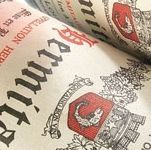
The image above of J L Chave's Hermitage label is taken from Berry Bros website.
North Rhône 2012 – very good in parts
• 1 min read
This is a longer version of an article also published in the Financial Times.


Choose your plan
Member
$135
/year
Ideal for wine enthusiasts
- Access 296,928 wine reviews & 16,140 articles
- Access The Oxford Companion to Wine & The World Atlas of Wine
- Access askJancis, our AI wine assistant


Inner Circle
$249
/year
Ideal for collectors
Everything in “Member”, plus:
- Early access to the latest wine reviews, 48 hours in advance
- Early access to the latest articles, 48 hours in advance
Professional
$299
/year
For individual wine professionals
- Access 296,928 wine reviews & 16,140 articles
- Access The Oxford Companion to Wine & The World Atlas of Wine
- Access askJancis, our AI wine assistant
- Early access to the latest wine reviews & articles, 48 hours in advance
- Commercial use of up to 25 wine reviews & scores for marketing
Business
$399
/year
For companies in the wine trade
Everything in “Professional”, plus:
- Commercial use of up to 250 wine reviews & scores for marketing
- Access to submit wines for review
- Offer memberships to your employees and manage them from a single place
- API access available for an additional fee
More Free for all

Free for all
Jancis remembers the most charming wine producer she has ever met. Above, Neill in his Two Paddocks vineyard. The worlds...

Free for all
After a first round of judging, we’re delighted to begin publishing the best of this year’s writing competition entries. All...

Free for all
Extraordinary seafood and the magic of a good pairing at The Rocket Store. Boscastle harbour is pictured above. The restaurant...
Free for all
How is the work of the ISVV transmitted to the châteaux? And how has it affected the wines? Plus, highlights...
More from JancisRobinson.com

Book reviews
Three additions to the Classic Wine Library plus a self-published guide to Portuguese wine. Three of the reviews below are...

Tasting articles
A revealing vertical that traces the evolution of South Africa’s most sought-after white. The wines were shown by UK importer...

Tasting articles
A quarter-century of wines from a legendary Bordeaux estate. See also this guide to our bordeaux verticals . Although Château...
Bite-sized
Umami junkies, head east for jaw-achingly tasty fusion and a Honshu sour. Having garnered itself quite a reputation for clever...
Tasting articles
A year of extraordinary balance, bright acidity and some of the best Gutsweine in recent memory. Plus a whole lot...
Wines of the week
The dry white wine that established New York’s Finger Lakes as the Riesling mecca of the US. And it’s only...
Inside information
Real cheddar for real wine. By some small miracle I manage to locate the one with four functioning wheels. My...
Tasting articles
Coolness and light in bottles from some of South Africa’s best producers. Above, Monty enjoys the cool surf in Betty’s...