I have never been one for singling out women for being women doing any particular job, and in an ideal world of equality, there would be no need. But in much of the wine world, including Slovenia, true equality remains a distant dream. As an outsider, I typically see Slovenia as quite forward-thinking – notably so in terms of environmental awareness, organic and local food and so on. Yet in wine, the playing field is very far from level, indeed shockingly so. After asking around, I’ve identified around two dozen women who are winemakers and/or owners from around 2,000 wine producers in the country. Mateja Škrl Kocijančič of Family Estates Slovenia confirms that just five of her association’s 87 members are women, though she adds that 90% of the male members have a strong woman at their backs.
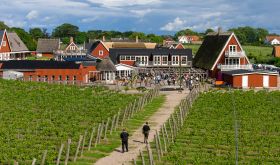
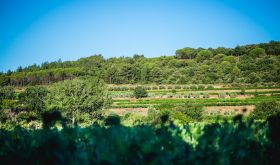
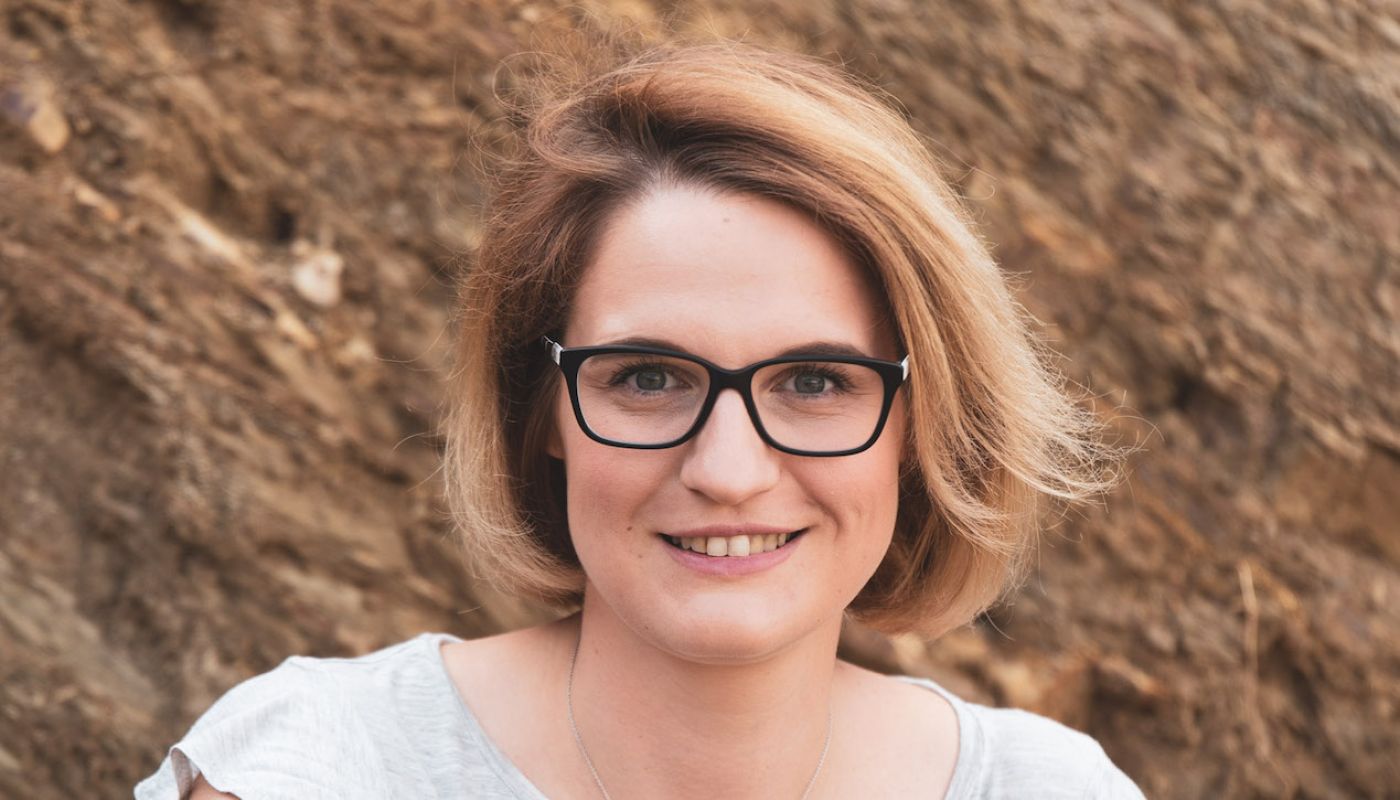
As I pointed out in reference to Bulgaria, I wouldn’t recommend communism or socialism as the best route to achieving gender parity, but because Slovenia has always struck me as progressive, the current inequality is quite a surprise. Špela Štokelj, owner and winemaker at Štokelj winery in Vipava Valley (pictured above), says that to understand this inequality it’s important to recognise the difference between women winemakers who run family estates and winemakers at bigger wine companies or co-operatives, because of completely different work obligations there. She says, ‘In a small family-owned wine estate you have to do the majority of the work by yourself, literally by hand, and it involves a lot of hard physical work. It’s just impossible for me to lift a 50-kg box of grapes!’ She adds that small estates usually can’t afford to employ anyone other than family members, or can’t invest in machinery that would help, and this is the most common model in Slovenia.
Inheritance laws are a major point of difference with Bulgaria, where there was effectively no private property to inherit and what were restituted were very tiny, fragmented plots of land. In Slovenia the typical family estate is routinely handed on to the eldest son, as Ingrid Mahnic explains. ‘Many farms in Slovenia are protected, which means that the owner cannot sell them as plots and only one heir can inherit. He is always the son – usually the oldest or the one the father chooses as most suitable. A woman rarely inherits the whole farm.’
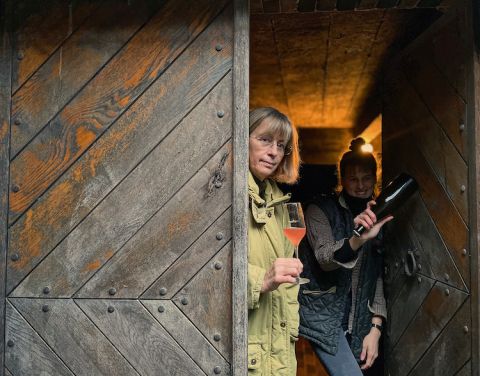
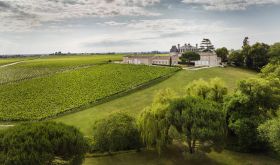
At Frelih, it was the younger son who was the heir but when he died, his widow Veronika Frelih Senior took over. She explained that there’s a widely held view that the eldest son who is also the worker inherits and there’s a perception that ‘positions in the cellar and vineyard require hard work, physical strength, knowledge and organisational skills. The physical work can be seen as too hard for women, especially working with tractors. Of course, the smaller cellars can have male employees for work with the machinery, but sometimes, if the owner/heir is a woman, male employees have difficulty taking commands from her.’ The future here is female, however, with the youngest of Veronika’s four children, Veronika Junior, being really passionate about the vineyard and the wines, has been chosen as the heir. She has recently completed a master’s degree in Bordeaux and returned to work at the winery last year. Veronikas Senior and Junior are pictured above.
Over 20 years ago Ingrid Mahnic was almost certainly the first woman to lead a winery when she took over the family estate after her husband’s death. ‘I felt like someone had thrown me somewhere I didn’t belong’, she says. ‘Although no one will admit this, certain professions are still a priority for men and certain tasks still women’s duty even though socialism is long gone, and we are supposed to live in modern times of democracy and gender equality.’ She adds, ‘An even bigger problem in Slovenia is the age of farm owners. Rarely are estates are passed on to a young acquirer (for which you can also get European funds). It’s sad they have to wait for someone to die and already be in their sixties when they take over a family business. Women also understand better that the future is in young people.’
Ingrid is often described as the ‘queen bee of wine’ in Slovenia. She says she’s been appreciated for her ability to do three things at once and is head of the Slovenian Istria Winegrowers Association, as well as having organised a Malvazija festival for more than 20 years. ‘I think we have to work together to prove women are capable so the myth of male and female occupations will be defeated’, she says.
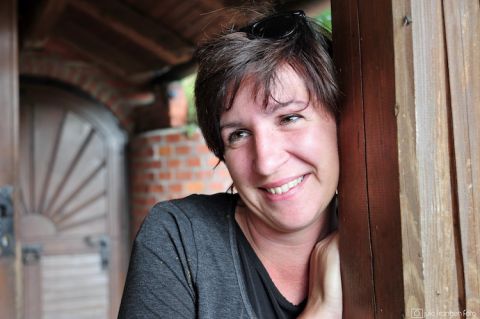
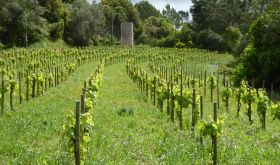
At Vino Graben, Zala Sekoranja (pictured above by Julio Frangen) explains that her father was extremely traditional and assumed her younger brother would take over. ‘It took the best part of a decade to come to an agreement’, she says, adding that she will buy into the estate through her work contributions. She mentions that women oenologists are respected and rising in number but are currently mostly employed by big cellars, whereas to own and run a family winery is a whole other story. ‘On the home front, it’s an extremely demanding job (I actually call it a way of life, not a job), because most work is done by family members. My marriage didn’t survive this way of life. And on the outside, it is even more difficult to prove yourself. Because you are always a daughter or a wife of somebody. I had some international successes with my wines, and I was still treated as only a hostess.’ Špela Štokelj adds that Slovenia has a very short history of professional winemaking. Her father is the first generation of ‘proper’ winemakers who built their own brand and started making their own wine. She believes that generation change is helping. ‘More women will be joining the winemaking business, because technology will help us with the hard physical work.’
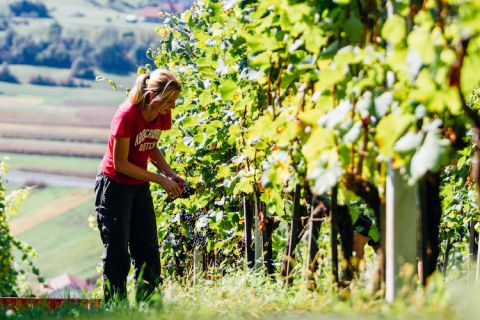
Katja Šuklje Antalick, wine academic and co-owner and winemaker at Šuklje winery in Bela Krajina, pictured above by Julio Frangen, adds, ‘I had to fight with my parents to study agronomy (at that time there was no official study system in Slovenia dedicated to viticulture and winemaking). Being a farmer is still perceived by the general public as something less worthy. It only occurred to me when I was studying in Stellenbosch, South Africa, that being a farmer can actually be an equally worthy occupation as being lawyer or similar.’
The story at Doppler winery is relatively unusual. Mihaela Krsnik Kopše is the owner of an estate started by her grandfather. He had two sons and one daughter, but somehow the daughter took over. Mihaela herself had a plan to study medicine but a passion for wine took her to her first vintage in 1996. She has three daughters who are all interested in wine and food so she’s sure that women will continue the business.
Sabina Horvat is owner and oenologist at her winery, and explains, ‘I took over the farm on my own, despite having an older brother who also helps with viticulture. What challenges did I face? In the beginning the responsibility to continue our tradition, to solve everyday problems and to face higher goals, especially in wine quality. Without the fact that my love for the vine and wine was laid in the cradle, I would not have been able to succeed.’
For the future, there is reason for optimism in Slovenian academe. Professor Dr Branka Mozetič Vodopivec (dean of the School for Viticulture and Oenology) along with her colleague Melita Sternad Lemut at the University of Nova Gorica reports, ‘enrolments in our BSc degree programme over the last 10 years show that the ratio of female to male students averages 40:60. However, there are more and more students who do not come from a winemaking family, and in that group, female students predominate.’
This all suggests that increasingly, winemaking is no longer seen as a male profession in Slovenia. Furthermore, the faculty of wine is 48% women while the university’s research centre is 50% female, with women in positions of faculty head and head of research. They say that it’s often still the case that family wineries are divided on traditional grounds, but they conclude, ‘we would say that the era of Slovene women in the shadow of male winemakers is slowly coming to an end, especially in view of the very ambitious female students in our faculty’.
This article is a modified version of an article originally published in Slovenian by Revija Vino magazine.