Vineyard and Winery Sustainability
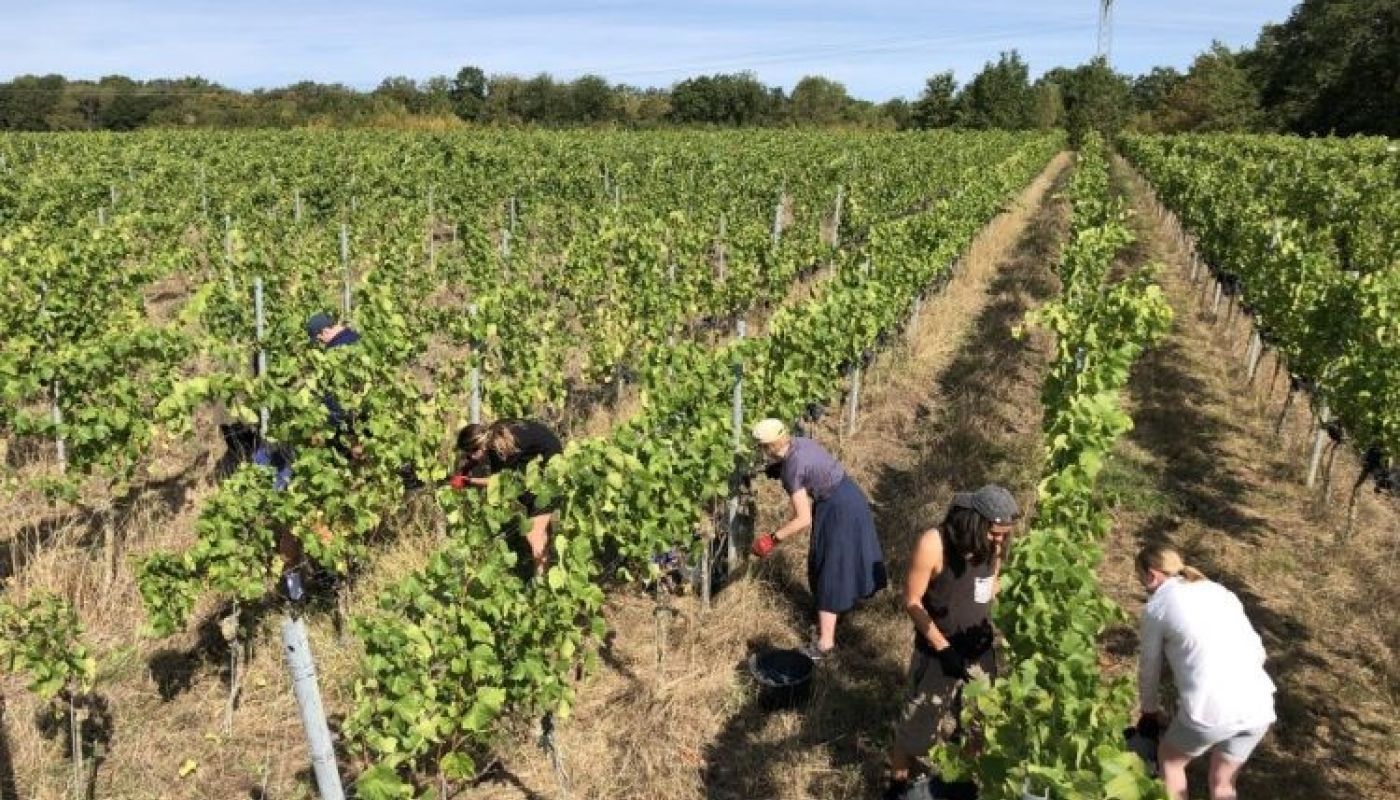
Franconia, Bavaria’s only wine region and little known outside Germany, is a small area producing exciting and complex wines that deserve a global audience. A key winery in this region playing a prominent role in the field of sustainability is 2Naturkinder based in Kitzingen near Würzburg. The winery makes white and red wines from Silvaner, Bacchus, Müller-Thurgau, Dornfelder, Domina and other varietals. As part of the vital and growing response to the monocultural and environmentally damaging practices of the large-scale, commercial wine industry, with its widespread use of pesticides and fertilisers which damages the soil and local ecosystems, 2Naturkinder places strong emphasis on soil-improvement, biodiversity and varietal planting. 2Naturkinder’s wines merit attention for their quality and their vineyard and winery practices. For these reasons, I believe 2Naturkinder should be considered a pathfinder towards a sustainable and ecologically responsible future for winemaking.
I was introduced to 2Naturkinder wines at 161, a South London natural wine bar in Sydenham in South London. A bottle of Drei Freunde particularly impressed me. It was a blend of the top three Franconian grapes Bacchus, Muller-Thurgau and Silvaner and gave a memorable drinking experience of tropical, bright and expressive fruit. Whilst working in London Michael Völker and Melanie Drese of 2Naturkinder had a similar transformative experience with a natural Loire Gamay called Boire Tue from Pascal Simonutti. Their subsequent determination to taste more ‘natural’ wines got them hooked on those that were low on additives, sulphur and filtration. They then became excited about the possibilities of returning to Germany to work in Michael’s father’s vineyard. Michael and Melanie moved back to Germany from London in 2013 and began their quest to experiment with the minimal-intervention philosophy.
The winery has been in family hands since 1843 and Michael’s father had run the winery for 40 years for a loyal, mainly German, customer base. Currently the vineyards cover seven hectares of land and they lie close to the River Main which creates a mild micro-climate. The soils are considered distinctive owing to high minerality and their mix of shell limestone, keuper, clay and red sandstone. Some of their vines lie on quite steep slopes, enabling them to benefit from a south- and south-west-facing aspect and gentle winds which optimise exposure to the sun while keeping the grapes from overheating and allowing them to retain acidity.
I interviewed Michael Völker on a Zoom call recently to try to understand more about his philosophy of wine and his and Melanie’s slogan of; ‘nothing added, nothing taken away’.[1] Together, they have developed a progressive approach in order to ‘produce great fruit’ whilst respecting the ecosystem as a whole. Their philosophy is to place sustainability and ‘naturalness’ at the centre of everything they do. The methodology has four 4 main thrusts:
- Natural soil improvement by making their own compost which they use to build up humus and increase energy and life in the soil which benefits the vines and creates higher-quality fruit
- Enhanced biodiversity in the vineyard to create a more resilient ecosystem which results in more robust vines and a healthy ecosystem
- Replacement of some vines, restoration of historic varieties and planting new hybrids to cope with climate change
- Low-intervention winemaking so that the wine is made with minimal additives and as naturally as possible.
Natural Soil Improvement
Michael is dedicated to soil-improvement by making his own compost to build life and energy into the humus to create a more dynamic and robust growing environment for his vines. He cites this as the core basis for improving the fruit in the vineyard. The compost feeds the microorganisms which in turn improves the humus. Lively soil makes the water and nutrients more available to the plants rather than storing it as some static soils might. Michael makes his compost from ‘grape leftovers and horse shit’ delivering nitrogen for vine growth (and carbon to a certain extent) and he adds Leonardite, a natural soil conditioner, to optimise the carbon-to-nitrogen ratio for a slower release of nitrogen into the soil. The humus helps supress disease, retain moisture and increase micro-porousness in the soil, which promotes good soil structure.
Michael does try to be as close as possible to ‘natural’ vineyard processes but he ‘sometimes sprays the vines for mildew’. He believes that spraying does not affect the soil in the same way that fertilisers and pesticides can damage a local ecosystem and water supplies. Last year his vines suffered less from mildew so spraying was not as frequent which he says is a result of the strengthened soil. In a typical year, a vineyard might spray eight to twelve times a year but Michael needed to spray a couple of times. One of the side-effects of the recent soil work has been the proliferation of clover in the vineyards. Often clover is sowed as a legume cover-crop and as it introduces nitrogen to the soil. In one of his vineyards the clover ‘appeared by itself’; the honeybees love it and the bees are good for pollinating the vines. Michael reports that the smell throughout the vineyard is ‘magical’, maintaining that the grape skins absorb some of this aroma and that this shows in a number of the final wines as floral hints and a greenish note.
Enhanced Biodiversity
Increasing biodiversity in the vineyard ensures more vigorous soils, disease-prevention, vine protection and a natural ecosystem in balance. Michael says that ‘one of the best things you can do in a vineyard to encourage biodiversity is to make a pond’ which he has done. Dragonflies, butterflies and bees populate the vineyard. Michael maintains that this helps to ‘build more wild yeasts on the grape skins which will eventually be the yeasts that start fermentation in the winery’. Michael asserts, ‘you need to work on the top-soil, ensure the plants remain healthy and you get the best grapes’.
In his new vineyard Michael has created an ecosystem hotspot with 4,000 vines from a ‘fucked up Muller Thurgau plot’ that he had ripped up to make ‘a sizeable compost heap in the middle of the vineyard’. Roses and herbs and wildflowers were also planted to break up the monoculture. 35 apple trees of different varieties have been planted in this vineyard. The apple trees will be interspersed along the trellises, imparting interest to a previously featureless, rectangular plot. Significantly, for 2Naturkinder’s holistic approach, also support the growth of a strong mycorrhiza network (fungus that helps the plants’ roots systems), protect against the wind and shade the vines. In addition, the apples and cider made from them are consumed by the vineyard workers.
Michael uses sheep to graze the vineyards; their wool to scares off rabbits and, in the bigger vineyards, when he has run out of sheep wool, the newly planted vines are protected by natural waxed paper bags to stop the rabbits from eating them. These are ‘five times the cost of the conventional plastic protectors but ecologically worth it’ he says. 2Naturkinder also have a bat preservation project in one of their vineyards to protect the long-eared bat which is declining in numbers. They use the ‘bat guano’ as a natural fertiliser.
Grape Variety Strategy
Michael has radically changed the grape varieties planted but kept some of the Franconian ones and he has added some ‘third generation hybrids’, as he puts it.
- Grapes that were retained were valuable local white grapes like Silvaner, Bacchus, Müller-Thurgau the top three planted varieties in Franconia. Michael is passionate about Silvaner in particular given that on this terroir it is considered to give its finest expression in the world. Originally, Silvaner was the most important grape of Franconia and still maintains its spot among the top three; Michael plants green, blue and yellow Silvaner and has plans to plant red Silvaner. He says it breaks up the clone variety, gives contrast in flavours and beauty to the vineyard. The Bacchus is used in Pet Nats and in still white blends. Müller-Thurgau and Riesling are used in still white blends.
- For red wines Michael has varieties like Dornfelder, Domina and Pinot Noir variants. Michael has restored half a hectare of what is locally called ‘Kleiner Fränkischer Burgunder’. After researching Michael found that it was a variant of French pinot/Petit pinot.[2] It ripens later than Pinot Noir, the skins are thicker and the grapes and plants hardier.
- Some of the older grape varieties like Elbling, Heunisch and Adelfränkisch are being replaced by what Michael calls ‘third-generation hybrids’ or PIWI hybrids (fungus resistant Vitis crossbreeds) like Souvignier Gris, Sauvignac, Donauriesling, Muscaris, Calardis Blanc and Blütenmuskateller.[3] These hybrids have been crossed on North American and Asian vines with Vinifera to create vines which are much more disease resistant and can withstand much lower temperatures in winter. At nearly 50 degrees latitude north, Kitzingen experiences the odd cold winter but can really be hit hard by severe spring frosts, as they were this year. The temperature can also swing to 35°C in the summer highlighting the temperature variations the vines have to tolerate.
- Three of his newly planted hybrids, Blütenmuskateller, Muscaris, and Souvignier Gris, are considered to be particularly resistant to fungal diseases such as powdery mildew and downy mildew and importantly they are well-suited to organic and sustainable viticulture. These hybrids Michael is planting are also being used in vineyards in France, Italy and the USA, demonstrating the nascent push on these new hybrid grapes. But what do they smell and taste like in the glass? Blütenmuskateller is renowned for its ability to achieve high sugar content and is often used in sweet wines and tends to show Muscat-like notes in addition to aromas of tropical fruit, flowers, perfume, and sweet spices such as nutmeg. Muscaris is a German-bred hybrid grape that tends to develop high levels of sugar and acidity, making them a good choice for sparkling wines. Typical aromas include lemon, orange, and tangerine. Souvignier Gris is a pink-skinned, white-grape variety which produces strong, fruity white wines.
- The final part of Michael’s grape-planting strategy is creating innovative field blends by mixing up the new hybrids in the vineyard row by row. He says he wants to cross ‘deliciousness with robustness’ and ‘considers a field blend to be a promising foundation for a complex wine’. In his new vineyard he has mixed Souvignier Gris, Blütenmuskateller, Sauvignac, Donauriesling, Calardis Blanc and Muscaris.
Low-intervention Winemaking
Michael doesn’t like me using the term ‘low-intervention winemaking’ and prefers to subtitle 2Naturkinder’s website with his aspiration of ‘Nothing added, nothing taken away’, a term used in winemaking from France to the Americas as a signifier of the movement advocating minimal interference. Michael does have organic and biodynamic accreditation for his vineyard and says, with some understatement, that ‘winemaking is mostly about cleaning all day plus a few decisions. Like when to pick and which vessel to use’. He has two wine ranges, 2Naturkinder with no added sulphur and Vater & Sohn made with purchased grapes and lightly sulphured and filtered to cater to their traditional customers. In 2018 Michael stopped producing Vater & Sohn as 2Naturkinder was doing so well. Grapes are typically hand-harvested, pressed and there is skin contact and some fermentation on the skins. There is no chilling, no use of gas, and no dry ice. Less control means a higher risk of failure but also has the advantage of ‘achieving something more interesting and sometimes remarkable’.
The overall result of 2Naturkinder’s radical organic approach is the creation of high-quality, complex white and red wines and enjoyable Pet Nat fizzes. If you get the chance, I would recommend trying their Fledermaus White made from Silvaner, Muller Thurgau and Riesling and Drei Freunde made from Franconia’s top three grapes; Silvaner, Bacchus and Muller Thurgau. These wines are sold in 20 countries ranging across from Europe to Russia, to North and South America, Japan and South Korea. Well worth trying.