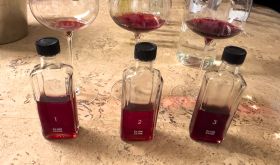
Scandinavia There are now flourishing wine industries with well over 100 wine producers in each of Norway, Sweden and Denmark (also, to a more limited extent, in Finland and the Baltics although the vine is yet to conquer Iceland). The 9th edition of The World Atlas of Wine to be published in September devotes two pages to Northern Europe whereas the 2019 8th edition (whose maps are provided for members here) mentions none of these countries. If ever there were a concrete symbol of global warming, this is it. Admittedly many of the vines grown are early-ripening hybrids such as Solaris and therefore different from the more familiar all-European varieties but the wines taste perfectly respectable. Norway’s most popular wine style is traditional-method sparkling so its usual grape ingredients Chardonnay and Pinot Noir are planted as well as a range of hybrids. Swedish wine producers were confident enough in 2024 to organise a blind comparative tasting of their wines with classics from the rest of Europe such as a Brocard Premier Cru Chablis. The international tasters’ top marks went to a Swedish wine. In Denmark, the famously foraging restaurant Noma gave a fillip to wines sourced locally, and encouraged Danish producers to make natural and orange wines.
Tariffs A 200% tariff imposed by the Chinese on Australian wine imports in late 2020 until March 2024 reduced total Australian wine exports during that period by a third. Australian wine is slowly re-establishing itself on the Chinese market, once its most important. But President Trump’s tariffs have had a crippling effect on the North American wine trade and the fine-wine trade in general. The US is the world’s fourth biggest wine producer and Canada was American wine’s biggest market. But in retaliation for US import tariffs on Canadian goods, US wines were removed from shelves in Canada so that US wine exports fell by 78% in 2025 compared with 2024 with disastrous effects on many American wine producers. Meanwhile, the tariffs imposed on wines (and bottles and corks) imported into the US have imposed turmoil on importers, distributors and retailers as well as some US wine producers who have been left without a sales network. A recent study by the National Bureau of Economic Research in the US found that ‘markups along a distribution chain make it possible for the consumer to fully pay for the cost of the tariffs in dollar terms even when the foreign supplier partially absorbs the tariff by lowering its price’. The argument that penalising foreign exporters will encourage American producers to make substitutes for them hardly works for a product as geographically anchored as wine.
Ukraine I was tempted to make U stand for underwater ageing, a new fad among certain producers, inspired by the youthful state of long-shipwrecked champagne in the Baltic to lower crates of bottles into the sea and hoik them up a few years later, covered in barnacles, but the Ukrainian wine industry is probably more deserving. The Russian invasion has at least highlighted its existence. Among Soviet republics only neighbouring Moldova produced more wine than Ukraine but during the Soviet era, of course, Ukraine included Crimea, imperial Russia’s popular holiday spot and viticultural showcase, being so much warmer than most of Russia. Today’s Ukrainian vine-growers tend to hug the coasts of the Black and Azov Seas in order to be sure to ripen grapes, a mixture of international varieties, the American hybrid Isabella and Ukrainian-bred vines such as Odessky Chorny, or Odessa Black, an Alicante Bouschet × Cabernet Sauvignon cross. Even under fire, Ukrainian wine producers manage to make wine, much of it sparkling, and, with great difficulty, some of it is exported. Specialist importers are the Ukrainian Wine Company in Barking in the UK and Spyrt Worldwide founded in 2023 in North Carolina by three American and Ukrainian war veterans. It was sparkling wine that was specifically targeted by thieves who robbed a consignment of Ukrainian wine as it awaited shipment from the port of Dover to London last year.
Vin de France This is so far the most popular designation of the growing proportion of top-quality wines sold without a formal appellation but the number of non-French wines in Europe sold as, for instance, Vino d’Italia, Vino de España, etc is growing. They are made by producers who find the appellation rules too restrictive – perhaps because the relevant grape variety is not officially sanctioned for that area or, very often, because they feel or have found that the style of the wine is unlikely to be approved by the tasting panels that are de rigueur for appellation wines. Tasters on these panels tend to be older and relatively conformist. (See Arise, lowly Vin de France.) Natural and orange wines are rarely approved but even some more conventional wines fail to find favour unless they adhere strictly to what is seen as the stereotype for that appellation. I first wrote about the growing number of Vins de France on 6 September 2014 but the first Vin de France in our tasting notes database is a 2002, Pierre Cros’ delicious Bon Papa based on his father’s Carignan vines planted in 1905 in the Minervois, whose appellation rules have for some time outlawed 100% Carignans, however good, in favour of varieties seen as higher quality such as Syrah, Grenache and Mourvèdre.
World Health Organization This body has such an authoritative name and reputation that, by promulgating the view that there is no safe level of alcohol consumption, it has managed to change perceptions, giving the entirely erroneous impression that one sip of wine causes cancer. WHO’s research partner is Movendi International, ‘the largest independent global movement for development through alcohol prevention’. Movendi is a temperance organisation dedicated to eliminating alcohol from society. It is easy to pick holes in the WHO’s logic and statistical work, less easy for anyone to stand up for alcohol as it is indubitably associated with some (though by no means all) medical and societal harms. But in my experience the proportion of medical professionals who agree with the WHO’s diktats is reassuringly low.
Xinomavro My X was one of the easiest choices in this alphabet of current wine trends, so popular has this super-fashionable Greek red wine grape become. It’s the defining grape variety of Naoussa in the far Macedonian north of Greece but such are its qualities that it is now planted much more widely and is the second-most planted red wine grape in Greece after Agiorgitiko. The wines it produces tick many 21st-century boxes, being relatively pale, fresh (the name means ‘acid black’), quite chewy in youth with excellent ageing potential, and a tendency towards a certain rust-colour with age, a bit like the fashionable Nebbiolo of Barolo. Apostolos Thymiopoulos makes a range of Xinomavros in a wide range of styles and prices in his native village in Naoussa, including an extraordinary long-aged Blanc de Rosé Xinomavro. In the UK, Greek specialists Keeling Andrew import them, and The Wine Society has a long history of selling them. But there are many other fine producers. And, for the moment, the wines are cheaper than Barolo.
Young people No 21st-century survey of wine would be complete without referring to the reason given by so many for the decline in global wine consumption. I have been writing about wine for more than 50 years and throughout that time wine lovers have complained that the younger generation seems immune to the charms of their own favourite alcoholic drink. Wine is not a natural fit for young people – especially not now that there are so many delicious and alluring alternatives that did not exist in the last century. It’s a complicated subject that too many people make boring or elitist. You generally have to pay for a whole 75 cl of it and need a special implement and some expertise to even open the bottle. But today there are additional influences depressing likely wine consumption among younger generations, not least an obsession with physical rather than mental health – see WHO above. (Boomers like me can attest to the mental, and social, benefits of an evening glass.) In-person conviviality has increasingly been sacrificed for online stimulation – which may not even be communication. I will stop here for fear of being sent straight to an old folks’ home.
Zuccardi The three generations of this Argentine family perfectly illustrate the evolution of wine production since 1963 when grandfather ‘Tito’ Zuccardi planted vines in warm Maipú near Mendoza in order to demonstrate the irrigation system he’d designed. He then built a winery and sold wine in bulk to other producers. His son José Alberto joined the family firm in 1976, introduced new French oak barrels and a level of international travel, marketing and branding practically unknown in Argentine wine then.

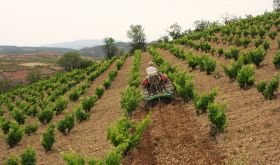
But when José’s son Sebastián (son and father are pictured above), who, significantly, chose to study viticulture rather winemaking, came on the scene there was a dramatic move uphill into the Andes culminating in the inauguration in 2016 of his concrete-dominated Piedra Infinita winery in the high, cool, rocky Paraje Altamira district (pictured at the top of this article). He boasts of having bought his last barrel in 2014. He now has vineyards up to 1,700 m (5,577 ft), claims to be Argentina’s biggest producer of organic wine, and makes particularly pure expressions of the terroir he has excavated in detail. But, like so many wines today, they are not cheap.
Suggestions
Scandinavia
These are the best wines from each country to have come my way so far but I suspect quality is increasing with each vintage.
Voie Vin, Komorebi Sparkling Solaris 2022 Norway
Thora Vineyard, Pure Solaris 2023 Sweden
Njord Pinot Noir Précoce 2021 Denmark
Tariffs
Buy local.
English wine quality is coming on in leaps and bounds. Look out for Langham Estate’s multi-vintage Perpetual cuvée. The first edition swept the board in the WineGB annual awards and sold out at £94.95. The second edition should be available from the winery website in June. Or try their Classic Cuvées at £34.95.
US-based wine lovers may like to consider Apollo’s Praise, Nutt Road Vineyard Dry Rosé 2025 Seneca Lake 13%
Bone-dry, light-red Cabernet Franc from the New York Finger Lakes for drinking with food all year round.
$17.94 Saratoga Wine
Ukraine
Beykush, Loca Deserta 2019 Mykolaiv 13.5%
Sumptuous red Bordeaux blend from a family-owned outfit on the Black Sea coast.
£40.20 Ukrainian Wine Company UK
Vin de France
Jérôme Bretaudeau, La Justice 2023 Vin de France 13%
Stunning biodynamic blend of Chardonnay and Savagnin with a Billecart-Salmon connection.
£45 Wanderlust Wine
World Health Organization
Read everything you can get your hands on pertaining to alcohol consumption and health.
Xinomavro
Dalamára Xinomavro 2019 Náoussa 13%
Flirtatious fruit with a surprisingly appealing dusty finish.
£28 The Wine Society
Young people
Canned wine seems a more youth-friendly proposition than wine in carbon-emitting bottles.
Zuccardi
Zuccardi, Fósil 2023 San Pablo, Argentina 13%
Many an Argentine Chardonnay is superior but this concrete-aged example from vines grown in the bright Andean sunlight at 1,200 m (3,937 ft) is superbly persistent.
£46 Berry Bros & Rudd
For tasting notes, scores and suggested drinking dates, see our tasting notes database. For international stockists, see Wine-Searcher.com.