
Clocks have changed, afternoons are suddenly darker. I’ve been watching the segue of photos, emails, WhatsApps, social media, websites and newsletters tracking the story of the 2025 vintage: fat bunches of ripe grapes hanging heavy on vines in hot sunshine; to harvest pics of sweaty, tanned muscles; boxes and tractors laden with mounds of berries; to jewel-bright juice running and bubbling through-in-out-into presses, pipes, vats and tanks.

But suddenly, it’s gone quiet. Fermentations are finished or popping along slowly and quietly in their own time. Everyone has caught up on sleep and even brushed their hair. Red-stained hands and purple fingernails are starting to get back to normal colour. Wineries are clean again. The forklifts and tractors, presses and pumps have been washed and parked. When you walk into a winery now, it’s like walking into the nursery of a maternity ward – quiet but for the breathing; you whisper. The whole of the winemaking northern hemisphere takes a deep, collective breath, and slows down. Everything will begin again in spring …
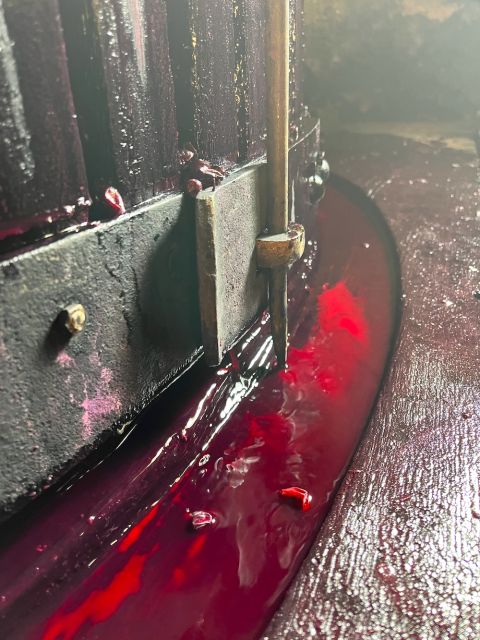
Except in a tiny region in the heart of France, where, at just this time, there is a ripple of excitement. A kind of craziness is taking place. The crash and clash and clank of the bottling line is in full noisy shunt. The smell of new wine is filling the air as purple juice is pumped from tanks to glass. Cork machines are out doing their flash mobs of arm-pump breakdance. It’s about as new as a wine can be. It’s as old as the history of humans making wine. And, for the last century, it’s a wine that has been on a bit of a rollercoaster.
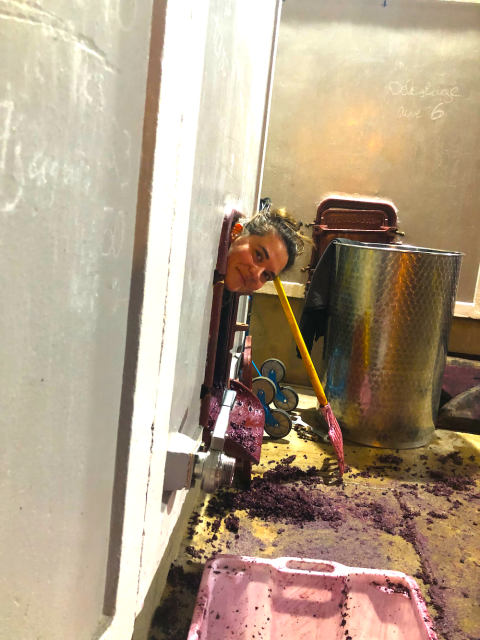
Beaujolais ‘nouveau’ has been produced since as far back, possibly further, than the early 1800s, when winemakers (as so many in Europe already did) toasted their new vintage by quaffing wines poured into jugs straight from the just-fermented vats. Nothing special, but a kind of vinous ‘thanksgiving’ tradition, as it were.
Apart from the lows of phylloxera and World War One, which affected the whole of Europe, the first kick in the teeth to Beaujolais Nouveau specifically was the introduction of AOC rules in 1937, forbidding vignerons from releasing the new-vintage wines before 15 December. Post-war austerity meant these rules were relaxed in 1951, and a new date, 15 November, was set.
But the spectacular, exponential rise of Beaujolais Nouveau really only began on 18 November 1970 – read all about it here. From there, it reached the giddy heights of a worldwide craze in the late 1980s that saw (as one source estimates) 66 million bottles being sold within a couple of weeks. It’s not surprising that the following decline, while not as steep, saw Beaujolais Nouveau relegated by the winerati to the garbage lot along with leg warmers and big shoulder pads.
But over the last few years, in no small part catalysed by the natural wine movement, that rollercoaster has started heading back up again. For consumers leaning towards low-alcohol, super-fresh, artisan, low-intervention, gluggable, food-friendly wines with a strong identity, few wines embody the spirit of this movement more than Beaujolais Nouveau. Not least because it is a wine that has such specific provenance, identity and long history, but also because the most interesting ‘BoJoNo’ is, nowadays, being made by the young, rebel, visionary vanguard of Beaujolais. If you didn’t know that Beaujolais Nouveau is on the up and up, you do now.
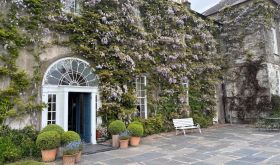
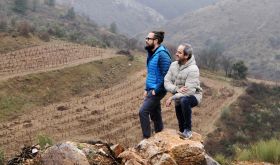
One such young vigneronne is Cosima Bassouls. She had no intentions of taking over the run-down property that her parents had bought in 2000. Instead, she studied agro-engineering and headed off after university to work with humanitarian projects in Tunisia, Peru and Madagascar. But the cynical reality of how such projects are corrupted by politics and misdirected funding eventually brought her back to France, where she retrained in winemaking and viticulture. During internships in Savoie and Roussillon, she became more and more convinced that the overlapping principles of regenerative viticulture, agroecology and agroforestry held the answers to the future.
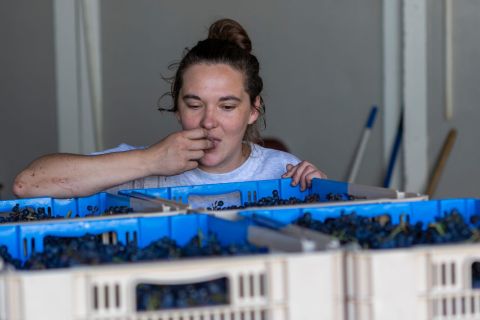
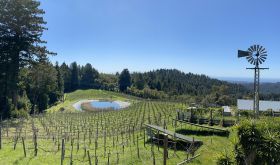
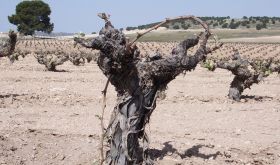
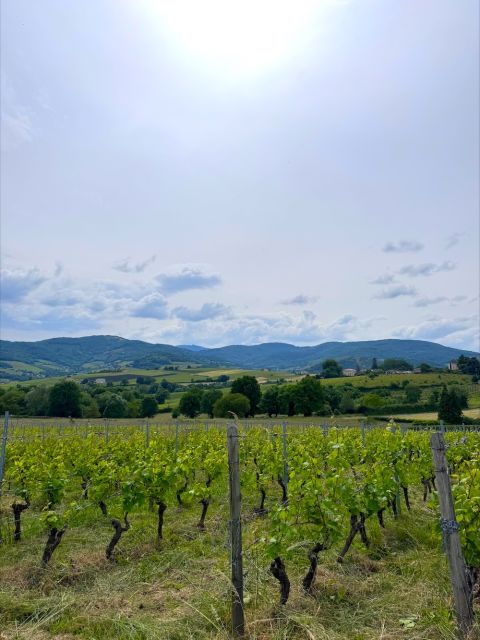
When her mother died in 2018, she took over Château des Vergers. The first change she made was to bottle her own wines instead of selling to négociants as her parents had done. By 2019, she had begun converting all 6 ha (15 acres) of vineyards to organic farming. She began to retrain their old vines on high stakes to give them more ventilation and disease resilience. Her vineyard rows are now rich with native grasses, herbs and wild flowers. She has planted and continues to plant trees and hedgerows around and throughout the vineyards, believing that trees and shrubs not only encourage greater health and spread of the mycorrhizal networks that are so essential to healthy soils and plants, but also provide shade and windbreaks and play a vital part in soil hydrology – all of which gives the vineyard more resilience in the teeth of climate change. Fascinatingly (to me) she braids the vines’ summer shoots instead of trimming them – something I’ve seen a few other winegrowers do, and it’s on my list to understand the thinking behind this. (If you have thoughts on this, please drop them into our forum!)
Her winemaking is just as thoughtful. She starts her fermentations with a pied de cuve (a starter) of ambient yeasts, and makes the wines with minimal intervention and the lowest possible sulphite additions in stainless steel and concrete vats.
Bassouls also heads a movement of 18 winegrowers campaigning for Latignié, where her vineyards are located, to be recognised as a cru, with organic farming as minimum criterion.
She has just released Le Tout Nouveau 2025, her first-ever Beaujolais Nouveau – and I think it captures her vibe, spirit and energy as well as the surge of excitement around the region. Certified organic, the wine is unfiltered and made with 22 mg/l of added sulphites – just enough to keep the wine juicy, fruity and clean. At a butterfly weight of 12% abv, it smells of raspberries and sumac, and it tastes of hibiscus tea and wild orange and hedgerow rose hips, with all the sharp-slap tang and twist and bite of acidity that those things bring. The tannins feel like the kind of silky clay used for face masks. It’s slightly wild – probably not enough for natural-wine geeks, but just enough for those of us who like to dabble. Drink ever so slightly chilled with any kind of pâté scraped (or piled) on hot, buttery toast.

Due to the regulations around the release of Beaujolais Nouveau, it is almost impossible to find out in advance who will be selling the new vintage on Beaujolais Day, 20 November 2025. Which means that, although I’d love to recommend a BoJoNo which is available on both sides of the Atlantic, this has proved tricky. It is also why the wines aren’t (yet) listed on Wine-Searcher. Therefore, we’re bending the rules. I’m putting forward Cosima Bassouls’ Le Tout Nouveau, which is available in the UK, but we’re also going to recommend a few other BoJoNo 2025s which we’ve tasted, loved and know are available in the UK or the US. While this is a ‘wine of the week’, it is really a call to everyone to embrace the joyous ‘thanksgiving’ concept behind Beaujolais Nouveau and also to embrace the deliciousness of those BoJoNos that are made by vignerons who care.
One more thing to add is that £18.25 – the price of the Bassouls – might strike some as high for this style of wine, but I don’t think it is for this quality of wine. Nouveau or not, it takes an entire year in the vineyard to produce the wine – and that is a lot of work, especially if that work is organic, regenerative and/or agroecological. I would go so far as to argue that to bottle and sell, within the time frame, such a baby wine with the confidence that it has the structure, fruit and freshness to withstand the shock of not only very early bottling (no tank time to let it come together) but also early shipment and early consumption, requires a particular skill and understanding. These winegrowers are not just opening the taps on a delicious tank of wine and filling up jugs. These Nouveau Beaujolais have serious structural integrity, natural or not.
Cosima Bassouls, Le Tout Nouveau 2025 Beaujolais Nouveau is available from The Modest Merchant for £18.25.
For more Beaujolais Nouveau 2025, see our tasting notes database.
PS If you’re living in the UK, you might find it fun to go to one of these Beaujolais Nouveau celebrations. In the US, find events at Beaujolaisday or search by location at LocalWineEvents.
All photographs provided by and published here with the kind permission of Cosima Bassouls.