
See my tasting notes on these wines.
'What's an offline?', asked Nick as he read an account of an evening I spent recently in the company of wine geeks and a load of old beaujolais. He, as you may gather, is blissfully unaffected by the symbiotic obsessions of wine and online bulletin boards that drew together my fellow tasters.
This particular get-together in the flesh of habitués of the forum of wine-pages.com was organised by Purple Pager Thomas De Waen, a Belgian national who has been in private equity in London for the last 10 years. A wine nut disgusted by price rises in recent vintages, he turned his back on Bordeaux, only to see the same thing happening to his beloved Burgundy. So now he is turning his considerable attention to the long-neglected red wines made at the southern limit of Greater Burgundy, Beaujolais, and in particular aged beaujolais.
He has been keenly aware of the fact, highlighted many a time on these very pages, that beaujolais has been seriously underpriced for years. The reputation of the wines has long been tainted by the ephemeral, inconsequential nature of over-industrialised beaujolais nouveau, on which the region depended for far too long. Today the leaders of the region are making serious wines, properly vinified rather than rushed to market, and De Waen wanted to demonstrate to us fellow wine lovers that – contrary to accepted wisdom – these wines can successfully be matured in bottle. Better still – many of the wines we tasted would cost under £20 a bottle retail – if you could find them.
Before our bibulous dinner, in a private room above a wine-minded restaurant in Clerkenwell, De Waen had pointed out to me, 'it's actually really hard to source properly aged bojo. There just isn't any around, regardless of price. And when it is sold, it is generally by some small merchant in the middle of France with no inclination to send stuff to the UK. Nightmare. I actually couldn't buy any wine from my favourite producer Philippe Jambon'. He therefore raided his own cellar and went to considerable effort to assemble suitable demonstration bottles. De Waen's tip for those who wish to indulge in his passion for mature beaujolais, incidentally, is to visit Alain Dutournier's two-star restaurant Carré des Feuillants in Paris, whose list currently offers 10 venerable beaujolais back to 1989, mostly at 60 or 70 euros a bottle.
Our bottles were supplied mainly by De Waen but also by several other participants, a mix of wine professionals and those who have to pay for their wine. It was one of those who brought, from his uncle's cellar, what was the single most revelatory contribution of all – a half bottle of simple AC Beaujolais 1970 bottled by the négociant Geisweiler.
AC Beaujolais is the lowest of the low. Beaujolais-Villages a modest step up. The great majority of the best wines of the region come from one of the Beaujolais crus – Chiroubles, St-Amour, Fleurie, Régnié, Brouilly, Côte de Brouilly, Juliénas, Chénas, Morgon and Moulin-à-Vent in roughly ascending order of body and ageability. These names appear on labels which may not cite the word beaujolais at all (just as a Chambertin label may not mention the fact that Chambertin is a burgundy).
Furthermore, because of the greater ratio of air to liquid, wine in half bottles is meant to age far faster than wine in regular bottles. And bottlings by the big négociants (merchants) are conventionally thought to be the least authentic and promising. But this wine – despite having a crumbly cork and having to be decanted – was delightful and perfectly fresh. A little sweet but still vigorous and with beaujolais' trademark combination of vibrant fruit and appetising acidity – wherever the wine may have come from. Anthony Hanson MW, who worked at Geisweiler at around this time, said it could have been anywhere and probably wasn't the Beaujolais region.
We began with a run of Morgons from Foillard, 2009 back to a wonderful 1999 that offered the glory of a successful old-fashioned red burgundy from that famous vintage but had in fact been bought recently by De Waen for just 20 euros.
We then had a couple of oddities that are Thomas's personal favourites. Les Baltailles 2005 from Philippe Jambon had, most unusually, been aged for three years in tank and three in old oak. This was very 'natural' (minimal additions) and very unlike any other beaujolais but was certainly spicily arresting and full of life. L'Interdit from Jules Desjourneys was mainly 2008 with a bit of 2009 and failed to achieve appellation contrôlée status because of its very marked deviation from the beaujolais mainstream. It was just too tart for me.
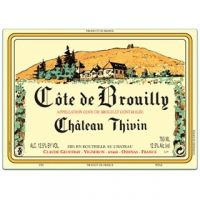
But the next flight, wines from the widely admired Château Thivin of Côte de Brouilly, should not be too difficult to find at all and was much more recognisable as decidedly superior beaujolais. There were representatives of the special Chapelle and old-vine Cuvée Zaccharie bottlings, but actually the most delightful wine of all was the regular 2007 bottling, still available commercially. The special cuvées probably simply need more time.
A couple of Côte de Py Morgons from the admired J M Burgaud from the 2005 and 2006 vintages followed but, to quote Thomas's online report the next morning, 'did not get much love'. At this stage anyway, they seemed particularly tough. That this was no fault of the vintages was proved by the gorgeousness of a Diochon Moulin-à-Vent 2005 and a Morgon 2006 from the appropriately named Desvignes.
There was certainly the odd dud, but overall, over an array of delicious British produce including Blackface lamb and fresh peas, De Waen succeeded in proving that beaujolais can not just last but improve in bottle, and that old bojo is one of the best values in the wine world.
As one attendee reported the following morning, 'What a Beaujolly evening! Thank you to Thomas for finding so many interesting and difficult-to-obtain wines. There was something very cheerful and communal about this do which is what I hope for in an offline. Were any of the wines transcendentally great? No. Did I enjoy them? Yes. Except my recall is so foggy that I am not sure which.'
De Waen responded, 'Somehow, I find that less exalted wines allow everyone to relax and enjoy the evening more. It certainly was one of the more boisterous offlines I've been to.'
SOME FAVOURITES
From youngest to almost incredible oldest. Try wine-searcher.com for stockists.
Foillard, Morgon, Côte de Py 2009 Morgon
Ch Thivin 2007 Côte de Brouilly
Georges Descombes, Côte de Py 2007 Morgon
Louis-Claude Desvignes 2006 Morgon
Diochon, Vieilles Vignes 2005 Moulin-à-Vent
Philippe Jambon, Les Baltailles 2005 Vin de France
Hubert Lapierre 2005 Moulin-à-Vent
Ch Thivin, La Chapelle 2005 Côte de Brouilly
Dom Diochon 2005 Moulin-à-Vent
Foillard, Morgon, Côte de Py 1999 Morgon
Bojo with mojo
• 1 min read
This is a longer version of an article also published in the Financial Times.


Choose your plan
Member
$135
/year
Ideal for wine enthusiasts
- Access 297,331 wine reviews & 16,160 articles
- Access The Oxford Companion to Wine & The World Atlas of Wine
- Access askJancis, our AI wine assistant


Inner Circle
$249
/year
Ideal for collectors
Everything in “Member”, plus:
- Early access to the latest wine reviews, 48 hours in advance
- Early access to the latest articles, 48 hours in advance
Professional
$299
/year
For individual wine professionals
- Access 297,331 wine reviews & 16,160 articles
- Access The Oxford Companion to Wine & The World Atlas of Wine
- Access askJancis, our AI wine assistant
- Early access to the latest wine reviews & articles, 48 hours in advance
- Commercial use of up to 25 wine reviews & scores for marketing
Business
$399
/year
For companies in the wine trade
Everything in “Professional”, plus:
- Commercial use of up to 250 wine reviews & scores for marketing
- Access to submit wines for review
- Offer memberships to your employees and manage them from a single place
- API access available for an additional fee
More Free for all
Free for all
The wines of Georgia continue to be surprising. A slightly shorter version of this article is published by the Financial...

Free for all
Leading new-wave South African wine producer is looking to the future. A version of this article is published by the...

Free for all
Jancis remembers the most charming wine producer she has ever met. Above, Neill in his Two Paddocks vineyard. The worlds...

Free for all
After a first round of judging, we’re delighted to begin publishing the best of this year’s writing competition entries. All...
More from JancisRobinson.com
Wines of the week
Domaine Lafage’s Moutou from the Côtes Catalanes is not only delicious but also supports environmental research in this hot, dry...
Tasting articles
Jancis plunges into these distinctive wines, if not the distinctive country. Above, from producer Dugladze’s website, characteristically Georgian amber Rkatsiteli...

Tasting articles
Big reds continue to rule in Penfolds Land, but changes are on the horizon. Penfolds’ Magill Estate is pictured above...

Tasting articles
Concluding Walter’s report on this notably accessible vintage. Today, reviews of wines from the southern and eastern villages of Castiglione...

Tasting articles
A final report on a tricky vintage that produced some remarkably fresh and accessible wines. Today, reviews of wines from...

Inside information
Mexico’s wine industry offers lessons in dealing with climate challenges, says Mexico-based journalist and sommelier Carlos Borboa. Above, vineyards in...

Vinomakase
Richard’s new Vinomakase column explores how the experts match wine with Japanese cuisine. For the first edition, a traditional sushi...

Bite-sized
A 15th-century pub with bang-up-to-date feasting in the Cathedral Quarter of St Albans. The front bar is still reassuringly pubby...