China is now the world’s sixth most important wine producer and, according to market analysts employed by the Bordelais no less, is also now the world’s biggest market for red wine. So what goes into Chinese wine glasses is relatively important to everyone in the world of wine.
I have been visiting China every two years this century and am always fascinated by the changes evident to an infrequent visitor. Shanghai has been my usual base and what was most noticeable during my visit last month was the slowdown in construction, mirrored by closures of such temples to luxury as Louis Vuitton’s Pudong showcase and The Wine Residence, an ambitious multi-storey series of private dining rooms owned by wine importer ASC. ASC’s American co-founder Don St Pierre Jr sold the company to Suntory of Japan and is now involved with Vinfolio, a fine-wine company in San Francisco. There are no official curbs on business entertaining in the Bay Area.
Total sales of wine in China, after the most phenomenal growth in the early years of this century, have levelled off in the last four years, partly thanks to President Xi Jinping’s crackdown on corruption. The theme of this year’s China Wine Summit discussion forum was ‘growing pains of China’s developing wine market’.
But at least wine in China is now being drunk rather than expensively packaged and handed from person to person as a corporate gift. Professor Changqing Duan, director of the Centre for Viticulture and Oenology at China Agricultural University, is one of the most reliable analysts of the Chinese wine market. He pointed out that the most frequent buyers of wine in China are now between 26 and 35 years old, and buying wine for personal daily consumption is now much more important than buying wine as gifts or for business entertaining.
One very significant change I noticed was that red bordeaux and its domestically produced imitations no longer dominate the Chinese wine market. In fact I spent five wine-rinsed nights in China and was not once served a red bordeaux. Among Chinese wine lovers, red burgundy seems all the rage, but the range of wines on wine lists and in stores is very, very much more eclectic than even two years ago – and not all wine is red!
This is very good news in terms of matching wine with Chinese cuisines. Thin Cabernet Sauvignon, too often from over-produced young vines if home-grown, is a poor accompaniment to the spicy, sometimes sweet dishes that are most likely to end up on the country’s ubiquitous Lazy Susans.
As in other Asian countries, Chilean wine has been making a huge impact at the volume end of wine sales. Mineral-rich Chile has cunningly signed up favourable trade agreements that give it big advantages over many of its competitors.
One healthy sign is that the proportion of wine imported into China in bulk has been declining and is now just 21% (the comparable proportions for the UK and France are 34 and 80% respectively). There was a time when blending the cheapest possible imports into liquids of dubious provenance was much more common than it is today, as an increasing proportion of Chinese wine drinkers are familiar with how wine should taste. And there are almost as many students of the WSET, the world’s leading wine educator, in China and Hong Kong together as there are in its homeland the UK.
But although wine continues to be one of the great signifiers of status and westernisation in China, the country’s total area of vineyard has been increasing more slowly than the amount of wine produced, suggesting that in this belt-tightening era yields are being pushed even higher.
As wine was catching on in China, and before the anti-bribery measures, overpriced, fancily packaged bottles were sought after. But more recently there has been a big increase in demand for mid-priced bottles, with almost two-thirds of all wines sold retailing at 60 to 180 RMB (about £6 to £18, or $9 to $28) a bottle. Wine duties in China are relatively high and calculated on value. Many of China’s fine-wine enthusiasts import special bottles from duty-free Hong Kong thanks to a well-organised network of human mules and more sophisticated means.
But what of the quality of wine produced in China? Every time I go I try to taste as many of the better Chinese wines as possible. For many years this was a pretty grim exercise, but for the last few years there has been a definite increase in the number of successful, ambitious wines.
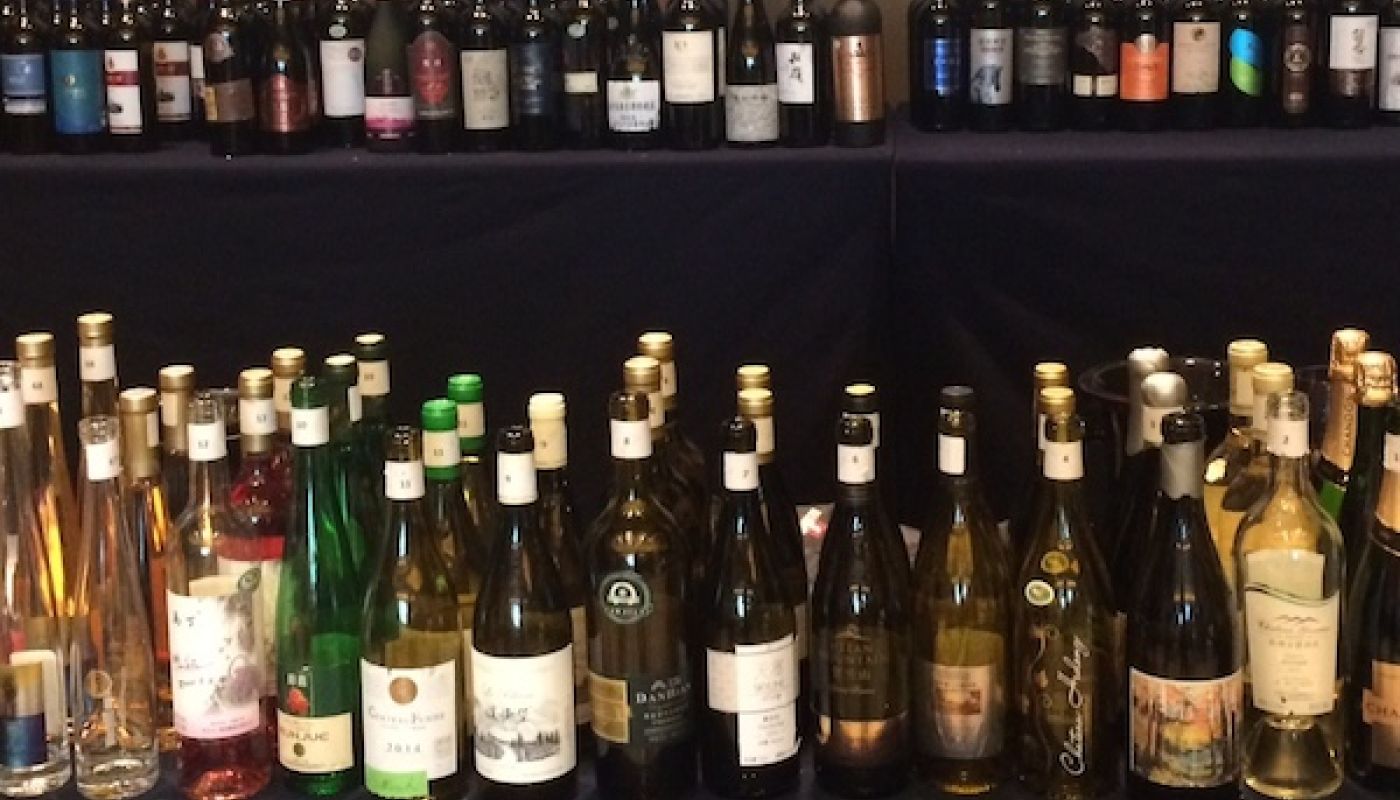
The last China Wine Summit wine competition was held two years ago, with entries having to pass muster with the organisers before being allowed to compete. In 2014 we tasted 53 wines but this year there were 68 entries, including 10 dry whites, one very respectable fizz from Chandon in Ningxia, a rosé and two sweet white icewines (both based on Vidal hybrid grapes).
Most of the dry whites were standard issue international Chardonnays without too much distinction (except for one that would not look out of place at a natural wine fair) but among the reds three wines – two Cabernets and a Syrah – were really very sophisticated, fine wines by any measure. Two of these wines were from Ningxia, China’s most wine-minded province, whose local government covered the relatively steep entry fees, but one of them was from Xinjiang, the far western province with an exceedingly continental climate. A further eight reds were nearly as good, whereas the 2014 version of this tasting yielded just four wines that stood out.
There was clearly much more widespread winemaking skill, with tannins nicely ripe and phenolics astutely extracted. Chinese wine producers will surely start to think about exporting wine seriously before too long, and LVMH, for example, are targeting their really rather delicious brand new Yunnan red (at €200 a bottle) at markets other than China.
The Chinese are now a major presence among student numbers in French wine faculties and in Bordeaux châteaux ownership. See the pictured below of building works behind Ch Grace Dieu des Prieurs on the main road between Pomerol and St-Émilion, and the extraordinary terracing of another Chinese-owned property just behind Ch Barde Haut.


The latest high-profile recruit is no less than the founder of Alibaba Jack Ma, who is reported as saying he intends to turn Château de Sours in Entre-Deux-Mers into a ‘mini-Versailles’ and is still scouting. The Chinese may have retired from the Bordeaux primeurs market (for the moment) but they clearly have no intention of retiring from wine.
SOME SERIOUS CHINESE REDS
Dom Cheng Cheng, Yi Pu Cabernet Sauvignon 2013 Ningxia
Citic Guoan, Niya Berry Select Cabernet Sauvignon 2013 Xinjiang
Ho-Lan Soul, Special Reserve Organic Syrah 2013 Ningxia