
18 May The story below is likely to have important ramifications for the US wine business, so we thought we would publish it free today as part of our Throwback Thursday series.
17 May On 23 March E & J Gallo Winery, America’s largest winery and the second largest wine company in the world, announced what was for some, shocking news. The company had paid an undisclosed sum for the Stagecoach vineyard, the single largest contiguous planting of grapes in Napa Valley, and one of its most famous (see Elaine's recent article on its neighbour Acumen).
The shock value of this announcement reflected the fact that Gallo, so often thought of more as a Sonoma-based brand, would be acquiring such a large swathe of Napa’s most cherished vineyards. But it was also because the Stagecoach vineyard supplies grapes for more than 100 wine labels, some of whose owners now face the prospect of needing a new source of grapes for their entire production. Indeed, in addition to the very profound implications for those who have based their entire fledgling wine projects on Stagecoach fruit, this purchase promises to have a fundamental impact on premium wine prices in Napa for a long time to come.
Astute observers of the California industry may note, however, that this purchase may not be a totally unexpected move by Gallo. In fact, the acquisition of Stagecoach’s slightly more than 600 acres (243 ha), might be seen as the climax of a very deliberate move to become a dominant force in Napa for the second time in history.
Headquartered in Modesto, in the heart of California’s Central Valley, but with its most famous hospitality facilities in Sonoma County, not to mention the well-known brand ‘Gallo of Sonoma', Gallo seems superficially to be focused on Sonoma County. The company farms more than 3,200 acres (1,295 ha) in the county, making it the second largest single Sonoma producer behind its rival Jackson Family wines.
But there was a time when Gallo bought more than 40% of the wine grapes grown in Napa Valley. According to historian Charles Sullivan, whose book Napa Wine: A History offers an authoritative account of the region, Gallo struck a deal in 1952 to purchase the entire production of what was then the largest producer in the county, the Napa Co-operative Winery. The following year they secured exclusive access to the full production of the other, smaller Napa Valley co-op and for the next 34 years, Gallo’s purchase of grapes from these two facilities (largely used for their low-priced Hearty Burgundy blend) financed much of Napa’s vineyard expansion during that time.
But with the increasing quality (and therefore price) of Napa grapes in the mid 1980s, Gallo could no longer justify the arrangement, and pulled out of Napa altogether.
‘They really did throw Napa under the bus', recalls vintner John Skupny, who at the time was working at Caymus Vineyards, where he negotiated to buy out some of Gallo’s contracts with individual growers. ‘They pretty much pulled out and moved everything to Sonoma.’
In the 1980s most of the wines Gallo produced were destined for sale in supermarkets. But in the decades that followed, the company gradually moved into the higher tiers of the wine market, eventually entering what analysts refer to as the ultra-premium and luxury price categories, which represent wines that sell for more than $15 per bottle.
Then in 2002, after nearly 20 years of all but ignoring Napa, Gallo purchased the Louis M Martini winery in the town of St Helena, along with 182 acres of Napa vineyards. This was followed in 2007 by the purchase of the William Hill winery, along with its 145 acres of vines. In 2015 Gallo purchased The Ranch Winery, a sprawling facility covering more than 70 acres (28 ha) and capable of crushing 30,000 tonnes of grapes each year. Most recently Gallo snapped up the Orin Swift brand, a 100,000-case production brand with three pricey wines made from Napa Cabernet. The purchase of Stagecoach brings Gallo’s Napa holdings to close to 1,000 acres (405 ha) of vineyard in total, making them easily among the most significant landholders in Napa County. Gallo also has the potential to take a significant number of premium grapes off the market over the course of the coming years, which will inevitably lead to higher demand and higher prices for Napa fruit.
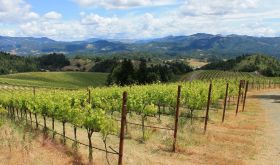
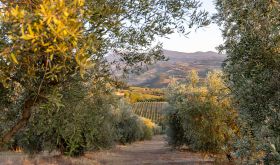
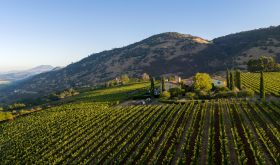
Stagecoach vineyard (pictured above and below) sits up in the hills on the eastern side of Napa Valley, more than 800 feet (244 m) above the valley floor in an area known as Pritchard Hill. Formed from a series of landslides off the volcanic Vacas mountains, this plateau overlooking the valley now houses some of Napa’s most famous wineries, including names such as Ovid, Colgin, Chappellet, and Continuum Estate.
Purchased in 1991 by Dr Jan Krupp and his two brothers, Stagecoach was little more than 1,100 acres of sagebrush and volcanic boulders broken up by ravines and gullies. Beginning in 1995, the brothers began the backbreaking work required to develop the site, eventually hauling out (according to their website) more than a billion pounds of rock over seven years to make way for vines. (See Elaine’s recent article Acumen – the importance of the human factor.)


‘If you asked most of my customers, they would have told you I’d die on this vineyard', says Jan Krupp, ‘and if it were just my vineyard, I would just die on the job. But I knew my two brothers would prefer to sell.’
As Krupp tells it, neither he nor his brothers had any intention of selling, and had rebuffed many offers over the years. ‘But then this investment banker came to me and told me that he thought it was a good fit for Gallo and that he thought he could get $200 million for it', says Krupp. ‘I told him he’d have to get a lot more than that before I was interested. But then they came up with a much higher number and I felt like I owed it to Bart and my little brother.’
Krupp says he placed a few key conditions on the sale of the property. First, that Gallo had to offer to employ all of his workers at the same or higher salaries and benefits than he was paying them. Second, that he and his brother got a 10-year contract for the same grapes they were already buying for their Krupp Brothers wine. Third, that the vineyard manager, Esteban Llamas, would be able to live on the property as long as he worked there; and fourth, that all the existing grape contracts with the vineyard’s customers would be honoured.
‘Most of the contracts are around three years', says Krupp, ‘but some are five or ten years. I recently signed a nine-year contract, and last year we planted new blocks for someone with a 12-year contract.’
One of those three-year contracts is owned by winemaker Aaron Pott, who isn’t worried about his contract. ‘I think they’re definitely going to honour my contract, but I know a lot of people are scrambling now, looking for other sources of grapes, not knowing what is going to happen long-term', says Pott. ‘A lot of tiny little guys base their entire brands on Stagecoach fruit. All of a sudden there’s now a lot of people sucking up to Andy Beckstoffer’ (Beckstoffer farms more than 1,000 acres (405 ha) for some of Napa’s most expensive fruit -- see At what price, To Kalon?).
In the course of its statements about the purchase, Gallo hasn’t announced specific plans for the vineyard beyond their intention to use some of its fruit to support their Louis Martini and Orin Swift brands.
‘Now they have the structure to build those brands up and to take over the valley. It’s scary', says Pott, who fears the impact of the purchase on smaller producers who don’t own any vineyards. ‘I want to drink wines that show where they’re from, made by people for the love of wine. I don’t think Gallo is the guy to do that.’
While all contracts will be honoured according to the terms of the deal, when pressed, Krupp admits that once the contracts have expired, ‘All bets are off.’ But he, as well as several others I spoke with, believes that it will take a long time for Gallo to use all the fruit, and that the company is smart enough to realise that high-scoring wines from other labels bearing the name Stagecoach will only improve the return on their investment.
As for Krupp’s return on investment? He’s ploughed some of it right back into the ground. Last week the Krupp Brothers announced their purchase of Kitchak Cellars, a boutique winery with a tasting room and 10 acres of vineyards just north of the city of Napa.