'Japan, wine exporter' has a somewhat unlikely ring to it, but that is the aim of a new organisation, Koshu of Japan, that would very much like to shine an international spotlight on a grape variety that is often dismissed within its native country.
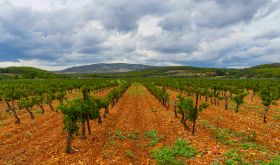
I have just made my second visit in 12 years to Yamanashi Prefecture, the Bordeaux of Japan in terms of winemaking. Except that it reminds me much more of Switzerland than Bordeaux. Every square metre in the heavily populated Kofu Basin overlooked by Mt Fuji and the snow-dusted Japanese alps is cosseted. Individual vineyards are tiny, partly thanks to McArthur's post-war policy of weakening the powerful landowners by redistribution. Farmers are protected. Labour costs are high. And the most-planted vine variety, like the Chasselas that is known as Fendant in French-speaking Switzerland, is also a table grape.
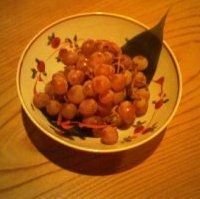
Perhaps it is this familiarity with the pink-skinned Koshu in the fruit bowl that makes many of Japan's army of wine lovers suspicious of wine made from it. Perhaps it is the fact that Koshu's thick skins, which help make it usefully resistant to the fungal diseases that can plague other varieties in Japan's exceptionally humid summers, can all too easily translate in the wine glass into bitterness. Or perhaps it is simply that, as Malbec in Argentina and Shiraz in Australia were regarded locally for many years, Koshu is just too ubiquitous, too much part of the national furniture, to be taken seriously.
Chardonnay, Cabernet Sauvignon and Merlot are regarded as much more foreign and therefore glamorous within Japan. And certainly the likes of Chateau Mercian's Private Reserve Hokushin Chardonnay 2006 and Suntory's Tomi Réserve Special 1997 mature red bordeaux blend, top Yamanashi wines from two of the biggest companies, are thoroughly admirable. But it seems unlikely that anyone other than the Japanese would be prepared to pay around £60 a bottle for such wines, and besides they are made in such small quantities that exporting is hardly viable.
But the national and local governments are supporting this new initiative to launch an export campaign for varietal Koshu, a drive set in motion only last year by the single-minded Yamanashi wine producer Shigekazu Misawa of Grace Winery. 'It is my dream to see Koshu wine recognised for the qualities I know it can have', he says, via his English-speaking, Bordeaux-trained daughter Ayana.
Equally determined is the chopstick-thin foodie, ex-sommelier and Master of Wine student Yuka Kudo, whose job it is to translate this intention into sales. 'We decided to focus on a market that was stable economically, had a real interest in Japanese cuisine, and was not a major wine producer itself: Britain', she explained. Some may question the stability of the British economy but they would not deny that the culture of sake-drinking is much less established in Britain than in the US, leaving a convenient gap that might just be filled by Koshu on the wine lists of superior Japanese restaurants in the UK.
Accordingly, a substantial delegation of Yamanashi wine producers flew over to London in January of this year, took over London's finest Japanese restaurant Umu to prove to some of us fortunate wine writers that Koshu goes with the likes of shiizakana, grilled sea bream with miso, and then held a much bigger tasting for members of the UK wine trade. They stayed at a modest hotel in Tavistock Square so that they could afford to have 15 translators in attendance when showing off their wines.
So far, according to Koshu of Japan's European co-ordinator Lynne Sherriff MW, three or four British outfits have expressed an interest in importing this exotic new variety – new to Europe that is, even if there is apparently evidence of this vine's having been grown in Yamanashi a millennium ago. DNA analysis reveals that its genes are predominantly European, prompting some to speculate that it was brought to Japan along the Silk Road.
There is a problem, however. Neither the grape Koshu nor the appellation Yamanashi are officially registered with the EU authorities. The second is likely to take much longer to remedy than the first. And, understandably, EU regulations do not permit winemakers to add both sugar to increase final alcohol levels and acid to increase final acid levels in the same wine. Koshu grapes are naturally low in both acid and sugar – although the current 2009 vintage was exceptional in both these respects – and export requirements could have a long-term beneficial effect on winemaking techniques.
Because Koshu is so light bodied and transparent, it is best served relatively cool. It is also a wine best drunk relatively young, so I cannot see how the Japanese will manage to persuade British wine buyers to pay more for it than for a Muscadet from one of the best addresses, for example, which means about £10 a bottle retail – even if I think the most suitable potential customers for it will be curious sommeliers rather than anyone in Britain's hyper-competitive retail arena. It is not going to be easy for Koshu of Japan.
But even the greatest Koshu sceptics such as Hiroshi Yamamoto, famed for his translations of multiple wine books into Japanese, who dismisses Koshu wines (and half his compatriots) as, 'essentially without much personality – like Japanese women', admit that the quality of the better wines made from Koshu has increased enormously in recent years. Growers such as Misawa have been experimenting with vine-training systems more suitable for growing grapes for winemaking rather than for eating than the traditional overhead pergolas (often with plastic sheeting above to protect them from Yamanashi's average 800 mm of rain in the growing season) designed to maximise yields and produce bunches that look good rather than maximising flavour. There is also experimentation with planting higher, cooler vineyards so as to extend the growing season and expose the grapes to naturally drying, and cooling, winds.
Many winemakers – and most of them buy in fruit as well as growing it – have been deliberately leaving the young wine in contact with the lees of fermentation to pick up more flavour and labelling their Koshu 'sur lie' like Muscadet (which it does rather resemble). And some producers have made sparkling, oaked and even flavoured versions in their efforts to imbue what is a naturally rather neutral variety with more interest.
I must confess that what appeals to me about Koshus is its very lack of brashness, its delicacy, purity, limpidity, and the way it goes so well with the calmer regions of the Japanese gastronomic landscape. The better examples do seem to go particularly well with sashimi – and indeed any sort of raw fish dish including oysters, with sushi, tempura, and rice – even some gentler-flavoured risottos. There seems to me to be something quintessentially Japanese about a fine Koshu. The word zen keeps coming to mind.
As for specific flavours, I found yuzu (a Japanese citrus) in some, lychee in others, and a professional Japanese wine writer assured me that quince was the fruit she found most often in Koshu. My acquaintance with it is still embryonic, but I have listed the examples that have particularly impressed me so far.
Favourite Koshu producers
Grace, Haramo, Lumière, Marufuji, Yamanashi