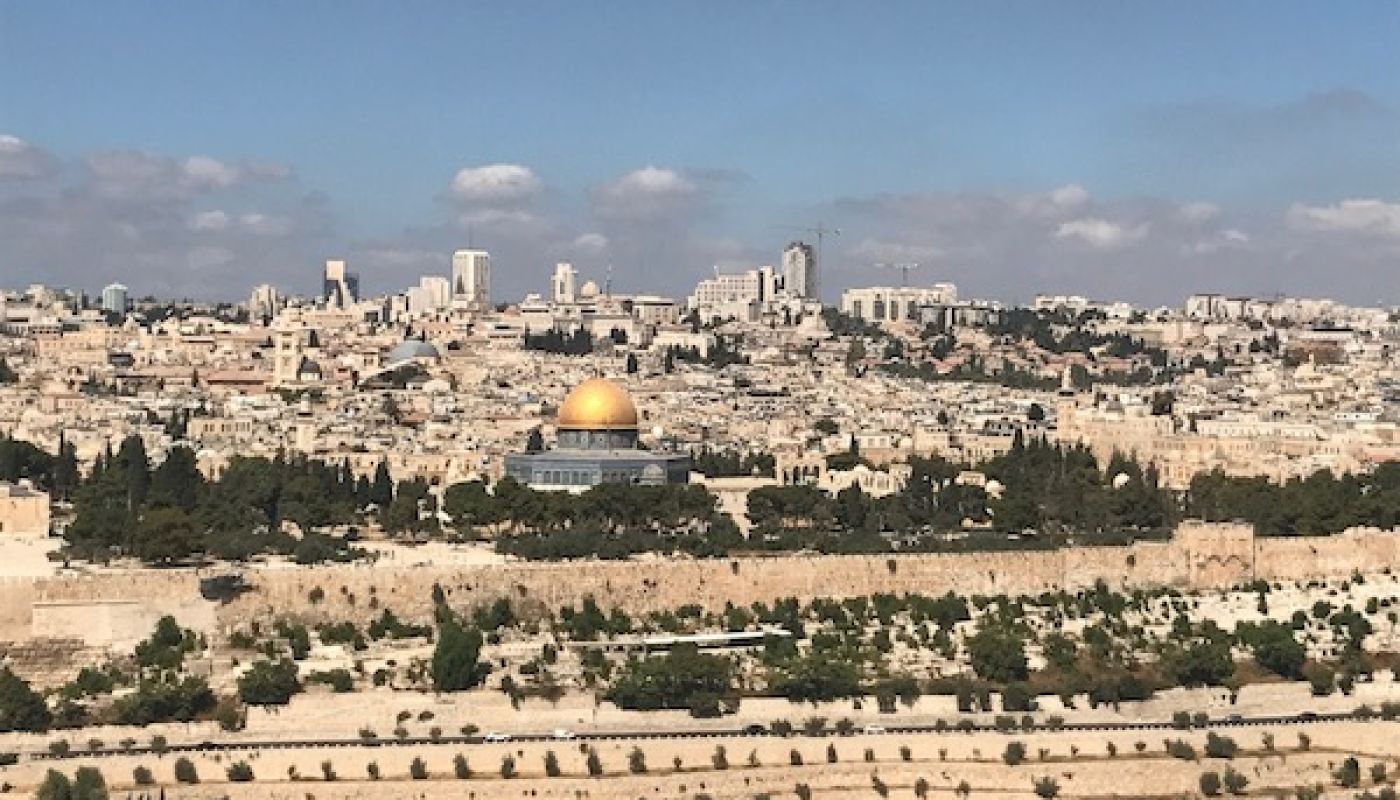
Until now I have been only too delighted to leave the complexities of the Middle East to much better qualified FT colleagues, but my first trip to Israel and the West Bank earlier this month impels me to present an update on the wines of – shall we call it, the eastern Mediterranean?
Turkey makes more wine than any other country in the region but the ascent of Erdogan and his anti-alcohol campaign seems to a large extent to have snuffed out the country’s recent, and most welcome, wine export initiatives.
Until about 2004 the other dominant producer in terms of quantity was Cyprus, once exporter of tankerfuls of copies of sherry. Today the island’s wine industry has been completely transformed. Quality not quantity is the watchword. Wineries are no longer vast, port-side industrial complexes but much smaller enterprises close to the vineyards high up in the hills run by well-travelled lovers of fine wine. Indigenous Cypriot grape varieties such as Yiannoudi and Maratheftiko are increasingly showcased.
The wine-producing country in this fraught region of which many of us have been most aware has been Lebanon. Most serious wine lovers have heard of Chateau Musar, and every report on the refugee camps of the Bekaa Valley reminds me of its vineyards, and magnificent Roman Temple of Bacchus, that I visited back in 1980. Despite the proximity of the Syrian conflict, Lebanese wine producers have been mushrooming, and increasingly concerned to produce genuinely Lebanese wines rather than copies of international stereotypes.
Perhaps the most unlikely Middle Eastern wine producer is Bargylus in north-western Syria, run (by phone) by Lebanese brothers based in Beirut. The red wine, grown on what was once a Roman site, is excellent although extracting the wine from Syria requires 45 days at sea. See one brother’s recent poignant report on the current situation below.*
But the country that now produces more wine than any other apart from Turkey is Israel: 40 to 50 million bottles a year to Turkey’s 70, Cyprus’s 11 (no longer the 35 I originally cited) and Lebanon’s nine, from wine-focused vineyards, many of which have been planted apace recently – especially in the coolest north-east, in Upper Galilee on the Lebanese border and the contentious Golan Heights on the border with Syria.
Geography is key to how wine tastes, and how it is identified, but the latter can be tricky in a country with disputed borders and the most delicate of political situations. Israel’s small but growing band of wine geeks are impatient for an official reform of an appellation system that dates from the 1960s and is based on crude divisions by latitude. Elevation, aspect and distance from the coast are in reality key determinants of wine style.
In 1990 there were just 10 wineries in Israel while today there are more than 300. And the wines have evolved from rather flat-footed and overblown copies of international varietals, apparently modelled on California Cabernet and Chardonnay. A tasting of modern Israeli wines at the hip Norman Hotel organised by some of the younger members of Tel Aviv’s wine profession was quite a revelation.
We began with the water-white Pelter Sauvignon Blanc 2016, just 11.5% alcohol, that is apparently the wine of choice for this party city’s jeunesse dorée. The Chardonnays from Upper Galilee and the misty Judean Hills between Tel Aviv and Jerusalem were admirably fresh, but the whites rapidly became more interesting as we progressed to blends of Rhône varieties.
The emergence of refreshing, interesting white wines is probably the single biggest evolutionary step in recent years. And to manage to fashion something so attractive out of a grape as potentially heavy as Grenache Blanc, as Vitkin and Chateau Golan do, speaks volumes about the terroir up in the north east, as did Roussannes from Lahat and Chateau Golan (clearly an accomplished producer).
There is much discussion among those who care about the future of Israeli wine about the direction in which red wines should go. Up to now they have been pretty full-throttle interpretations of the hot eastern Mediterranean climate, many based on Cabernet Sauvignon. But unless the air conditioning is turned up really high, these can be a bit overwhelming, and not particularly suitable for local dishes, particularly the more delicate and veg-based sharing plates that tend to start a meal.
Enigma 2011 from Margalit, Israel’s first boutique winery and a pioneer of dry farming, shows that Bordeaux blends don’t have to be heavy. With real drive and energy and a certain fashionably stony character – this too comes substantially from Upper Galilee. Israeli wine deprived of these northern districts would be a very different kettle of fish, although Yatir shows how wines from much further south on the edge of the Negev desert can have real style. The cooler climes of the rolling Judean Hills, planted only in the last 20 years, also have obvious potential for refinement – if the deer don’t get the grapes first.
Some local wine professionals believe that blends of Syrah and Cabernet may develop into Israel’s signature reds. Others see what they call Mediterranean varieties as the future. Old Carignan bush vines obviously have potential; it’s just a shame that the original Grenache clones were poor quality, so the Grenache story is perforce a very new one.
Israel in general has had a problem with plant material. Bone-dry summers mean that irrigation is essential for most vine growers, and if the outside world knows anything about Israelis and viticulture it tends to be that they virtually invented invaluably water-conserving drip irrigation.
Dry summers are generally ideal for organic vine growing, but Israel has a major obstacle: the leafroll virus that particularly affects the ripening of red wine grapes. Virused vines have eventually to be pulled out and yet there has been a chronic shortage of reliably healthy replacement plants. Golan Heights have established their own nursery and this year a group of wineries are making a concerted effort to sort out the problem once and for all, with advice from the South Africans, who have been similarly afflicted.
Some of the most interesting wines I tasted on this trip were made from the indigenous vine varieties currently being recuperated by the likes of Feldstein, Recanati – and Cremisan, a Christian monastery just outside Bethlehem in the West Bank. And at the particularly refined table of Hosh al-Syrian in Bethlehem I enjoyed a 2015 Reserve Chardonnay and a 2013 Nadim Cabernet from the respective Palestinian wineries Mony and Taybeh.
Another surprise was being loudly called to prayer from the local mosque as I tasted my way through offerings from the Israeli Judean Quartet, a group of Judean Hills producers, in the atmospheric Majda restaurant in the Arab village of Ein Rafa near Jerusalem.
Wine seems to transcend cultures. To a certain extent anyway.
* Sandro wrote to his UK importer H2Vin on 13 September, 'Regarding Domaine de Bargylus, I believe you are now selling the 2010 vintage for both white and red. 2010 was a particularly difficult vintage for the whole region (Lebanon and Syria) as the weather was very warm especially during the month of August. Despite that we have a lot of freshness in the wines with beautiful structure and complexity. Bargylus is an every day challenge. Karim and I are not going to the property since the beginning of the war in Syria for obvious security reasons so we manage the operations out of Lebanon. We are all day long in contact with our team there. Bringing empty bottles, cork, labels, French oak barrels in the country is a real challenge and getting the bottles out takes around 45 days of voyage by sea every time.
'We have no choice to continue as we have about 30 workers with their families depending on us to survive so we feel it is a sort of duty on our behalf to pursue this adventure. It's a whole symbol to continue producing wine in a country that is so torn apart!
'We have started to harvest the 2017 10 days ago and just finished the Sauvignon Blanc which will be part of the blend for the whites (no ageing in wood for the whites). On Saturday our press just stopped functioning so I spent my whole afternoon talking to French technicians to try and solve the problem; we finally managed to find a solution and we finished the whites at 4 am. This is just one example of what we experience being so far away from available 'assistance'. Two days ago we were desperately looking for some mazout [oil] to fill our tanks and provide for electricity in Bargylus as we have no connection to the electrical network in our area... Let me know if there is anything else you would like to know... Bargylus is every day a challenge, believe me.'
FAVOURITE ISRAELI WINES
These are excellent wines, but prices are relatively high. The Yatir wine is about £56/$75 a bottle, for example. See also my tasting notes on a much wider range of wines from Israel and the West Bank.
WHITES
Chateau Golan, Geshem 2016 and Roussanne 2016 Golan Heights
Lahat, Lavan 2015 Israel
Shvo, Gershon 2011 Upper Galilee
Sphera, White Signature 2016 Judean Hills
Tzora, Shoresh 2015 Judean Hills
Vitkin Grenache Blanc 2016 Upper Galilee
REDS
Clos de Gat, Sycra Merlot 2009 Judean Hills
Domaine du Castel, Grand Vin 2015 Judean Hills
Flam, Noble 2013 Judean Hills
Golan Heights Winery, Yarden Bar’on Cabernet Sauvignon 2013 Golan Heights
Margalit, Enigma 2011 Upper Galilee/Binyamina
Seahorse, Lennon 2013 Judean Hills
Tabor, Shifon Tannat 2013 Golan Heights
Tzora, Misty Hills Cabernet/Syrah 2014 Judean Hills
Yatir, Yatir Forest 2013 Ramat Negev