
First the good news. The quality of non-vintage champagne, the sort that makes up 94% of all champagne sales, has never been better. Thanks to climate change – again –grapes in the Champagne region are hardly ever underripe nowadays (just like German wines, as I pointed out recently). And cheap supermarket brands constitute a shrinking proportion of the champagne market, whereas champagne made by the famous houses, and that made by ambitious smaller, more artisan outfits, is increasingly significant.
The less good news, however, is that many of the champagne houses are underestimating the increasing sophistication of their customers. In the old days, NV champagnes, blends made up each spring based on the previous year’s harvest with varying proportions of older, or reserve, wines, were regarded as each house’s signature. The spiel was that it tasted exactly the same from year to year so there was no need to identify different blends, or cuvées.
A consumer had no way of telling from looking at a bottle how old the wine was or which of the many extremely irregular champagne harvests the blend was based on. The argument was that NV champagne fed efficiently through the distribution system so you were always presented with the most recent cuvée. That might be true of supermarkets with their necessarily efficient stock turnover, but is less so for small, independent wine merchants, and is absolutely untrue of what restaurants and bars offer.
Besides, it is well known that the NV champagnes of some houses – Bollinger, Louis Roederer and Pol Roger, for instance – can benefit enormously from a few years’ ageing in bottle. How are we meant to manage this if we can’t tell one bottling from another?
Then there is the problem of keeping NV champagne, generally less complex and less suitable for long ageing, than vintage-dated champagne, too long. I once received a letter from an obviously senior Australian who told me proudly that she had a bottle of Pol Roger from her wedding in her fridge that had survived two house moves. She wondered what it was worth. Nothing at all, was my brutal answer, since fridges tend to dry out sparkling wine corks, accelerating the ageing process.
A substantial number of those who buy champagne today (and have not been diverted to Prosecco, Cava, English fizz and the rest) understand why it is useful to identify individual cuvées of NV champagne, at least signifying when they were disgorged (prepared for release), but preferably citing which year or years the blend is based on. Most of the best smaller champagne producers, known collectively (if not always strictly accurately) as growers, are terrific at providing the details of each of their champagnes on the back label. It is common to be given the precise make-up of different grape varieties, perhaps their provenance, and often what the dosage was: how much sugar was added to the blend when it was disgorged, which is a normal part of the champagne production process.
As for the myth that NV blends are consistent from year to year, this was prominently busted back in 2011 when Krug, one of the most respected champagne producers of all, acknowledged how intricately their Grande Cuvée blend varied from year to year and announced that from henceforth they were to put a code on the back of each different lot of it so that Krugophiles could discover every detail about it from krug.com. See Eight (surprising) Krugs for breakfast.
Many years previously the dynamic family house begun by Bruno Paillard had pioneered putting the date of disgorgement on the back label of his NV bottlings.
And it is worth noting that most producers of any size disgorge each individual NV blend several times during its year-long currency according to demand, generally adding slightly less dosage each time as bottle age confers additional richness on a blend. Hence the additional significance of a disgorgement date.
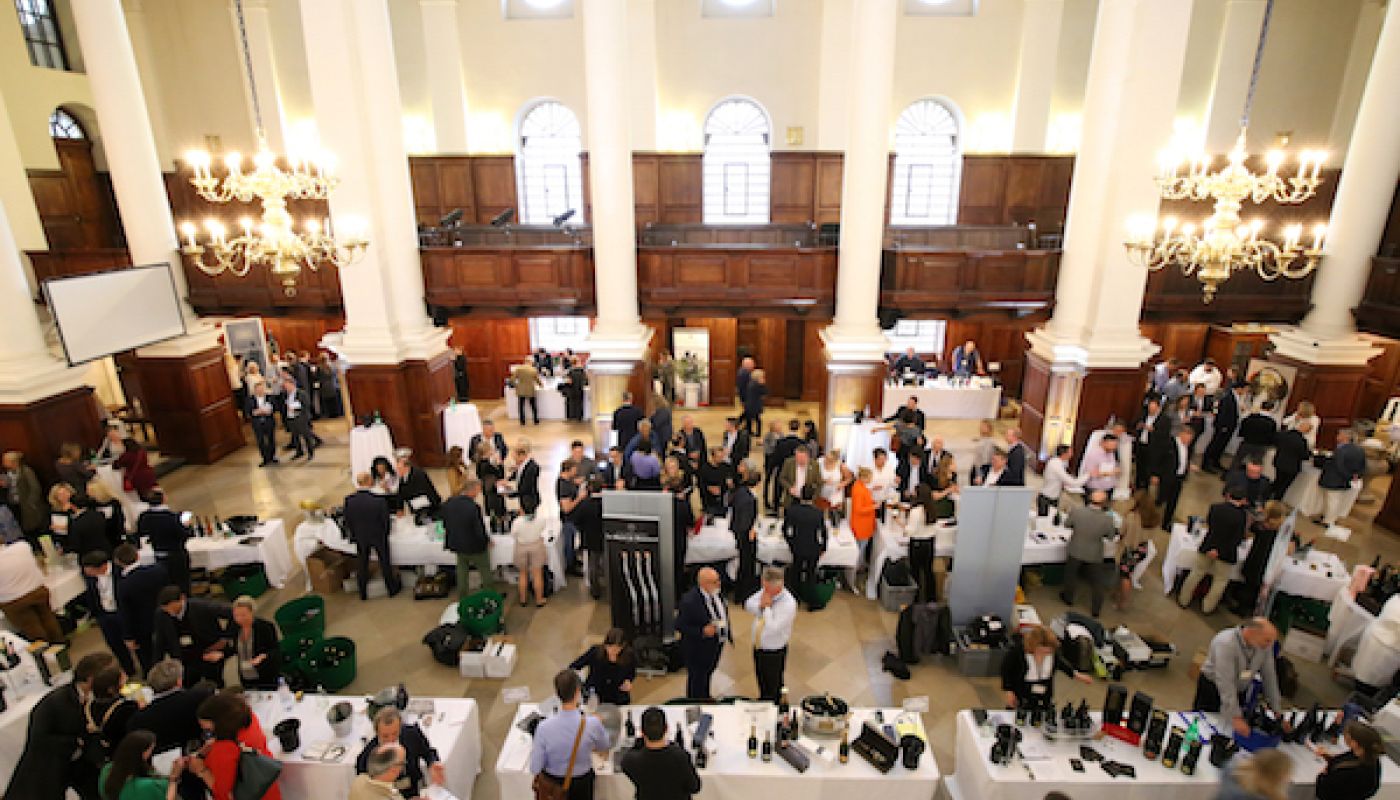
Wearing, as usual, my doubtless rather tiresome consumer hat at both Tyson Stelzer's big generic Taste Champagne tasting in London recently and an extremely concentrated visit to 20 producers in the Champagne region itself, I quizzed producers about how much information they give their customers about what is in their most important product.
The answers varied wildly. Bollinger and Moët & Chandon are good at giving details on the labels of their vintage-dated wines but not their NV blends. Moët policy is that those who drink their non-vintage Brut Impérial are not interested in such arcane details as disgorgement dates, and even I must admit that they may be right. The revitalised small Épernay house of Leclerc Briant have back labels that are a model of information which they say have been greeted delightedly by both their staff and their customers, but they tell the tale of a couple in a Swedish hotel who returned a bottle of their wine as being too young, mistaking the disgorgement date for the year the grapes were picked. Pol Roger give the disgorgement date only on their six-bottle cases rather than on the bottle itself, restricting such useful information to ‘serious consumers’, according to James Simpson MW of Pol Roger UK.
Charles Heidsieck, which for many years has produced superlative champagne, used to give prominently on the front label the year the blend was put in the cellar or ‘mis en cave’, routinely the year after most of the grapes were harvested. Today the ‘year of cellaring’ is given more discreetly on the back label, which is where most champagne aficionados look for clues.
Delamotte, the house closely associated with the super de luxe Salon, which is always vintage dated (and the 2008 is so rare that it will sold only in magnums in packs along with bottles of 2007, 2006 and 2004), actively avoids giving information to consumers about its NV blend. Deutz is another house that believes in playing its cards close to its chest. When I asked what clues there were from the bottle I was told, ‘we don’t like to divulge the year of the base wine but the last two digits of the lot number on the foil are the year of disgorgement so you just take three off that'. So simple!
Lot numbers can often be decoded by members of staff but rarely by mere consumers. And some producers put codes on the cork, which is not particularly helpful if you are trying to decide whether to open a bottle or not.
A solution favoured by an increasing number of champagne producers such as Louis Roederer is to put a scannable QR code on the back label. Not perhaps the most aesthetically pleasing option but it does offer the possibility of communicating an immense amount of detail. Others direct consumers to a website. This is the welcome new approach of Laurent-Perrier for their multi-vintage prestige cuvée Grand Siècle, which has always been a blend of three (unspecified) vintages. Thus one was expected to pay well over £100 for a champagne whose contents were a complete mystery. From now on each blend will be prominently labelled with an ‘iteration’ number which can be looked up on grandsiecle.com.
Good news for wine geeks.
Talking of which, here's what Tim Hall of Scala Wine has to add on this subject: 'To me, one of the most useful things about more info is that if it tells you plainly what is the base year, without too much deduction demanded to get to the year. Then you know if the base year was a great one. If so (ie 2008 or 2012 at the moment), then it makes the NV a real value, if not a bargain. When the base is 70–80% of what is in the bottle, such great year BSAs [brut sans années, or NV] are tantamount to good vintage champagnes at BSA/NV prices. There may not have been quite the strict selection of vineyard parcels or time on lees, but these are bottles to seek out nevertheless, I think.'
Helpful NV champagne producers
These are those whose non-vintage blend I happen to have tasted recently. Most other ambitious small-scale champagne producers, many of them vinifying only their own grapes but an increasing number of them buying in some grapes from trusted sources, give full details on their back labels.
Ayala
Chartogne-Taillet
Collard-Picard
Ulysse Collin
Devaux
Nathalie Falmet
Fleury
Geoffroy
Pierre Gimmonet
Philippe Gonet
Piper-Heidsieck
Gosset
Charles Heidsieck
André Jacquart
Jacquesson
Krug
Benoît Lahaye
Lanson
Jacques Lassaigne
Leclerc Briant
A R Lenoble
Lombard
Nicolas Maillart
Bruno Paillard
Philipponnat
Eric Rodez
Louis Roederer
Jacques Selosse
Suenen
Vazart-Coquart
Veuve Fourny
Vilmart
You can find my tasting notes on all these NV champagnes in NV champagnes tasted in London. Stockists on Wine-Searcher.com.













