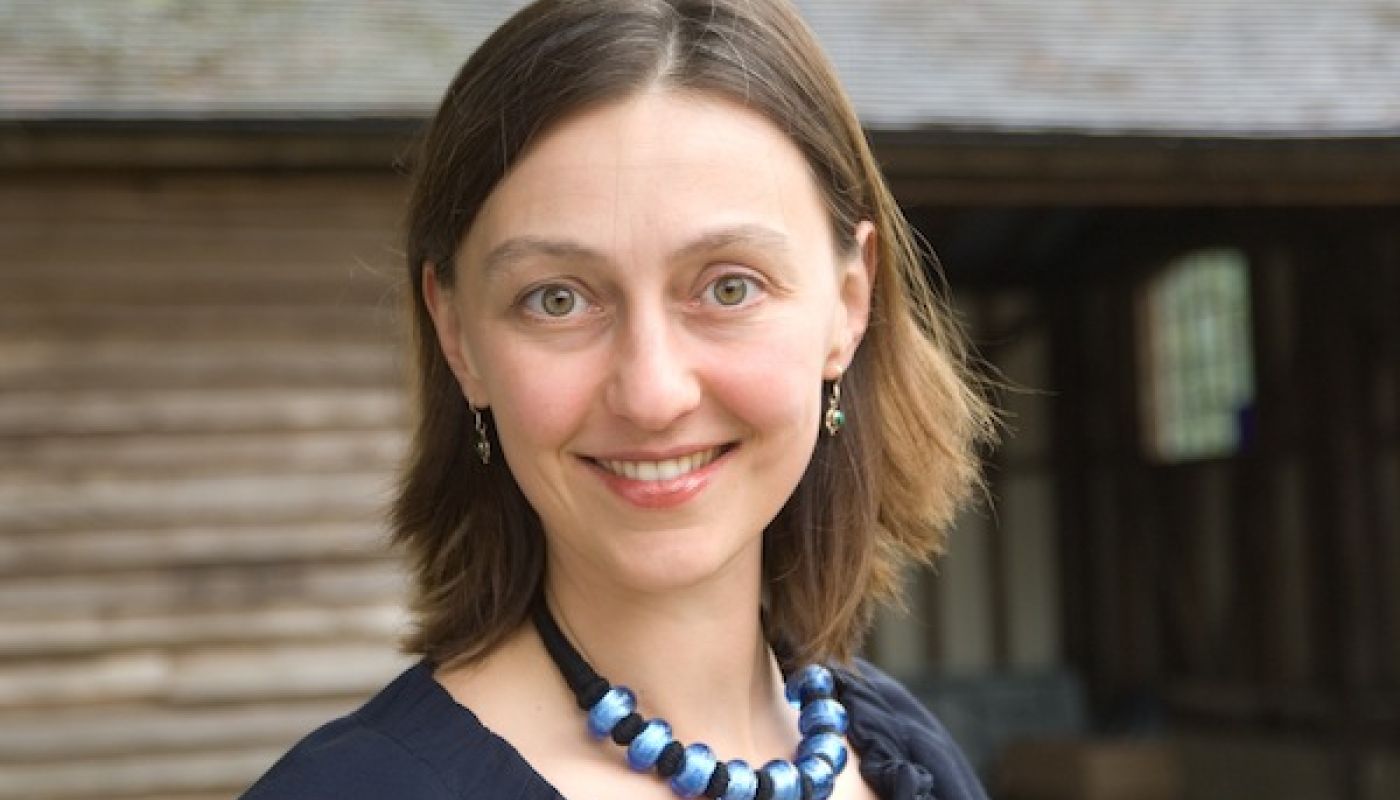
9 September 2016 There are quite a few winemakers who could be described as obsessive. There are some who could be described as having model good looks. There are very few who are both, but none that I can think of who are a couple. And that’s not all that’s extraordinary about Cherie Spriggs and her husband Brad Greatrix.
They are now responsible for the wines produced by England’s first and much-lauded sparkling wine estate Nyetimber, incidentally producer of our first English wine of the week, in 2003. (I first wrote about Nyetimber, created in the image of champagne and at that stage produced by Chicago couple the Mosses, in 1997 when it ‘beat’ many a champagne in a blind tasting in the FT offices.)
They met over biochemistry studies and became increasingly intrigued by wine, ending up studying at the Vancouver wine research centre and at Adelaide University. By 2007, after various work experiences, they were back in Canada and looking for ‘a dream job’ and volunteered their services to Nyetimber’s new owner, Dutchman Eric Hereema. From his business base in London, Eric became fascinated by English wine and originally bought Coldharbour vineyard, also in West Sussex, but sold it after five years in 2010, tiring of the challenges posed by its north-east orientation.
I visited this absurdly pretty estate in May, walked the vineyards with the couple, and tasted the wines described below. Over lunch in the carefully renovated Tudor manor house at Nyetimber (lots of distressed wood), Eric agreed how fortunate he has been with this pair of young Canadians, hired sight unseen. (He also told the story of how he wooed his young Scottish wife Hannah at a Belgravia gastropub where a nearby male diner recognised Hereema and raved over Nyetimber – she thought he was a plant.)
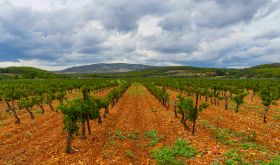
The Canadian couple clearly live and breathe Nyetimber and treat their grand total of 170 ha (420 acres) of vineyard – about 90 sub-blocks in eight different vineyards spread between the environs of Nyetimber and Hampshire, on a chalky site close to Waitrose’s near Stockbridge – as a sort of experimental playground. (The original Sussex vineyards are on green sandstone.) The latest acquisition, planted last year, was the site of the golf course next to Nyetimber and I got the impression that the local protests about this re-assignation came as rather a shock to the relatively sheltered lives of scientists Greatrix and Spriggs.
I asked them how they learnt so much so fast before arriving at Nyetimber. Cherie worked the 2007 vintage at Domaine Drouhin in Oregon where ‘Robert Drouhin always talked about texture.’ Brad, pictured below, said he learnt everything he knows about blending, and the quality level needed for a grand vin, when working the 2006 harvest at Ch Margaux. This presumably was a factor in Nyetimber’s decision, unusual in the English wine business, to reject the entire 2012 crop – Heerema’s fortune coming in particularly handy.

In 2013 the Canadians rejected just over 3% of the crop, in 2014 nothing. ‘We can reject at the press, as in 2008, for instance’, Cherie told me, adding contentedly, ‘we can take as much or as little as we like, in contrast to what happens in Champagne. We can also reject when we’re evaluating the base wines in January, and we might even reject a wine once it’s in bottle, as we did with some bottlings made before we arrived in 2007. They were never released’. Quelle luxe!
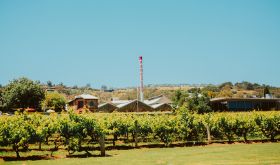
So far Nyetimber’s top-of-the-range wine, designed to retail at around £75 a bottle, more than double the price of their regular Classic Cuvée, has been a single-vineyard offering from their Tillington vineyard next to Petworth, 20 minutes west of Nyetimber’s historic base – although the wines are now made in a modern facility near unromantic Crawley. I’m sure that when they arrived, Cherie and Brad took one look at the old winery in sheds on the estate and started to make the case for the move – although there is still a pressing station near the vineyards at Nyetimber, and another in Hampshire.
Some time early next year they will be launching the as-yet-unnamed prestige white and rosé described below – at more than £100 a bottle. Might it not impoverish the Classic Cuvée, I wondered, but was assured that there will be only a few thousand bottles and it will not be made every year. The idea is that it comes only from their very top sub-block(s) but is designed to age for a long time. When I tasted it in May it was impressive but backward (see below). There is also a surprisingly deep-coloured rosé version, also reviewed below. When I queried the colour, I was told that because the Champenois get more light, pigments build the phenolics in Pinot, but there are lower phenolics in English grapes so English winemakers can get away with more colour than the Champenois.
Since their arrival in 2007 the Canadians have been steadily laying plans for a move to a non-vintage formula for Classic Cuvée with the first one, based on 2011 and described below, to be launched later this year. Another change they instigated was to stop making a Blanc de Blancs every year. Because Chardonnay is the trickiest variety to ripen in England, nowadays they make a Blanc de Blancs, retailing at around £40, only in years when the Chardonnay quality really warrants it. They also re-introduced malolactic conversion, which seems thoroughly sensible given the high natural acid levels in most English wines. (There was no malolactic conversion from 1999 to 2007 inclusive). ‘The acid was so high in 2008 that it seemed natural to do malo.’ And they introduced a tiny amount ('less than 3%') of barrel fermentation of base wines in new oak. For most winemakers this would seem to be merely playing fruitlessly, but I’m sure Cherie and Brad spend hours discussing exactly what the effects of this small proportion are.
The dosage is generally very low, but is always a blend of wine, usually the same wine, and sugar. ‘We did lots of trials’, Cherie assured me (why doesn’t this surprise me?), agreeing with me that some English wines are too tart, but suggesting this is sometimes because of vineyard management. Strolling through the vineyards with them, I got the strong impression that they spend at least as much time outside as in.
Realising after my visit that there was one aspect of Nyetimber’s production I had forgotten to raise during my visit, I asked Cherie by email what their policy on yeast was and got a 300-word answer whose spelling, grammar and format would impress even Hawkeye Harding, giving me the full names and stories of IOC18-2007, CHP and DV10, the yeasts they had trialled, both for first and second fermentation. They have tried ambient yeast for both but are not yet wholly satisfied with the trials. They are also trialling seven different hybrid yeasts developed by the Australian Wine Research Institute. ‘Some of these could be quite interesting’, she wrote, ‘but the trial is only one year old and we really want to taste the wines with more lees development before making our own conclusion about these strains’.
I wondered how much time the Canadians got to spend in Champagne, particularly since the old Champenois consultant was despatched less than two years after their arrival, perhaps hastened (though this is entirely my supposition) by the number of bottles of disappointingly oxidised Nyetimber 2000 on the market. Some good reports of the new regime must have filtered over the Channel because apparently Nyetimber was invited to participate in this year’s Champagne Week. But at the last minute, after the wine had been shipped over there for the tasting, the Canadians were uninvited because some members of the group were unhappy about their inclusion.
There is only one possible comment: sour grapes?
The eight wines below are in the order tasted.

100% Chardonnay. Acidity 8.5 g/l, pH 2.94, residual sugar 10.5 g...
79% Chardonnay, 15% Pinot Noir, 6% Pinot Meunier. Acidity 12 g/l...
55% Chardonnay, 26% Pinot Noir, 19% Pinot Meunier. Acidity 7.8 g...
36% Chardonnay, 51% Pinot Noir, 13% Pinot Meunier. Acidity 8.3 g...
Pre-release. 54% Chardonnay, 35% Pinot Noir, 11% Pinot Meunier...
78% Pinot Noir, 22% Chardonnay. Acidity 8.4 g/l, pH 2.93...
Pre-release. 'Prestige' is a temporary name, the official name...
Pre-release. 'Prestige' is a temporary name – the final name...