Something quite remarkable happened at this year’s Southwold-on-Thames bordeaux tasting.
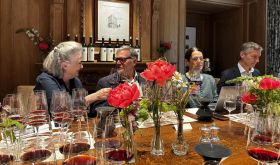
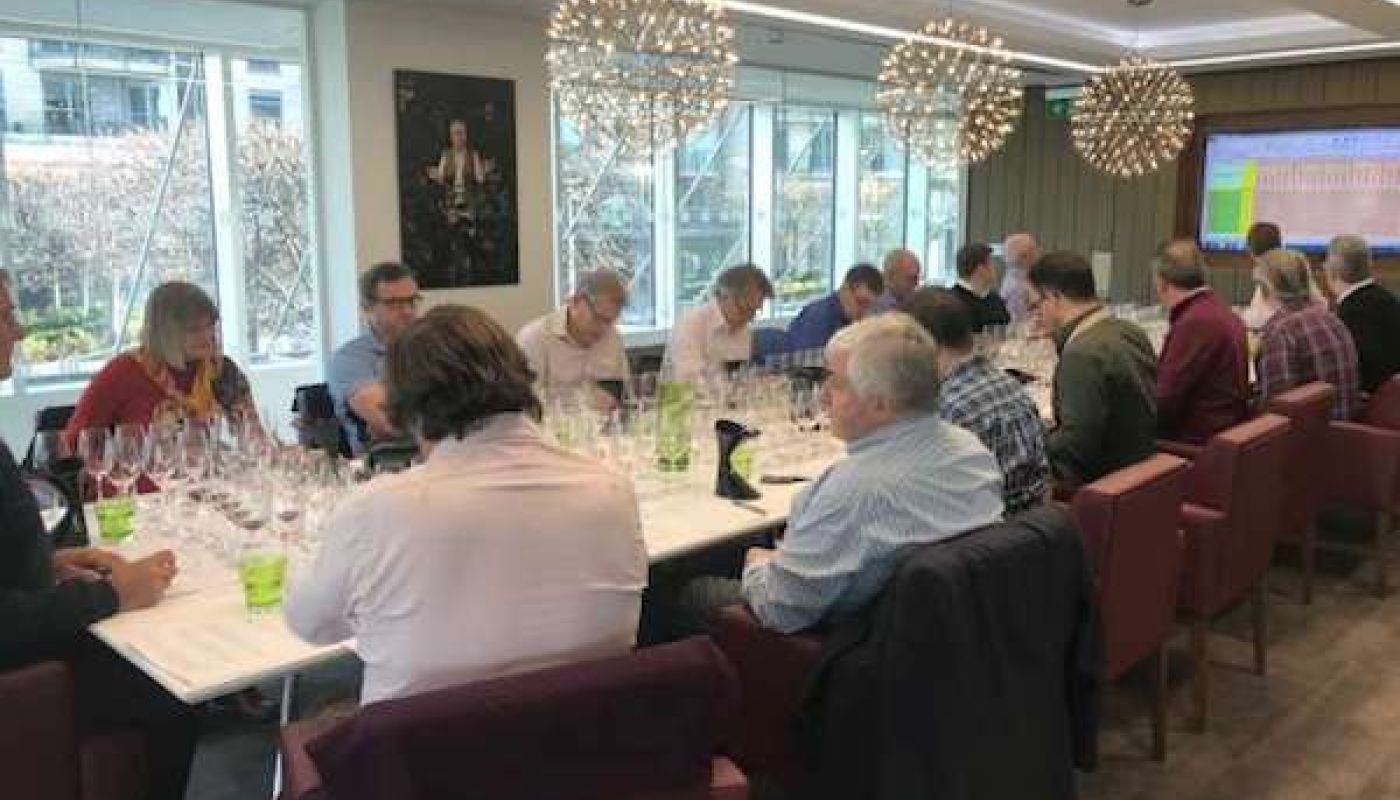
For years a group of wine merchants and wine writers would gather in the Suffolk seaside town for a ‘horizontal’ tasting of all the most important representatives of the Bordeaux vintage that was three and a bit years old. Nowadays this takes place in the Thames-side offices of fine-wine traders Farr Vintners in London – less ozone but less of a carbon footprint on the part of us participants.
Each year we taste the 200-plus wines single-blind by appellation – knowing what’s being poured in each flight but not which is which. Every year for almost as long as I can remember, the most disappointing flights have been the St-Émilions.
Of all the Bordeaux appellations, St-Émilion has been the most aggressively modernised – by which I don’t mean improved but, to borrow a modern phrase, sexed up. Around the turn of the century, a significant proportion of the 800 châteaux in the appellation (many of which were originally little more than farmhouses) were taken in hand by investors, apparently with the deliberate aim of garnering high scores from American critics. This often meant hiring consultants well versed in producing concentrated, dramatic wines, often marked by very obvious sweet oak, in some ways more redolent of a stereotypical Napa Valley red than of the varied terroirs of St-Émilion.
Classical St-Émilion was always sweetish, certainly sweeter than a Médoc thanks to being based on the plump Merlot grape rather than on Cabernet Sauvignon, with accessibly fruity notes of plums and fruit cake – often leafily perfumed by a proportion of Cabernet Franc grapes. As it aged it faded in colour and took on more complex notes of something more animal, sometimes even bloody meat.
But the particularly modernised St-Émilions were nothing like this. They remained deeply coloured and concentrated for years, and relatively few of them managed to integrate the sweetness, alcohol and oak very satisfactorily. It too often seemed as though, while extracting so much from the grapes, the wines ended up with an excess of drying tannins.
In virtually every Southwold tasting, we concluded that the wines from St-Emilion’s neighbouring appellation Pomerol, also based on Merlot, were much more successful and appealing, with gentler textures and more interesting flavours. This may have been because the great majority of Pomerols have been in the same hands for decades, sometimes generations. Because the appellation is so much smaller than St-Émilion, and can boast Bordeaux’s two most expensive wines in Petrus and Le Pin, Pomerol prices have been boosted by both rarity and glamour. So there was no need for major tinkering with the formula – and, in contrast to St-Émilion, Pomerol has seen far fewer well-heeled incomers determined to make a splash.
But when we tasted 239 2014s earlier this month, including three flights of St-Émilions and two of Pomerols, the former were, for the first time in living memory, better than the latter. The St-Émilions definitely seemed to have been toned down, especially the most renowned names. Almost uniformly they tasted less aggressively extracted, less obviously alcoholic, more harmonious and more expressive than they used to. Some of the more expensive ones even tasted rather Burgundian with the blend of sweetness and transparency that Ch Tertre Roteboeuf, a St-Émilion outlier in every sense, has been achieving for years – via effort in the vineyard rather than in the cellar.
The Pomerols, on the other hand, seemed to lack their usual drama and richness. Admittedly the weather in 2014 made life very difficult for the vignerons on the right bank, St-Émilion and Pomerol territory. ‘At the end of August we thought we had a disaster – another 1963 – on our hands', Alexandre Thienpont of Vieux Château Certan in Pomerol told me in 2015 when the wines were presented en primeur. Thanks to rain at decidedly inconvenient times, and a notably cool summer, the right-bank Merlots with their higher sugar levels and thinner skins were less able to benefit from the season’s trump card, an extended Indian summer, than the left-bank Cabernets. (The best wines in this year’s Southwold tasting were the St-Juliens, Pauillacs and St-Estèphes from the northern Médoc, and the sweet whites.)
So, overall, the right-bank Merlot-dominated wines were a bit more muted than usual – which did the Pomerols no favours but may just have improved the often-over-the-top St-Émilions. But I don’t think the new taming of St-Émilion is wholly down to the weather in 2014. There are definite signs that exaggerated wines are going out of fashion – and as for the late twentieth century garagiste phenomenon whereby a new producer would buy a few rows of vines and transform their produce into a rare super-brand in their garage, it has all but shrivelled. The most skilful early garagistes such as Jean-Luc Thunevin of Ch Valandraud have seen their wines join the establishment and become part of the famous St-Émilion classification that takes place every 10 years or so.
Even Ch Pavie, a cossetted estate whose first vintages under new owner Gérard Perse were so controversial, is now producing well-balanced, terroir-driven wines in quite a different style from the early days.
What has also changed, even more dramatically, around the tourist mecca that is the medieval town of St-Émilion, is the wine map. Their aims may now be different but there has been no cessation in the number of new investors in the sand, clay and gravel plateau behind the town and the dramatically quarried limestone slopes below it. One Hong Kong businessman, Peter Kwok, owned no fewer than three St-Émilion châteaux by 2018 (plus three in Pomerol): Bellefont-Belcier, Haut-Brisson and Tour St-Christophe. Andrey Filatov has combined a transport fortune amassed in Russia with the vision of prize-winning architect Jean Nouvel to transform the once-modest Château La Grâce Dieu des Prieurs into a gallery for Russian art and cellars about as far from St-Émilion tradition as it is possible to conceive – although LVMH did a pretty good job when they rebuilt first growth St-Émilion Château Cheval Blanc recently.
As on the right bank, the insurance companies have arrived, as witness the owners of Ch Fonroque and the recent sale of Ch Troplong Mondot. The current name of the game is consolidation (see below). This is a good time to be in right-bank real estate.
St-Émilion may no longer be the exclusive preserve of the sort of local smallholders who resurrected the medieval confrerie, the Jurade de St-Émilion, just after the war – and had the satisfaction of seeing their grander counterparts across the Gironde in the Médoc follow suit (suits under red velvet robes in both cases). But I do think many more of the St-Émilion producers, new and old, seem now to be on the right track.
St-Émilion agglomeration
Many of the most ambitious proprietors have acquired neighbouring properties recently, generally with the intention of extending the vineyard holding of a famous name. Below are notable acquisitions, with the current name of the prime property listed first.
Ch Ausone
Ch La Clotte
Ch Belair-Monange (owned by J P Moueix of Libourne)
Was Ch Belair, Ch Magdelaine and Clos La Madeleine
Ch Canon (owned by the family who own Chanel and left-bank second growth Ch Rauzan-Ségla)
Ch Matras and Ch Berliquet
Ch Dassault
Ch Faurie de Souchard and Ch Trimoulet
Ch Quintus (owned by the Dillons, owners of left-bank first growth Ch Haut-Brion)
Was Ch Tertre Daugay and Ch l’Arrosée
Ch Soutard
Ch Petit Faurie de Soutard
Ch Trottevieille
Ch Bergat
See our guide to Bordeaux 2014 for links to all recent and previous tasting articles.