
See Domaine Tempier, new and (very) old for full tasting notes.
There aren’t many wine names as resonant as Domaine Tempier Bandol but this is a producer whose back story is as heady as the dry Provençal rosé for which it is best known.
Tempier’s garrigue-scented pink wine is so popular that it runs out long before the next vintage is available, and yet it is one of the world’s few rosés seriously worth ageing – for decades in some cases. It is usually released in late March or early April but by July, when demand is greatest, there is none left in the subterranean cellars of the domaine on the plain below La Cadière d’Azur.
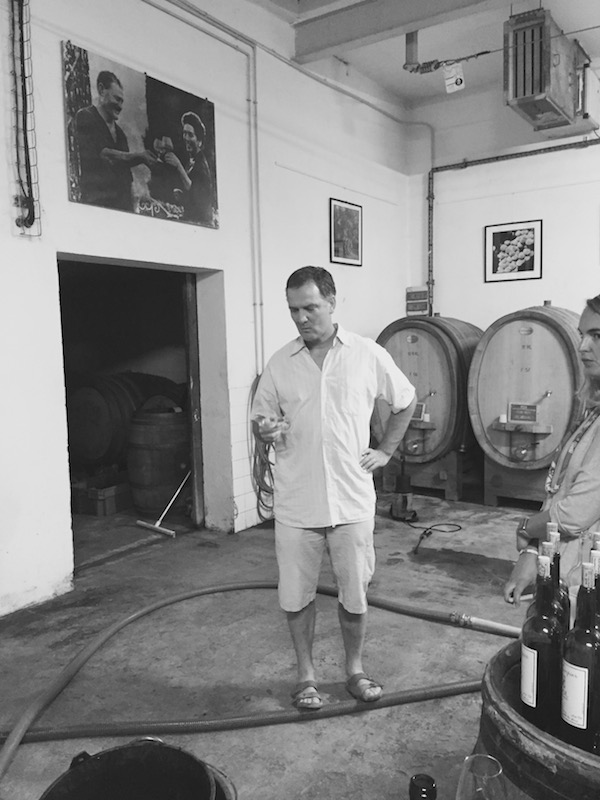
Daniel Ravier (pictured below), winemaker at Domaine Tempier since 2000, freely admits that the rosé sells too quickly. They want to build a new cellar in which to keep back 10–20% of the stock but the local mayor has refused permission – twice – arguing that the road leading to the domaine is too insubstantial. As it is, each year’s Tempier rosé is bottled in four or five tranches between March and May. ‘We bottle for the cash’, Ranvier told me frankly, adding, ‘but I don’t want to make the rosé seem more important than the reds.’ The totemic pink wine constitutes less than 45% of the domaine’s production, apparently, their full-bodied Clairette-based white, produced from 1988, just 2%.
The story of the domaine is in large part the story of Bandol, but also of a Mediterranean way of living and entertaining. It was first told admiringly by the fastidious American food writer Richard Olney, who lived not far away, and was then spread far and wide by disciples Alice Waters of Chez Panisse and her influential wine-merchant neighbour Kermit Lynch, who commutes between Berkeley in California and an eyrie on a hilltop high above Domaine Tempier.
The couple at the heart of the story were Lucie ‘Lulu’ Tempier, who is now in her nineties and still lives at the domaine, and her late husband Lucien Peyraud, who, inspired by a bottle of pre-phylloxera wine from the estate, resolved to recreate its greatness from the vineyards of Domaine Tempier. The farm had been a wedding gift from Lulu’s father and by the late 1930s had, like its neighbours, substantially been replanted with grape varieties more productive than the Mourvèdre traditional in the area. Lucien championed Mourvèdre to such an extent that Bandol is now the only appellation in the world that demands 50% minimum.
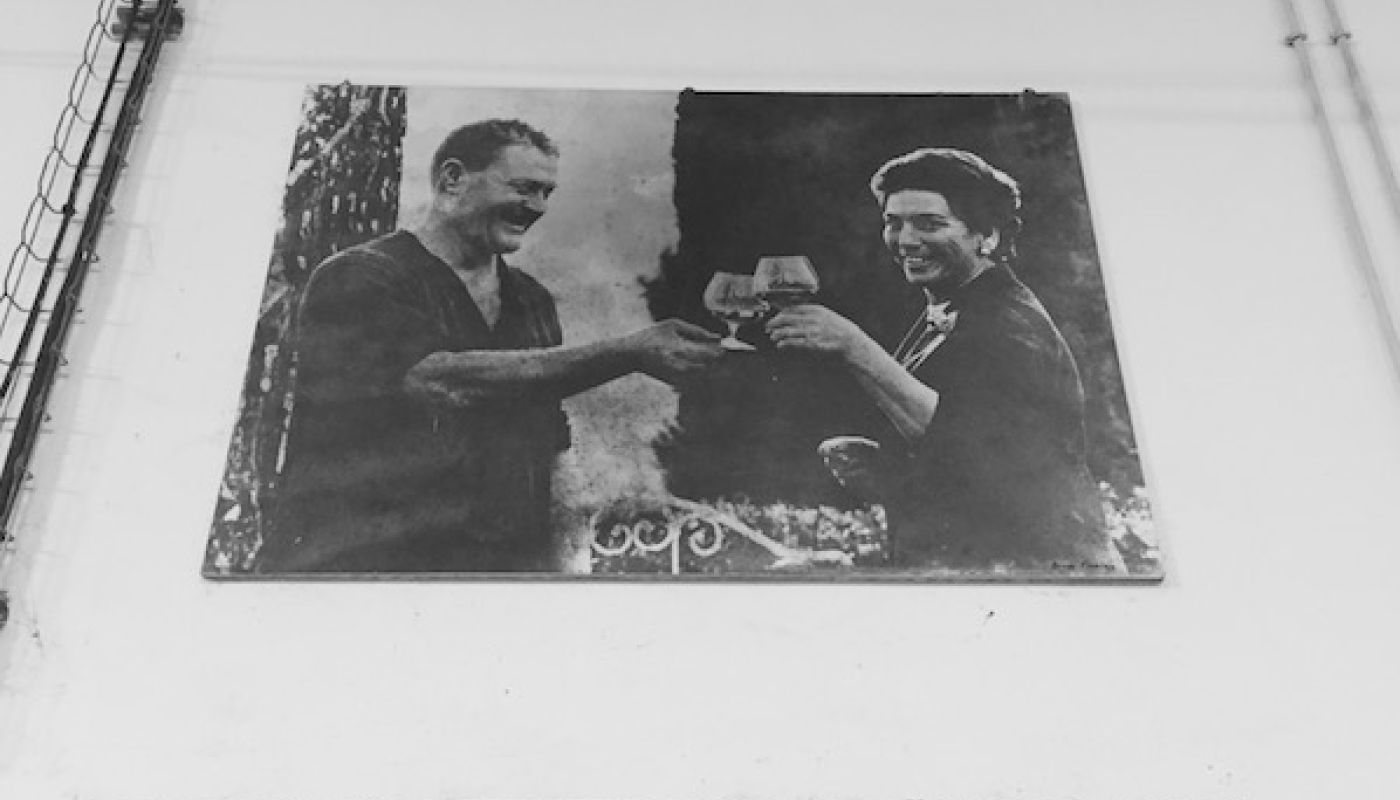
Lulu was a vivacious, generous and talented hostess and the Peyrauds’ table became celebrated worldwide, always true to its Provençal roots and inspiring an army of enthusiasts for the bouillabaisse, tapenade, ratatouille and aioli described in Olney’s book Lulu’s Provencal Table. The cellar today is dominated by a giant black and white photograph of this energetic, sunburnt couple, who had seven children, two of whom ran the domaine for many years.
The job of Tempier winemaker, therefore, is not just any job in the wine business. But Daniel Ravier, an agricultural engineer from Savoie who had been based in Bandol since 1987, seems to fill the shoes comfortably with his open, boyish good looks and the solidity of a rugby player. The estate was always organic but he took it along the biodynamic path a few years ago, and has instituted some gentle fine-tuning in the unglamorous cellar. Over the last 10 years or so he has replaced a few of the old 50-hectolitre round casks with new ones from his friends at Stockinger in Austria. He is a big mate of the iconoclast traditionalist of Rasteau, Jérôme Brassy, and now ferments the range of reds that are his pride and joy in a mix of stainless steel and cement.
There are four different reds, the Classique blended from all their plots and three more expensive bottlings based on specific vineyards that can be seen on the slopes across the plain. La Migoua is the particularly lively product of a geological accident and at 270–300 m is the highest of them. It ripens first and always contains more of the fruity Cinsault and Grenache grapes than any of the other blends; it has only just over 50% Mourvèdre. When I tasted at the domaine last July in the company of two British wine merchants who also happened to be visiting that day, there was spirited but fruitless discussion as to whether La Migoua is ‘feminine’ or ‘masculine’. The wine itself certainly isn’t fruitless.
La Tourtine is a popular and powerful, slow-maturing, almost leathery Tempier red, grown on clay, while just below Tourtine is the plot responsible for the most expensive wine of all, Cabassaou, protected from the mistral in a sort of amphitheatre. Old Mourvèdre vines, more than 55 years old, generally constitute 95% of Cabassaou, the densest of all the Tempier reds.
At least one of the wine merchants, Roy Richards of Fields Morris & Verdin, strongly encouraged Ravier to demonstrate Tempier’s ageing ability to us and we ended up tasting almost two dozen wines, much to the amazement of the friends who lived nearby with whom I visited the domaine. The 2014s were hugely promising, the 2013s a bit scrawny from a vintage Ravier described as ‘bizarre’. The 2012s are coming along nicely while he counsels keeping the 2011s for quite a bit longer. A Tourtine 1982 – second bottle after a cork-tainted one – was gorgeous, even if in youth the wine can be a bit too solid to enjoy.
But it was a vertical tasting of the rosé, generally a blend of 55% Mourvèdre with almost equal portions of Grenache and Cinsault, that was the real eye-opener. After showing us the three most recent vintages (by now the 2015 will already have finished fermentation), he opened three much older wines, the 2006, 1988 and 1981. This for a wine style that in theory is designed to be drunk no more than one year after the harvest.
Yes, the 1981 was a bit syrupy and long in the tooth, but the 1988 Tempier rosé was probably the finest pink wine I have ever drunk. Creamy and suggestive of macerated rose petals but with a bone-dry finish, it seemed to call out for a talented chef. Lulu in bed upstairs, perhaps? My tasting notes include the gnomic comment ‘Great with sea urchins?’ It was an utter revelation. We should all lobby that obstructive mayor.
SOME TEMPIER FAVOURITES
Rosé 2014
White 2013
Classique Red 2014, 2012
La Tourtine 2014, 2012, 2001, 1982
La Migoua 2014
Cabassaou 2014, 2012, 1988
See Domaine Tempier, new and (very) old for full tasting notes.













