Gergely Ripka writes Gergely is from Budapest, he was born and raised there too. After spending 10 years of selling wine on different fields of the wine business, he is working now as a freelance entrepreneur (since 2019). He is an independent wine blogger focusing on his own publication on the Tokaj region, called TokajGuide (the fifth edition will be out in October). He loves photographing too. He leads exclusive, one-day tasting experiences to Tokaj and he also has his own monthly club tasting series in Budapest, with some special Tokaj wines (old vintages, vineyard and other thematic events), which is called TokajMagic.
My favourite wine person is the worker out in the centuries-old vineyards in the Tokaj Wine Region. They might not be the most famous wine people but they are the true heroes behind each and every bottle we enjoy at the end of a normal day. Especially nowadays when what is behind a product is more important than ever. Is it a fairtrade product that helps local families to survive? Or is it something that helps us live in a more sustainable world? Or something made by machines, lifeless mechanisation (or AI soon)? The future of the wine regions in my country depends on how many people can continue to make a living out of cultivating the soil and the vines, growing the grapes, harvesting the perfect fruit, then pressing it and making lovely wine from it. What does their life tell us about the future of a region, of any region?
The story of Pál and the white beard …
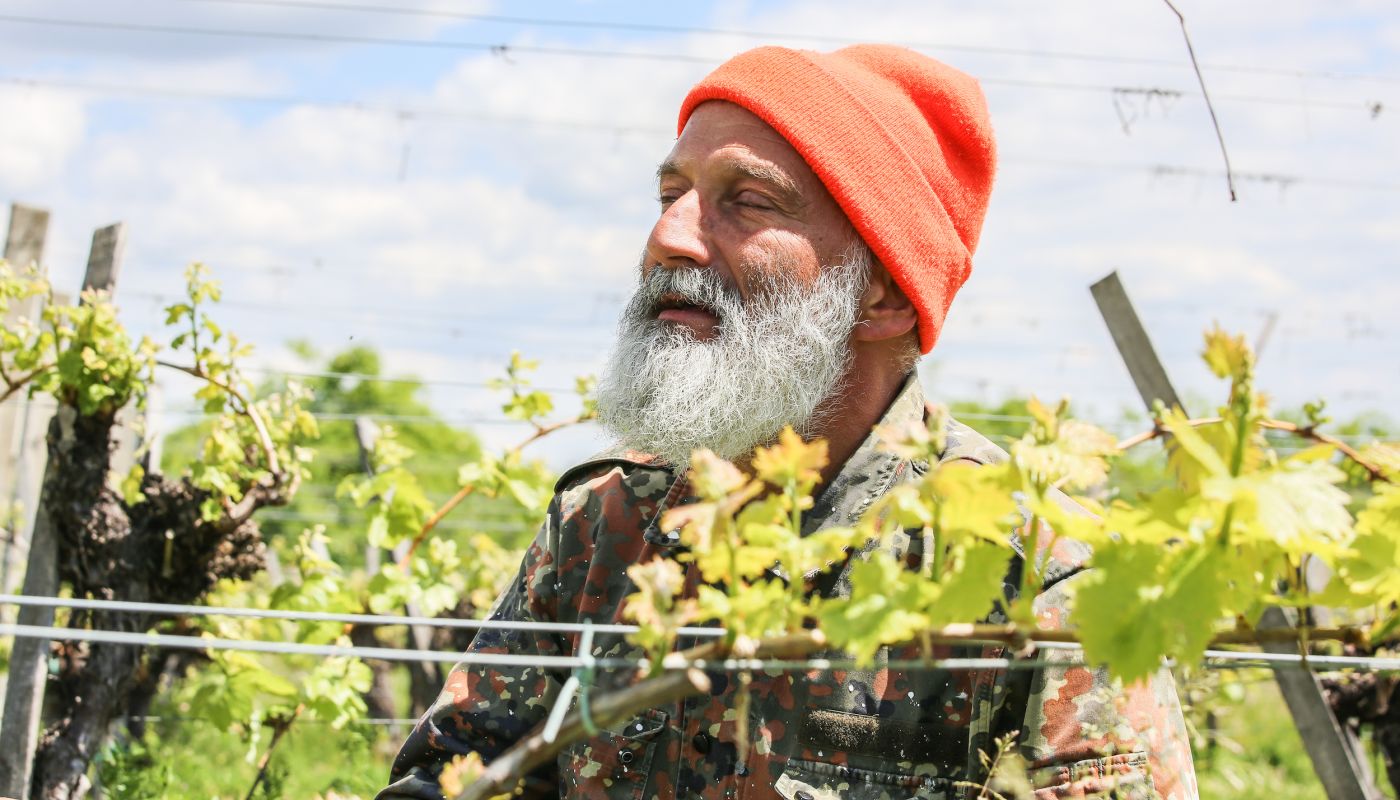
Born and raised in Debrecen in a classic Calvinist family, Pál Juhász - whose hobby is making electronic music - worked for many years as a graphic designer in Budapest before he moved to Erdőbénye in 2017. But during Covid his life had a big turning point. Today he makes his living mainly as a ‘vineyard manager’ for local producers (primarily Vayi Winery, his neighbour in Erdőbénye). He has two children and is the proud grandfather of two.
“Hi Pali!!” yells a little girl riding down the main street of the village. It turns out she is the daughter of a woman who works with him in the vineyards. “What I am truly proud of is that kids always really accepted me - and not just because I look like Santa Claus!” he laughs. “But they are truly honest creatures, and their trust means a lot to me.”
“Country for old men?”
“I started this life here at over 50 years old but I am lucky enough to enjoy manual work, honestly. It is even better for my body too. Fresh air, wildlife in the vineyard, sunshine and a relaxed environment surround me. What else do I need?” he explains the advantages of his lifestyle.
I do believe without workers like him the whole wine region would be an emptier place. I decided to spend a half day with him, in order to see Tokaj through his perspective. And how different a view it is!
Every gorgeous wine starts with them. Workers like him have to do their job also in 40+ Celsius degrees out there in the vineyard, and they are the ones who harvest aszú berries even in cold winds and frost, if that’s the weather - remember, aszú berries can be picked only by hand, no machine can select those perfect shrivelled ones.
“In the very near future, in the next few years actually a shortage of labour will be the most serious problem in this region: there will be no one to do these things out there. Most local manual workers who still do it are far too old, while most young people move to big cities or to abroad for a better salary.” said Pál.
As we discuss the issue, we find we are in total agreement that the community of local producers and/or the government should make some serious efforts to find ways to solve this huge demographic problem of the region… sooner rather than later, because we are already in the final hour.
Who will tend the vineyards?
Seasonal employment is not a solution. Using local people for 1 or 2 days then letting go of them for months of insecurity cannot work. I think it is inhuman and it makes no sense. There should be an acceptable career model for students, young people in ‘working groups’ around the region who are capable of doing the range of vineyard tasks. There are approximately 200 wineries most of whom suffer from the same problem each year – and it is getting harder and harder to find help in the vineyards, for cultivating the soil and the vines, harvesting or for the cellar, etc.
“Every single year I always end up saying that I cannot be hundred percent satisfied with any row of grapes I pruned last year. The vines challenge me again and again, and I always find something that will help them grow somewhat better.” There are certainly good examples out there like Pál who left behind a comfortable life many of the readers live. He still finds it important to learn for example modern pruning methods, believes in organic farming too and is sensitive to environmental issues as well. However, the most important point is that he is simply a reliable hand for the producer throughout the whole year (when the winemaker must travel the wine world or do a wine tasting somewhere else, etc).
In his garden in Erdőbénye he explains, “I even heat with the vines in winter, I use the old vines we cut out in my wood-burning stove. Isn’t that the most organic way of heating and using everything that a wine region can give us?”
Wine still connects us to our roots, to the soil. One of the wine journalists I most admire, László Alkonyi often says “culture starts with the human connection to the soil and it ends by the time we lose this connection”. A region like Tokaj tells us hundreds of timeless stories through the local people, and for me the main conclusion of those stories is that we must take care of the culture, the human cultivation of the land. That might bring us closer (again) to freedom, to a happier life.
The photo is the author's own.