
Just after I finished my enthusiastic article on Salis restaurant and some of the more obvious charms of Chania late on the afternoon of Thursday 23 April, it started to rain torrentially – non-stop – for the next 36 hours. The narrow streets disappeared underwater and the sea turned from cerulean blue to a shade of dispiriting grey.
By the end of the week, however, I had learned a great deal about this charming port city and its hinterland and here is my advice.
- Do visit.
- If you don’t have school-age children, go in April, May, September or October.
- If you do go with children in the hottest months, choose a location by a beach.
- Travel light.
It was still raining during the taxi ride to the airport (€35) and the sea was visibly angry. The taxi driver explained why he liked this weather: ‘The summer is too hot in town. Mosquitoes are everywhere and you need to take a shower every couple of hours.’
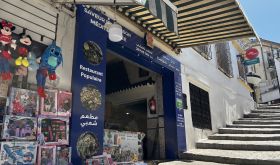
Many of the buildings in the Old Town focus on tourists. There were five ice-cream parlours within 20 metres of each other near my hotel, and cafes, restaurants and clothing and jewellery stores abound at street level. Above them, many of the buildings have been converted into accommodation: small hotels, ‘suites’, Airbnbs. They are invariably approached by narrow, steep, awkward steps. Hence the recommendation to travel light.
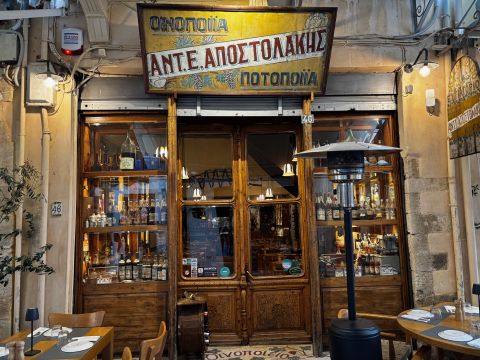
In the scenic Old Town many of the buildings are too narrow, and the structures too old, to support the installation of a lift, but at least two hotels do have them. The first, where I stayed, is the Monastery Estate Venetian Harbour, right in the centre of the Old Town. The building, a former Venetian nobleman’s home in the 16th century, has been converted with charm and oozes history – the lift is above atmospherically-lit ruins clearly visible below the glass floor. The breakfast service is good and the staff are extremely friendly. And for such a central location, the hotel is extremely quiet at night. Despite its name however, it does not have a view of the harbour that is Chania’s focus.
One hotel which has magnificent sea views and also has a lift is The Tanneries Hotel and Spa, quite a walk east of the town centre, in what used to be a series of tanneries. It also has an excellent restaurant, the Periplous Seaside restaurant, from whose tables, I was reliably informed, the views, especially at sunset, are sensational. Julia’s picture of winegrower Antonis Dourakis, taken on the restaurant’s terrace one evening in 2023, confirms this (see her Cretan feast - part 1 for wine recommendations).
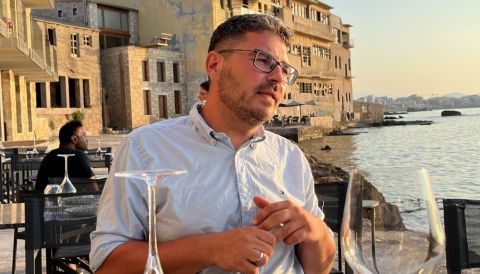
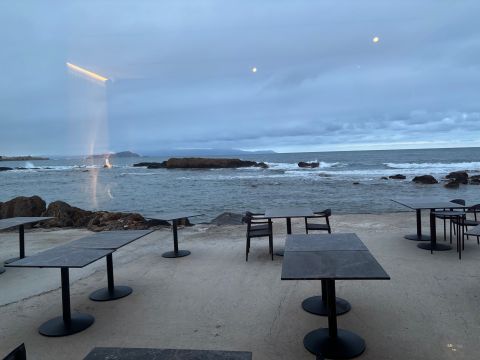
Not however on the night I was there, when heavy rain closed the terrace. But the food was impressive and the wine service under their exuberant sommelier, Iro Koliakoudakis, was truly memorable. She is one of the smiliest sommeliers I have ever encountered. As a greeting she chose a favourite Assyrtiko, a 2022 from Akrathos in Halkidiki, and followed it up with the delicious Vassalitis Gramina Cuvée des Vignerons 2020 from the variety’s birthplace, Santorini.
Periplous is a short walk from the Archaeological Museum of Chania, which in summer stays open until 8 pm. Enjoying the spacious, modern, fascinating building as virtually the only visitor – its well-lit, well-captioned cabinets full of the fruits of many archaeologists’ hard work – was one of the highlights of my week.
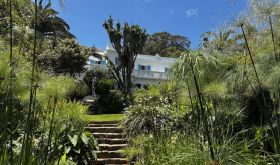
The longest trip was by bus to the Botanical Gardens of Crete, an hour from Chania (and much longer if you get on the wrong bus, as I did). But it was a highly rewarding trip which revealed three very different characteristics of the island.
The first was quite how hilly Crete is. The second was the amount of (surely unplanned) hotel development there has been and continues to be westwards along the coast from Chania. And the third was the number of men from the Indian subcontinent arriving with a large suitcase, presumably in preparation for the summer season’s work.
I finally arrived at the unmissable Botanical Gardens, paid the €13 entrance fee and set off to walk the course, whose difficulty was not explained beforehand. There would, I’m sure, have been numerous warning signs if this were the US. The rough paths are pretty steep and would be perilous after rain.
The climb is unquestionably worth it, however. All the plants, flowers, fruits and vegetables are clearly marked and while the onset of spring may not be the best time to visit any garden, it was memorable. Particularly so as I was greeted by the sight of a peacock in its full splendour at the end.
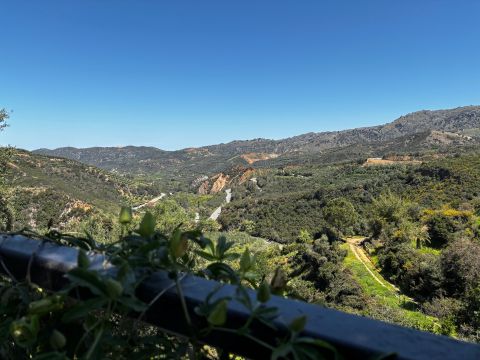
The visit was made even more memorable by the fact that the swing door that marks the exit from the gardens also marks the entrance to the restaurant above, into which everyone falls with seemingly great relief. The restaurant offers fabulous views across the countryside as well as the winding road which the bus has to travel. The highlights of the excellent menu for me were a giant glass mug full of freshly squeezed orange juice and a slice of what was described as ‘orange pie’ but was more akin to an orange cake dripping in local honey.
Back in the Old Town, three other restaurants showed originality.
The first was Tamam, which occupies buildings on either side of a busy, narrow street heavily frequented by tourists. The kitchen is on one side and the food is somehow carried between the two. The older building used to be a Turkish bath and, as I sat in there, I could see where everybody must have sat in it, the steps that they had to clamber up, as well as the lovely design of the floor tiles. A soothing plate of Iranian rice stuffed with vegetables cured a temporarily slightly queasy stomach.
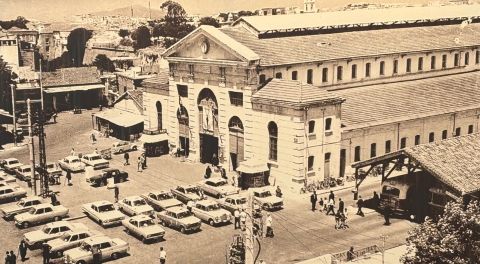
There is nothing soothing about busy, incredibly inexpensive Marmaritsakis, which, although this is its second location, remains true to its founding principles. When it was first opened in 1928 it was close to the handsome, classically designed covered market of which a huge photo hangs on the restaurant’s walls. Its purpose then was to feed the working porters, opening from very early in the morning to serve huge portions of food. It is the same principle that saw the start of many restaurants in Les Halles in Paris and around Smithfield in London.
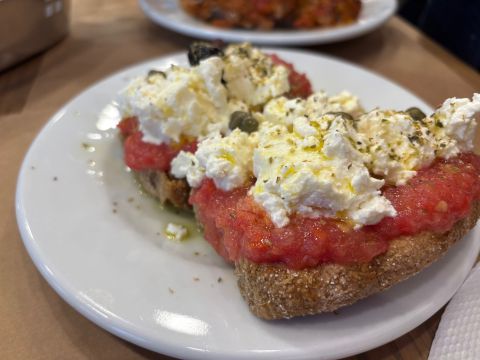
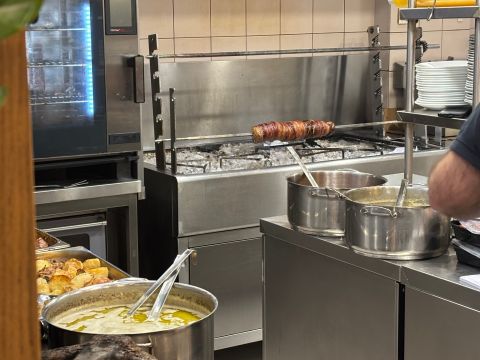
The covered market is currently closed for renovation but Marmaritsakis, now on a nearby shopping street, carries on this noble tradition today. The steaming open kitchen displays the many dishes on order. There are only about half a dozen tables supplemented by a couple of counters with high chairs. Generosity seems to be the byword here. I enjoyed a vast plate of beef ribs with fried potatoes; dakos, the Cretan dish of rusk topped with grated tomato and crumbled feta or the local mizithra cheese (pictured above); a huge serving of aubergine with onion and melted cheese; and a small tumbler of surprisingly drinkable local pale red Romeiko for 50 cents. On this rainy lunchtime there was a constant stream of delivery men carrying out orders and dozens of customers coming in for takeaway. As we left I saw a dish on a spit which a Cretan friend described as kokoretsi, a dish of lamb or goat intestines wrapped around offal and grilled. Not for the faint hearted.
A 15-minute walk even further away from the harbour is Evgonia, whose interior and style of service does not appear to have changed in the past 50 years. When we walked in, two women wearing aprons were sitting at a table in front of the kitchen and spent the entire evening disconsolately studying their mobile phones. It was left to a willing young man, obviously also a family member, to conduct the service. The interior of the room has not changed either.
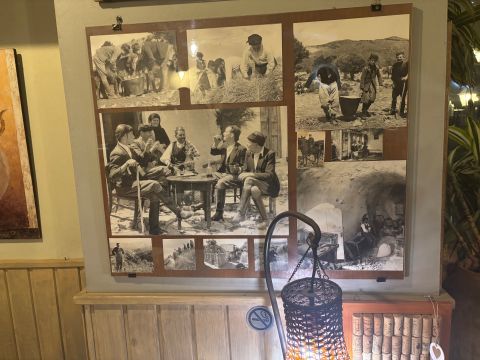
An old Bakelite radio. Black-and-white photos on the walls. And lighting provided by low bulbs covered in old lampshades. But their food is impressive if traditional: tzatziki; an enormous Greek salad; and delicious lamb chops, knobbly but full of flavour. It was €80 for two including a bottle of wine, with nothing extra for the memories.
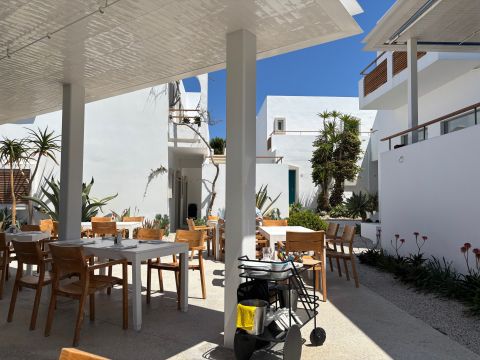
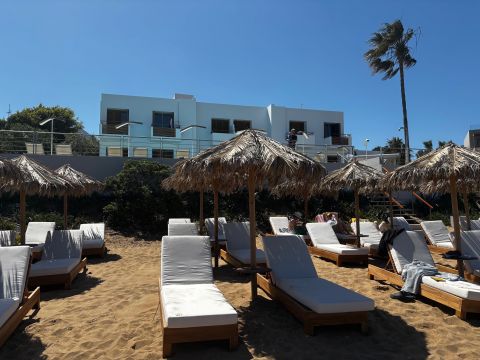
Finally, for those with children, apply to Ammos Hotel, a €15 taxi ride from the centre. Whitewashed; stylishly modern; on a sandy beach; and with excellent food and wine, this is already a hugely popular hotel.
Monastery Estate Venetian Harbour Parodos, 4th Kallinikou Sarpaki 40, Chania, Crete, Greece; tel: +30 2821 052 184
The Tanneries Hotel Vivilaki St 19-25, Tabakaria Chania, Crete, Greece; tel: +30 2821 043 900
Archaeological Museum of Chania Skra 15, Chania, Crete, Greece; tel: +30 2821 023 315
Botanical Garden of Crete 18th km, National Road of Chania, Fournes, Omalos, Crete, Greece; tel: +30 2821 200 770
Tamam Restaurant Zampeliou 49, Chania, Crete, Greece; tel: +30 2821 096 080
Marmaritsakis Estatoriou Kon/nou Sfakianaki 4–6, Chania, Crete, Greece; tel: +30 2821 044 183
Evgonia Milonogianni 120, Chania, Crete, Greece; tel: +30 2821 059 420
Ammos Hotel Irakli Avgoula Str, 73100 Chania, Crete, Greece; tel: +30 2821 033 003
All photographs are the author’s except for winegrower Antonis Dourakis, by Julia Harding.