As if to spoil the party, Vinceremos, a UK wine importer that has for years specialised in organic wines (including a range of 'no added sulphur' wines), has just published the results of a survey of its European wine suppliers on the hot topic of natural wines. They are not happy about the vague nature of what constitutes a natural wine and the current informal nature of the movement (see my views in Naked as nature intended?). Vinceremos are suggesting that this unruly bunch need proper regulation – and indeed it must be rather galling for those producers who have gone through the painstaking process of formal organic accreditation to see those who haven't, benefiting from the current natural wine buzz.
The current situation is that, while many of those selling their wines as 'natural' are certified organic or biodynamic, by no means all are. Vinceremos are concerned particularly about those operating outside the strictures of the certifying bodies. Their edited report follows.
We asked our suppliers two questions:
1 How do you perceive 'natural wine' – a welcome development or a threat?
2 Are you doing anything to respond to it?
Of the 20 who responded only one was completely positive. The rest were concerned that it was an unregulated term that was open to abuse, as it could be employed by any winemaker regardless of his or her use of chemicals and additives.
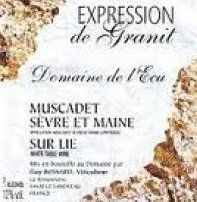
Guy Bossard of Domaine de l'Ecu, a highly respected Muscadet producer and organic/biodynamic pioneer, replied 'I've always said (and written) that 'natural wine' is a fantasy term bordering on dishonesty. It's too vague, too woolly and without a rule book. In any case, literally speaking there can't be 'natural wine' because wine doesn't exist in nature. Without human input there's no wine!'
While two producers were already making 'natural wines' and saw it as a welcome new niche, the rest were worried that 'natural' wines might be confused with 'organic' wines and might harm their improving reputation, as organic wine producers have been driving up standards for over 20 years.
'It's possible to make wines without sulphur (and we do) but certain technical precautions need to be taken. It doesn't work with all wines. Our vision of a sulphur-free wine is of a clean wine without any defects, vinified without the help of any winemaking product. It therefore needs to be well-filtered and very carefully bottled to protect it from oxygen. We are against 'natural wines' when that's synonymous with unstable, unfiltered, reduced or 'dirty' wines.'
Damien Marres, Domaine de la Grande Bellane
'The desire to produce 'natural wines' was the engine that directed us to organic certified agriculture. The base philosophy is that better wines are obtained from the forces of the nature and from their balance.'
Ivo Nardi, Perlage (who supply Vinceremos with a no-sulphur-added Prosecco).
Jem Gardener, managing director of Vinceremos, said 'I'm worried that 'natural' might undermine the progress made by organic wines by muddying the waters. There appears to be no clear definition of what they are but there seems to be an implication that they are 'better than' organic'.
When asked how to respond to this new development, many felt it also highlighted the need for agreement on precise standards for 'organic wine' – an issue which the EU is currently addressing. Perhaps 'natural wine' could also be externally regulated for all producers. In the meantime as 'natural wine' is aiming to be unadulterated, it would be helpful if producers had to adhere to the rigorous growing standards necessary to produce 'organic grapes'.
'I welcome any movements or trends that lead to us being able to consume food and drink of greater purity, but it must be made, labelled and marketed with greater transparency. We are expected to take it on trust from the supplier (or their distributor) that they are using natural methods and ingredients. I am by nature a very trusting person and would love this to be sufficient, but I fear in this world it isn't .
We would prefer the natural wine people to throw their weight behind certified organic (and biodynamic) wines – building on the work and successes of this sector in recent decades – and then to promote wines within this category made from manually harvested grapes, and vinified without added yeast, sugar or sulphur.'
Paulin Kopfer of Weingut Zähringer, Germany said: 'For us in Germany this discussion seem rather curious. There are three reasons I am quite sceptical: The word 'natural' is in Germany impossible to use by law. It has been used in history for unchaptalised wines, but forbidden since 1971. If the term 'natural' does not include organic production it would seriously damage its transparency. Lastly, however it's defined, I see rather more confusion for consumers'.
The reaction of Matthieu and Gwenaelle de Wulf of Domaine du Jas d'Esclans in Provence was, 'We prefer to use selected yeasts to develop the wine's flavours – not all natural yeasts are good and sometimes develop unpleasant flavours. Sulphur dioxide is present naturally in wine and sometimes sulphur-free wines have higher sulphur levels than ours. We shouldn't forget that sulphur has been used to preserve wines since antiquity and that it's a 'natural' element'.
Jean-Pierre and Chantal Frick in Alsace were more sympathetic: 'Natural wine is a logical progression from our work in biodynamic production. We believe it to be the most faithful expression of the personality of a terroir, a vintage and the men and women who tend the vines'.
While an unnamed supplier in SW France commented: 'Natural wine has no official definition. We do not know what it means. If the idea is to make wine without sulphur, it is a risky choice. None of these wines can age – or very, very rarely perhaps because there is a little sulphur naturally present! There are too many observed deviations of the wines. At the moment these wines are fashionable but it probably won't last when the customers realise what they taste like'.